
Technology moves quickly, and businesses often find themselves surrounded by outdated desktops, old laptops, broken monitors, and redundant IT equipment sooner than expected. Whether you’re upgrading office systems, clearing storage space, or replacing aging hardware, understanding how same day computer disposal Leeds services work can save time, improve compliance, and reduce environmental impact.
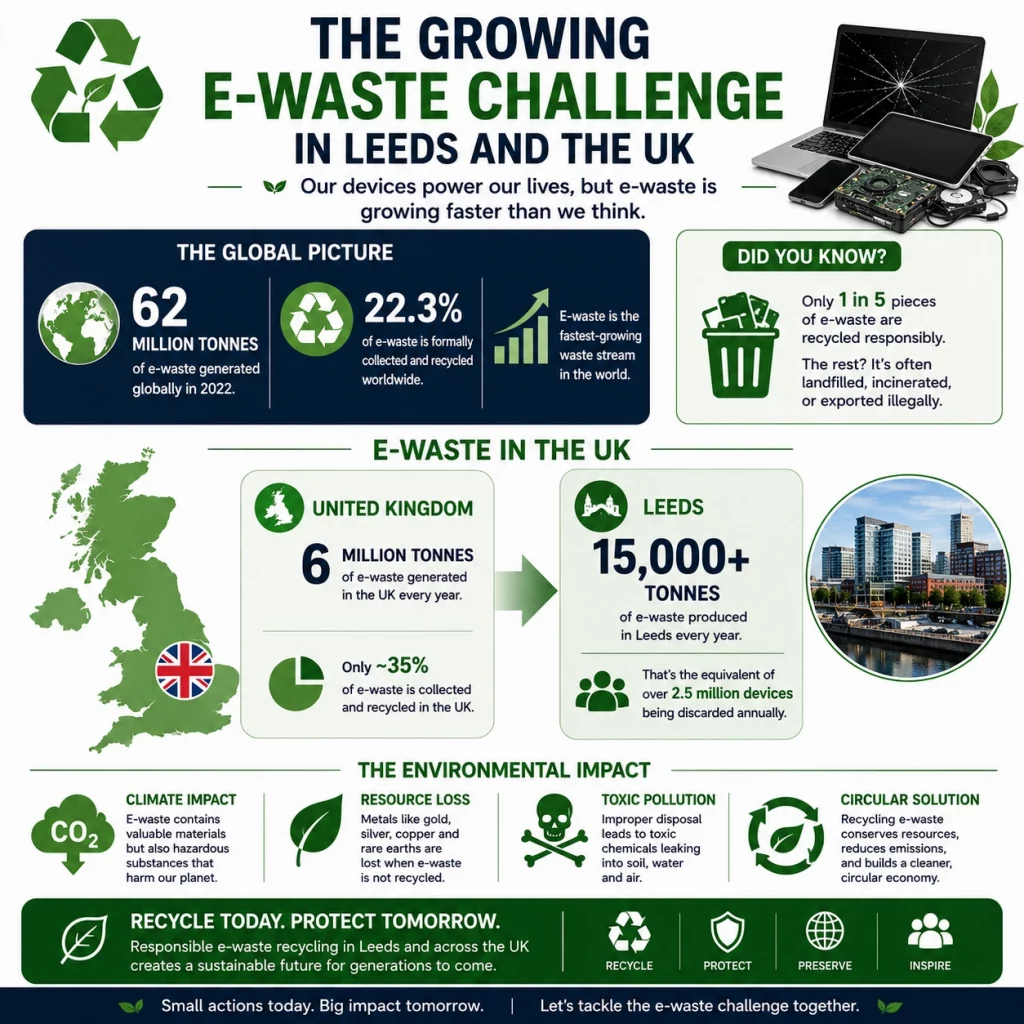
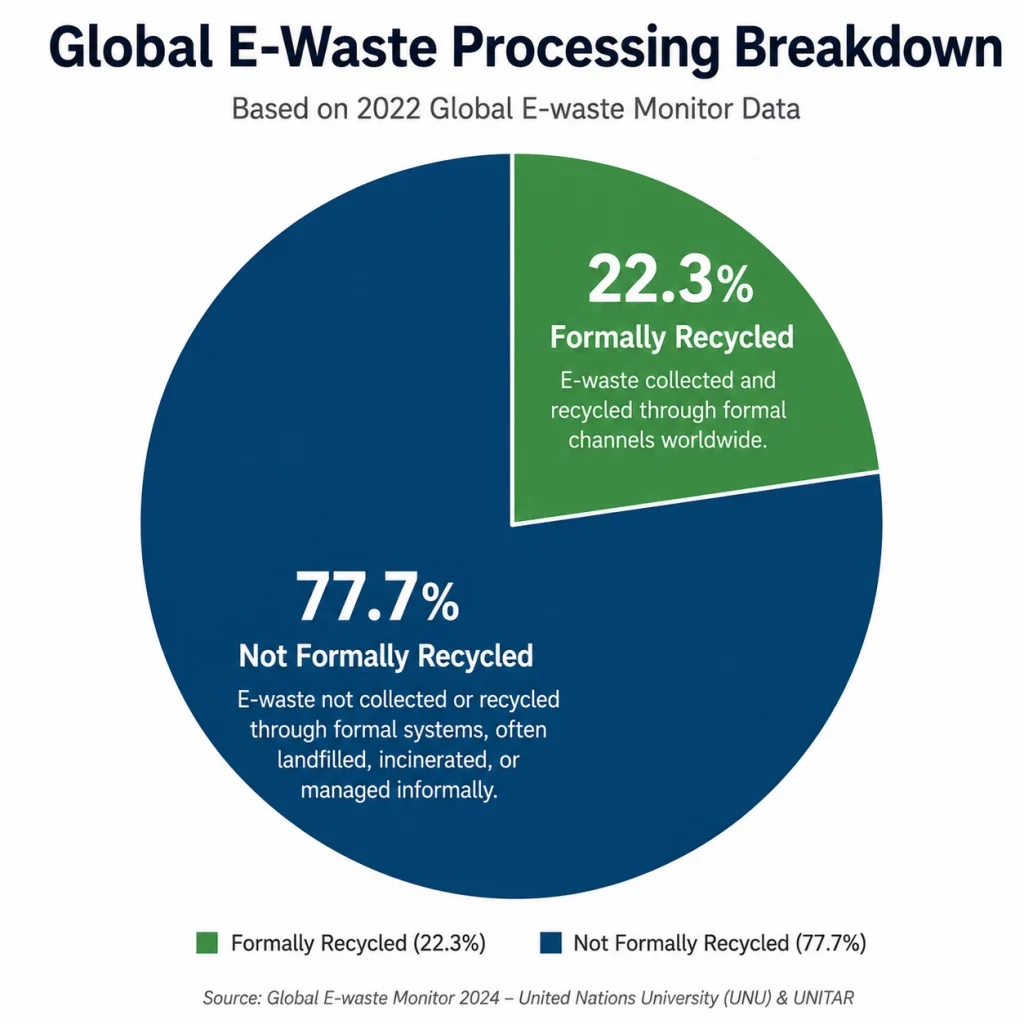
The challenge is bigger than simply throwing away unwanted computers. Modern IT equipment contains sensitive data, valuable recyclable materials, and components covered by WEEE regulations. With e-waste now recognised as one of the fastest-growing waste streams globally, responsible disposal has become an essential part of business operations. According to the Global E-waste Monitor 2024, the world generated 62 million tonnes of e-waste in 2022, yet only 22.3% was formally collected and recycled.
For organisations and individuals in Leeds, same-day disposal services provide a practical way to remove unwanted computers while ensuring data security and environmental compliance.
Businesses across Leeds are upgrading their technology infrastructure more frequently than ever before. Cloud computing, cybersecurity requirements, hybrid working environments, and software compatibility demands often make older devices obsolete long before they physically fail.
Research from industry sources suggests that the UK generates around 6 million tonnes of e-waste annually, while IT and telecommunications e-waste has doubled over the past 15 years. The average UK household also owns around 25 electronic devices, many of which sit unused in cupboards and storage rooms.
For organisations undergoing office moves, refurbishments, or technology refreshes, waiting weeks for equipment removal is often impractical. This is where computer disposal Leeds services offering same-day collection provide significant value.
Most IT disposal providers accept a wide range of equipment during collection visits.
This often includes:
Equipment Type | Typically Accepted |
Desktop Computers | Yes |
Laptops | Yes |
Servers | Yes |
Monitors | Yes |
Printers | Yes |
Networking Equipment | Yes |
Hard Drives | Yes |
Keyboards & Accessories | Yes |
IT Peripherals | Yes |
The exact list may vary depending on the condition and quantity of equipment being collected.
Many items still contain reusable components that can be refurbished, extending their lifespan and supporting circular economy initiatives.
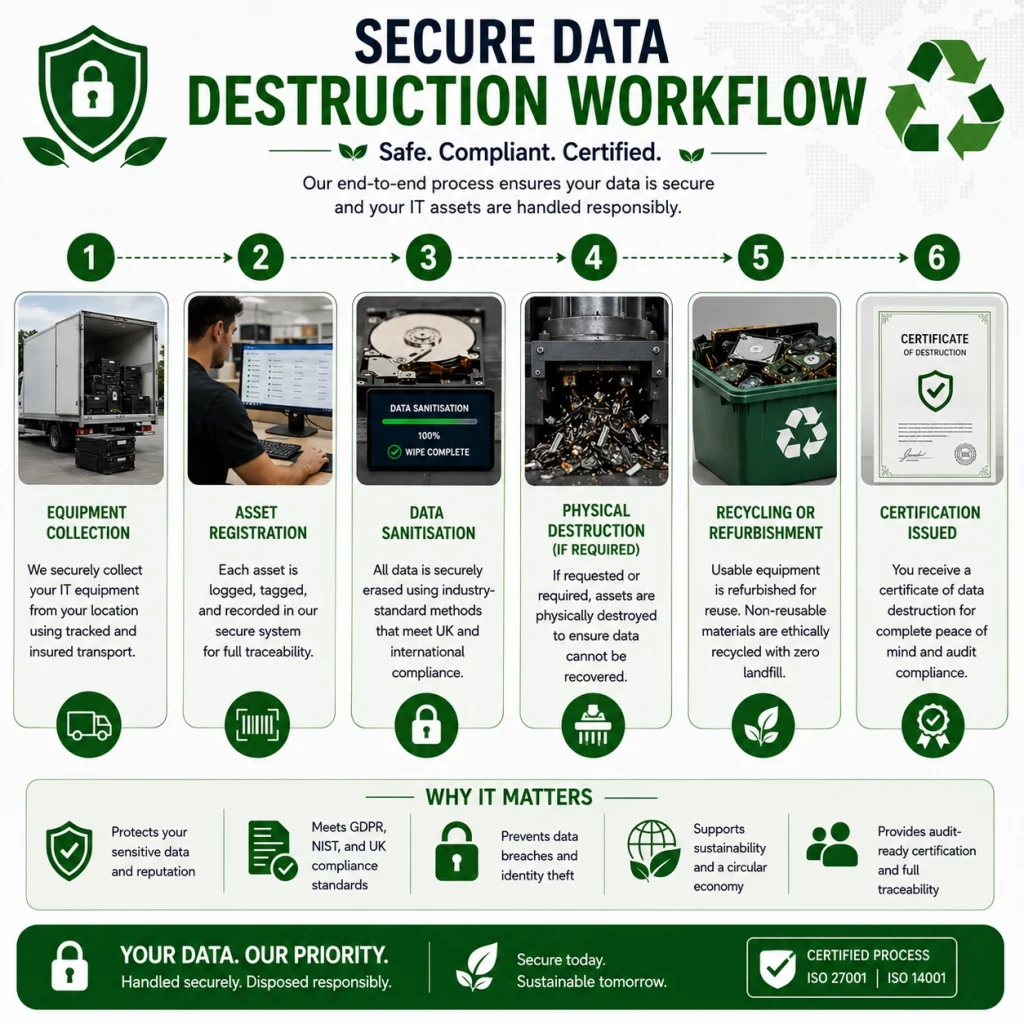
The process generally begins when a business or household contacts a disposal provider.
Information typically requested includes:
For urgent office clearances, many providers can arrange collection on the same day subject to availability.
A trained collection team arrives and removes the equipment safely.
Chain-of-custody procedures are especially important for businesses handling confidential information. Every item is typically logged to maintain accountability throughout the disposal process.
For many organisations, data security is the most critical aspect of computer disposal.
Even deleted files can remain recoverable if storage devices are not properly sanitised. According to various information security studies, improper handling of electronic devices remains a significant contributor to data breaches.
Professional disposal services typically use methods such as:
Businesses should always request documentation confirming data destruction has been completed.
The UK’s Waste Electrical and Electronic Equipment (WEEE) Regulations were created to prevent electronic waste from entering landfill unnecessarily and to encourage reuse and recycling.
For businesses, compliance matters because improper disposal can expose organisations to environmental, legal, and reputational risks.
The WEEE framework promotes:
Many electronic devices contain valuable materials that can be recovered and reintroduced into manufacturing supply chains. According to the Global E-waste Monitor, billions of dollars’ worth of recoverable resources are lost each year due to inadequate recycling practices.
Many people assume collected computers are immediately destroyed.
In reality, responsible disposal often follows a structured hierarchy.
If devices remain functional, they may be refurbished and reused.
This approach reduces environmental impact while extending the life of valuable equipment.
Devices unsuitable for reuse are dismantled.
Materials commonly recovered include:
The recovery of these resources helps reduce demand for virgin materials and supports sustainability goals.
Remaining components enter approved recycling streams where materials are processed according to environmental regulations.
This helps minimise pollution risks associated with improper disposal practices.
The most obvious benefit is speed, but the advantages extend much further.
Old computers left in storage rooms can still contain sensitive business information.
Immediate collection reduces the window of exposure.
Office relocations and IT upgrades often operate on tight schedules.
Same-day removal helps projects stay on track.
Responsible recycling helps divert electronic waste away from landfill.
The World Health Organization notes that improperly managed e-waste can release hazardous substances into the environment, posing risks to both ecosystems and public health.
Removing obsolete equipment creates more efficient workspaces while supporting accurate IT asset records.
Preparation can make the process smoother and more efficient.
Before collection:
For larger projects involving multiple departments, creating a disposal inventory can significantly improve tracking and reporting.
Calculate your bulk equipment weight profiles, structural shipping volumes, and logistics compliance scores before requesting an on-site collection team.
Many businesses focus on removing physical equipment but underestimate the value of the data stored within it.
Customer records, employee information, financial documents, intellectual property, and login credentials can remain recoverable long after a device appears inactive.
Industry guidance consistently recommends secure destruction or certified sanitisation before equipment leaves organisational control.
When evaluating a computer disposal Leeds provider, businesses should always verify:
Not all disposal services operate to the same standards.
A reliable provider should demonstrate expertise in data security, environmental compliance, refurbishment opportunities, and transparent reporting.
Documentation is equally important. Collection records, destruction certificates, and recycling reports help businesses maintain compliance while supporting sustainability initiatives.
As e-waste volumes continue to rise globally, responsible disposal is becoming a critical part of modern business operations. With same-day services now widely available, organisations no longer need to let obsolete IT equipment occupy valuable office space or create unnecessary security risks.
Have outdated computers, laptops, or servers waiting to be removed? What is the biggest challenge your organisation faces when arranging secure and compliant IT equipment disposal in Leeds?
Same day computer disposal in Leeds is a service that collects unwanted computers, laptops, servers, monitors, and other IT equipment on the same day of booking. It helps businesses and individuals remove redundant technology quickly while ensuring secure data destruction and environmentally responsible recycling.
The cost of computer disposal in Leeds depends on the quantity and type of equipment being collected. Some providers, including those offering reusable IT asset collections, may provide free collection services for qualifying equipment. It is best to request a tailored quote based on your requirements.
Yes. Professional computer disposal companies use certified data destruction methods such as data wiping, hard drive shredding, and physical destruction to ensure confidential information cannot be recovered from disposed devices.
Most computer disposal services in Leeds collect desktop computers, laptops, servers, monitors, printers, networking equipment, hard drives, keyboards, and other IT peripherals. Collection availability may vary depending on the provider and equipment condition.
WEEE-compliant disposal ensures electronic waste is processed according to UK environmental regulations. It helps reduce landfill waste, recover valuable materials, protect the environment, and ensure businesses meet their legal responsibilities.
Yes. If a computer is still functional or suitable for repair, it may be refurbished and reused. Refurbishment extends the lifespan of IT equipment, reduces electronic waste, and supports sustainable business practices.
Many providers offer same-day or next-day computer disposal services, depending on availability, collection location, and the volume of equipment requiring removal.
Reputable IT disposal companies provide documentation such as data destruction certificates, collection records, and asset tracking reports. These documents help businesses demonstrate compliance and maintain audit trails.
Collected computers are typically assessed for reuse, refurbishment, parts recovery, or recycling. Equipment that cannot be reused is dismantled, and valuable materials such as metals and plastics are recovered through approved recycling processes.
Before collection, businesses should back up important data, identify equipment for removal, record asset information if required, and discuss data destruction requirements with the disposal provider. This helps ensure a smooth and secure disposal process.