
Every school eventually reaches a point where aging computers, laptops, servers, and classroom technology need replacing. What happens next is often overlooked. Yet responsible computer disposal Leeds schools implement is just as important as purchasing new equipment. Old devices can contain sensitive student records, staff information, financial data, and network credentials that must be protected throughout the disposal process.
The challenge is growing. According to the United Nations Global E-waste Monitor 2024, the world generated 62 million tonnes of electronic waste in 2022, a figure expected to rise significantly over the coming years. Educational institutions contribute to this growing stream as they upgrade technology to support digital learning environments. Proper decommissioning helps schools reduce environmental impact while protecting sensitive information and meeting legal obligations.
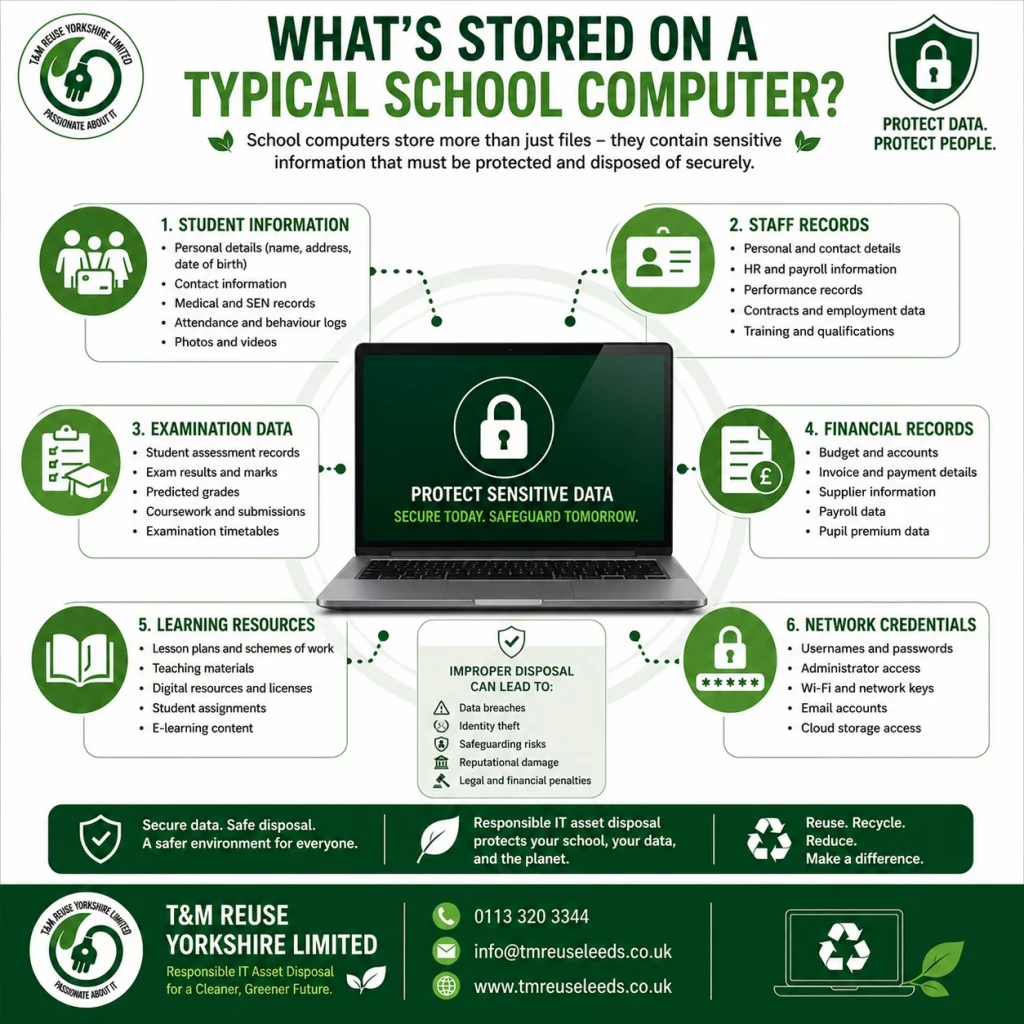
School computers often contain far more data than many people realise.
Student records, attendance information, safeguarding documents, examination data, financial records, staff files, and internal communications may remain stored on devices long after they are removed from service. Simply deleting files or performing a factory reset may not permanently remove this information.
The UK Information Commissioner’s Office (ICO) advises organisations to securely erase or destroy data-bearing devices before disposal. Failure to do so can expose institutions to data breaches and regulatory concerns.
For this reason, school computer disposal Leeds programmes should always prioritise secure data management alongside environmental responsibility.
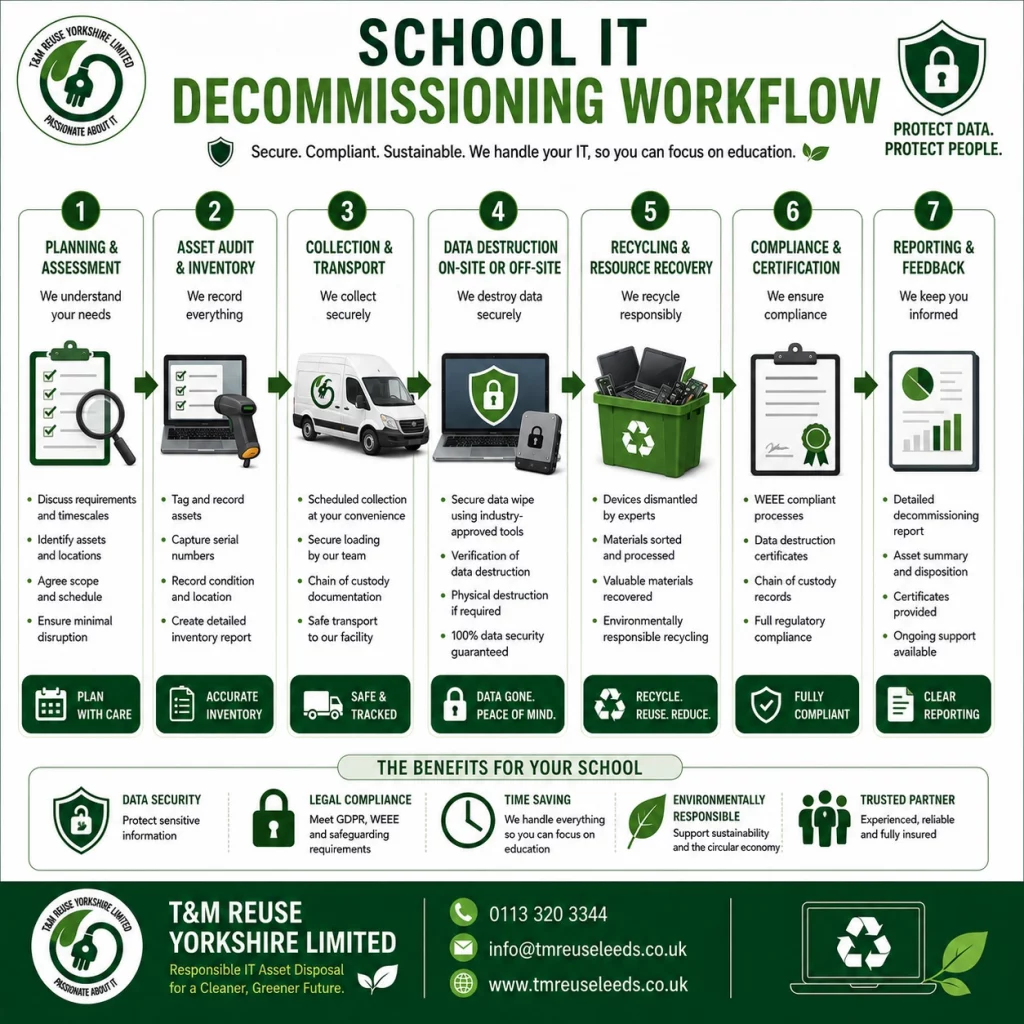
Decommissioning involves much more than removing devices from classrooms.
A structured process helps ensure that equipment is accounted for, data is securely managed, and reusable materials are recovered responsibly.
The first stage is identifying all devices scheduled for retirement.
Schools often discover additional equipment stored in cupboards, IT offices, and unused classrooms. Creating a complete inventory helps ensure no assets are overlooked.
This inventory should include desktops, laptops, servers, tablets, monitors, storage devices, and networking equipment.
Not all devices contain the same level of risk.
Schools should identify which devices store personal data and determine the most appropriate method of data destruction before disposal.
Protecting student and staff information should remain a top priority during computer disposal Leeds projects.
According to the UK Government’s Cyber Security Breaches Survey 2025, 43% of UK businesses and 30% of charities reported experiencing a cyber security breach or attack during the previous year. While schools face different challenges, the risks associated with data exposure remain significant.
Data destruction methods may include certified software erasure, degaussing, or physical destruction of storage media. The National Cyber Security Centre (NCSC) recommends using approved sanitisation methods to ensure information cannot be recovered.
Receiving certification after data destruction provides valuable evidence that sensitive information has been handled appropriately.
Schools increasingly incorporate sustainability into their operational strategies.
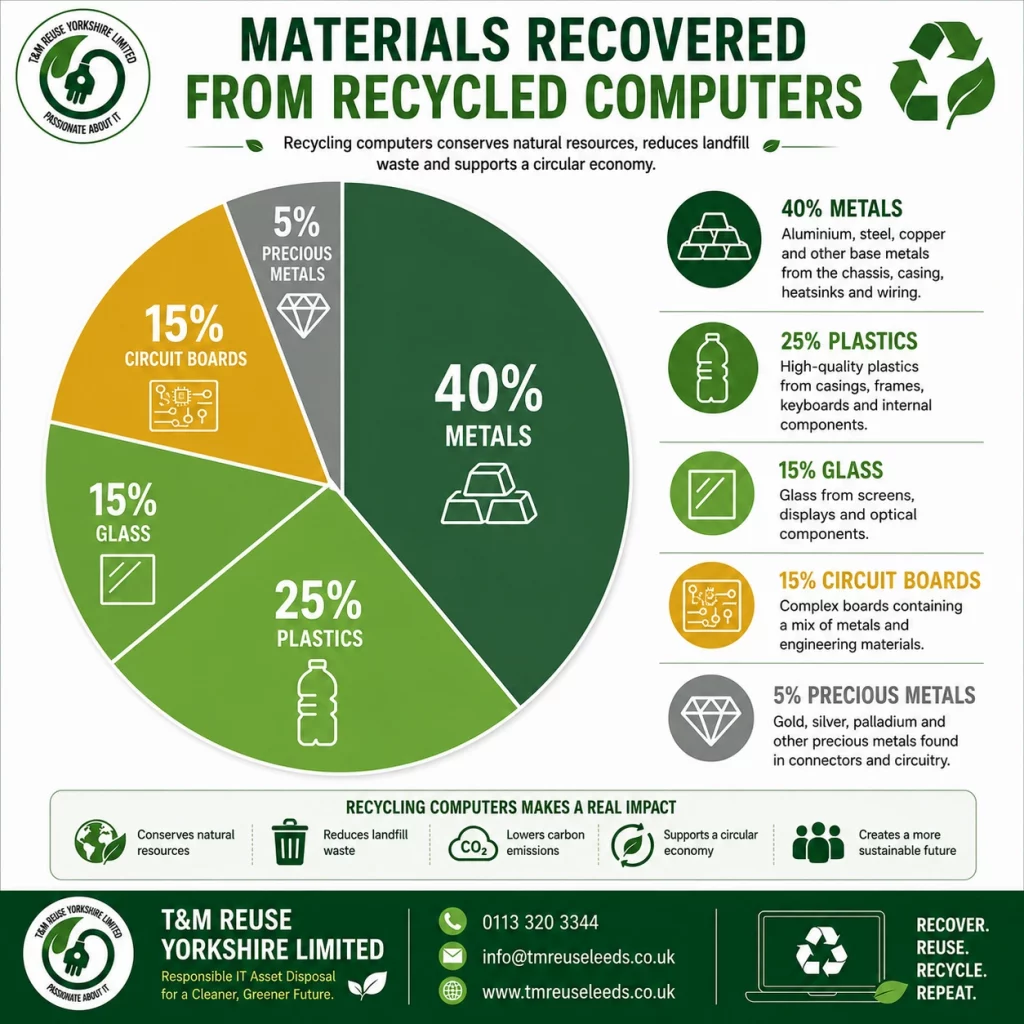
Responsible disposal prevents electronic equipment from entering landfill and supports the recovery of valuable materials. Computers contain copper, aluminium, steel, plastics, and precious metals that can often be recovered and reused.
According to the Global E-waste Monitor 2024, approximately US$62 billion worth of recoverable materials are lost globally every year through inadequate recycling practices.
By implementing responsible school computer disposal Leeds procedures, educational institutions can contribute to a more circular economy while reducing environmental impact.
Educational institutions must comply with strict data protection obligations.
The UK GDPR requires organisations to implement appropriate measures to protect personal data throughout its lifecycle, including disposal. Schools are responsible for ensuring that retired devices cannot be used to access student or staff information.
Maintaining documented disposal records can help demonstrate compliance and accountability if questions arise in the future.
Many schools also have internal governance requirements that support secure asset management and disposal.

Many schools focus only on desktop computers and laptops.
However, numerous devices can contain sensitive information or valuable recyclable materials.
Examples include servers, external hard drives, tablets, interactive whiteboards, printers, photocopiers, networking hardware, backup devices, and storage media.
Even multifunction printers may contain internal hard drives capable of storing scanned documents and administrative records.
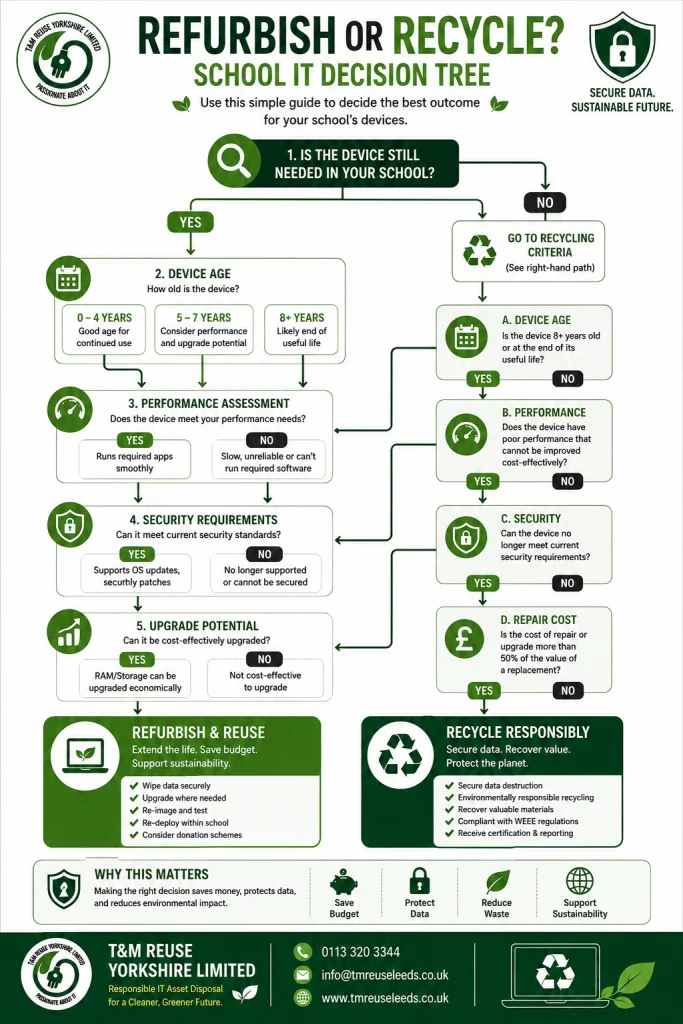
Not all retired computers have reached the end of their useful lives.
Some devices may be suitable for refurbishment and reuse if they remain functional and meet current performance requirements. Refurbishment can extend product lifecycles and reduce overall electronic waste generation.
Equipment that is no longer suitable for reuse can be dismantled for material recovery through responsible recycling processes.
One common mistake is storing old devices indefinitely.
Many schools keep retired computers in storage rooms for years, creating security risks while reducing opportunities for material recovery.
Another issue is failing to maintain records. Without documentation, schools may struggle to demonstrate that equipment was disposed of securely and responsibly.
Incomplete asset inventories can also result in devices being overlooked during decommissioning projects.
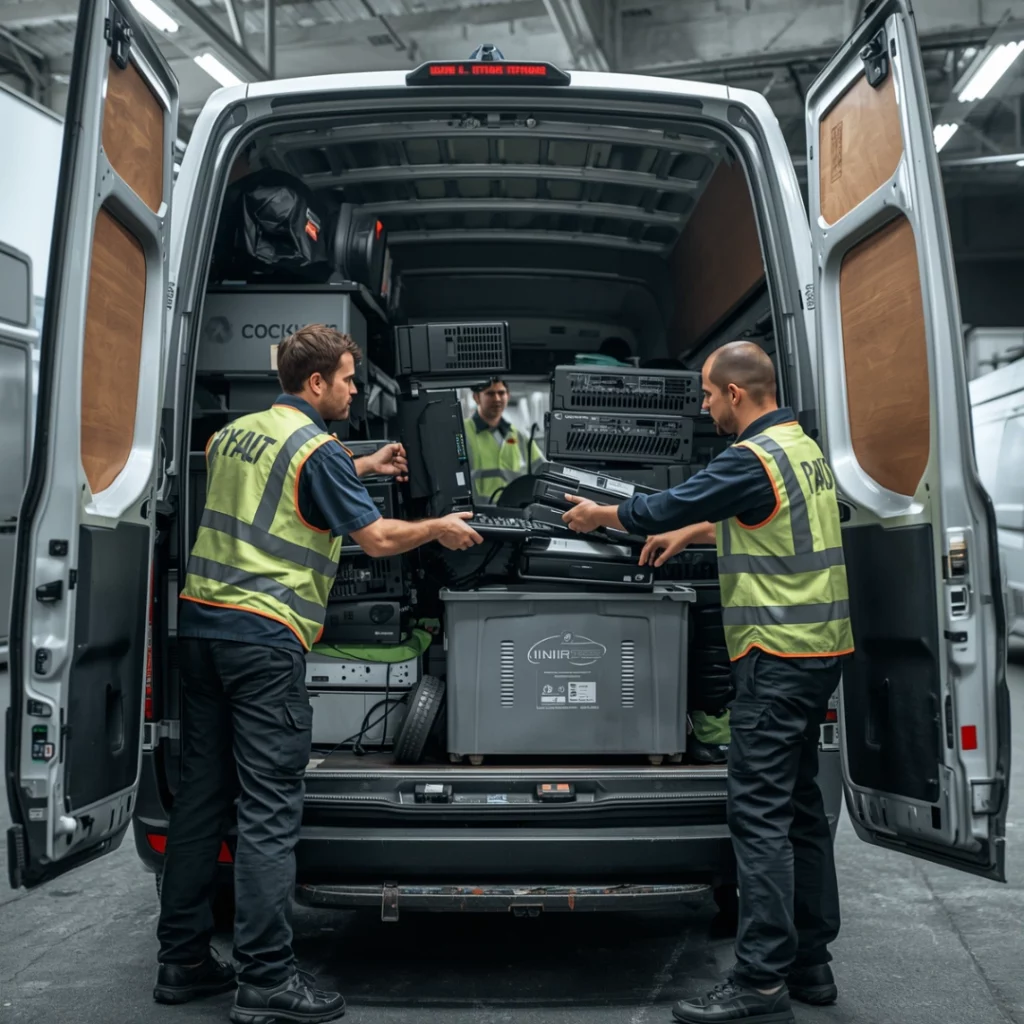
Technology refresh cycles continue to shorten as schools adopt new digital learning tools.
Rather than treating disposal as an occasional project, educational institutions can benefit from developing a structured end-of-life IT management policy. This approach helps ensure consistency, compliance, and sustainability across future technology upgrades.
Documented procedures also simplify planning for future computer replacement programmes and reduce the risk of sensitive devices being forgotten in storage.
How many retired computers, laptops, servers, tablets, or storage devices are currently sitting unused within your school? More importantly, can you confidently verify that every one of them has been securely decommissioned and accounted for?
The safest way to dispose of old school computers is through a professional computer disposal service that provides secure data destruction, asset tracking, and environmentally responsible recycling. This helps protect sensitive student and staff information while ensuring compliance with data protection regulations.
Schools store confidential information including student records, safeguarding documents, staff details, and financial data. Secure disposal ensures this information cannot be accessed or recovered after devices are retired.
All personal, educational, financial, administrative, and network-related data should be securely erased or destroyed before computers leave the school premises. This includes student records, staff files, login credentials, and stored documents.
Yes. Simply deleting files or performing a factory reset does not permanently remove data. Professional data destruction methods are required to ensure information cannot be recovered.
Computers are typically audited, securely wiped or destroyed, assessed for refurbishment, dismantled if necessary, and then processed for material recovery. Valuable components and materials can often be reused or recycled.
A comprehensive school computer disposal programme should include desktop computers, laptops, servers, tablets, hard drives, USB devices, printers, photocopiers, networking equipment, and backup storage devices.
Proper disposal ensures personal data is securely removed from devices before recycling or reuse. This helps schools meet their obligations under UK GDPR and reduces the risk of data breaches.
Yes, provided the devices are fully data-sanitised and remain functional. Refurbishment and reuse can extend the lifespan of IT equipment and reduce electronic waste while supporting digital inclusion initiatives.
Schools should receive records such as asset inventories, collection reports, data destruction certificates, recycling reports, and audit trail documentation confirming secure and compliant disposal.
Schools should review their IT disposal policies annually and whenever major technology upgrades, cybersecurity changes, or regulatory updates occur to ensure ongoing compliance and security.
Responsible computer recycling helps recover valuable materials such as copper, aluminium, plastics, and precious metals. It reduces landfill waste, conserves natural resources, and supports a circular economy.
Professional computer disposal services provide secure data destruction, regulatory compliance support, environmental responsibility, documented audit trails, and peace of mind that retired equipment has been handled correctly.