
Data breaches rarely begin with sophisticated cyberattacks alone. Sometimes, the biggest security risk is sitting unnoticed in a storage cupboard, server room, or office corner. Old laptops, hard drives, smartphones, and servers often contain sensitive information long after they stop being used. That’s why chain of custody IT recycling Leeds has become a critical consideration for businesses looking to protect data, meet compliance requirements, and dispose of technology responsibly.
As organisations across Leeds continue to upgrade IT infrastructure, retire outdated devices, and adopt cloud-based systems, the volume of electronic equipment reaching end-of-life continues to grow. According to the United Nations Global E-waste Monitor 2024, the world generated a record 62 million tonnes of electronic waste in 2022, yet only 22.3% was formally collected and recycled. This growing challenge highlights why businesses need secure, traceable processes when disposing of IT assets.
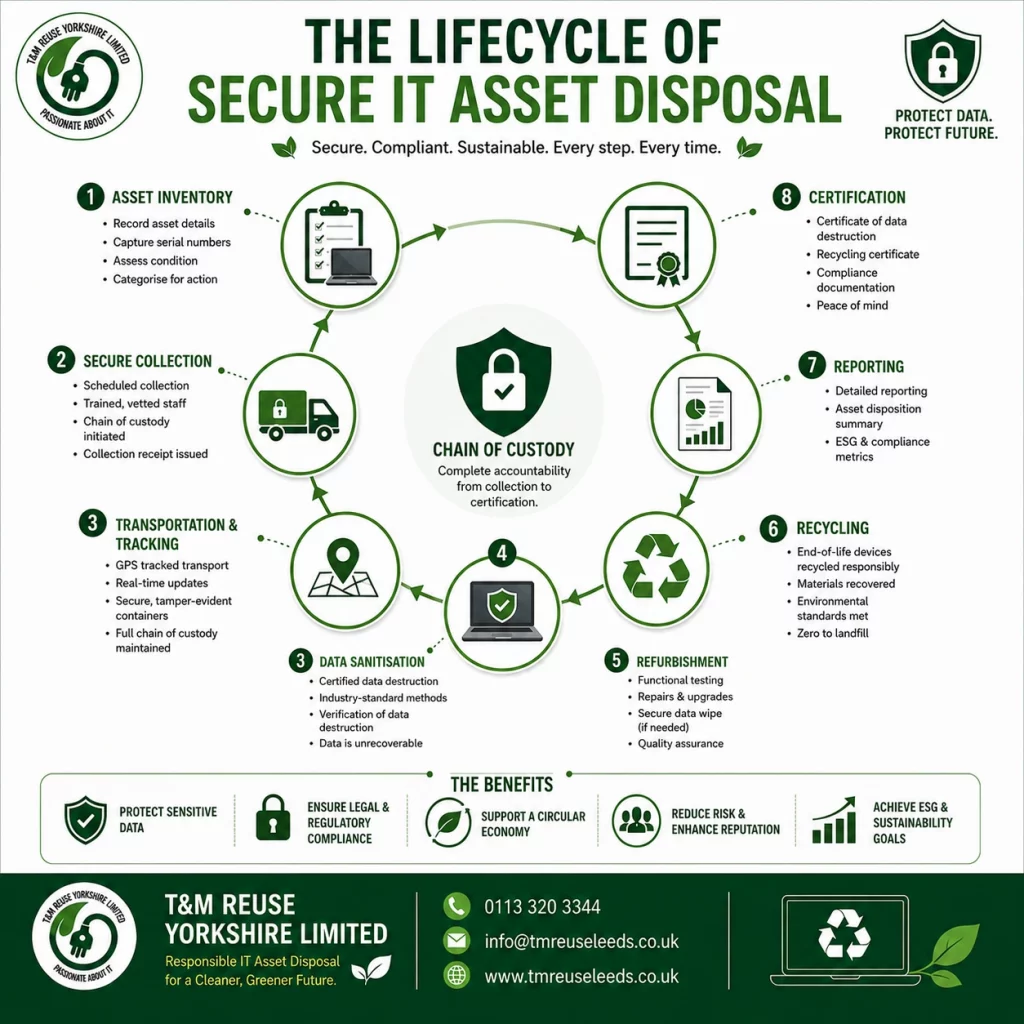
Chain-of-custody IT recycling refers to a documented process that tracks IT assets from the moment they leave a business premises until they are securely refurbished, recycled, or destroyed.
The purpose is simple: create a complete audit trail showing exactly who handled each device, when it was transferred, how data was removed, and what ultimately happened to the equipment.
For Leeds businesses handling customer records, financial information, employee data, healthcare information, or intellectual property, maintaining this documented chain can significantly reduce security and compliance risks.
Many businesses assume deleting files or formatting hard drives permanently removes information. In reality, data recovery tools can often retrieve information from improperly erased devices.
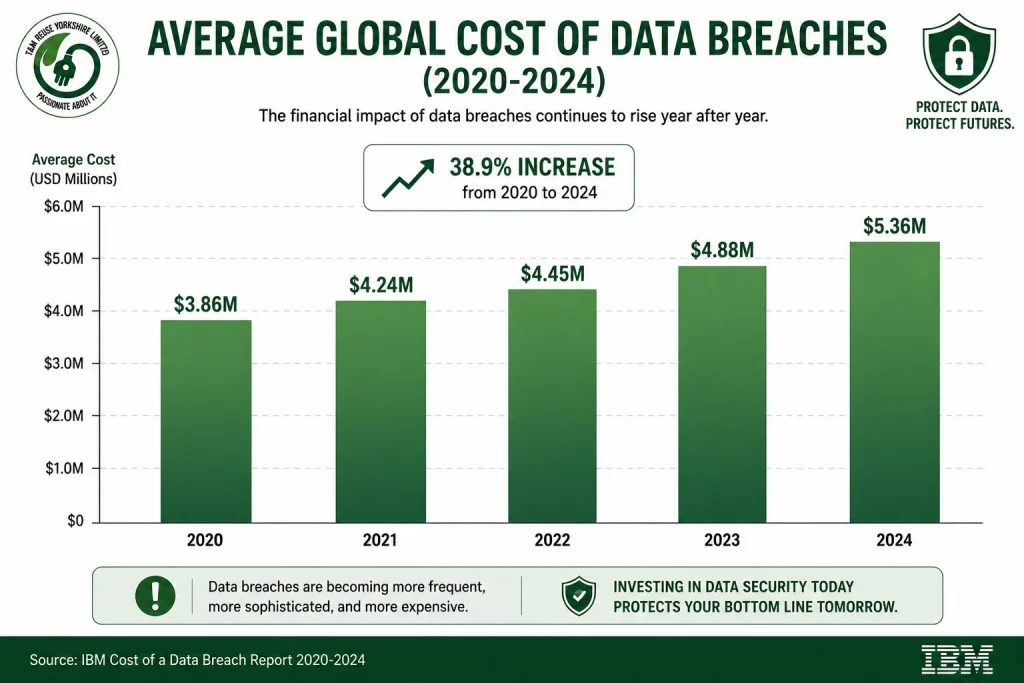
According to IBM’s Cost of a Data Breach Report 2024, the average global cost of a data breach reached $4.88 million, representing a 10% increase from the previous year and the highest total ever recorded.
While cyberattacks receive most of the attention, improperly disposed IT assets can also expose organisations to significant risks. A single misplaced hard drive could contain years of confidential company information.
This is why secure IT recycling Leeds services increasingly include documented custody procedures that provide accountability throughout the disposal process.
The process begins before any equipment leaves the building.
Every laptop, desktop, server, storage device, smartphone, network switch, and hard drive should be catalogued. Asset tagging creates a unique identifier for each item, allowing businesses to track devices throughout their disposal journey.
Without an accurate inventory, maintaining a reliable chain of custody becomes difficult.
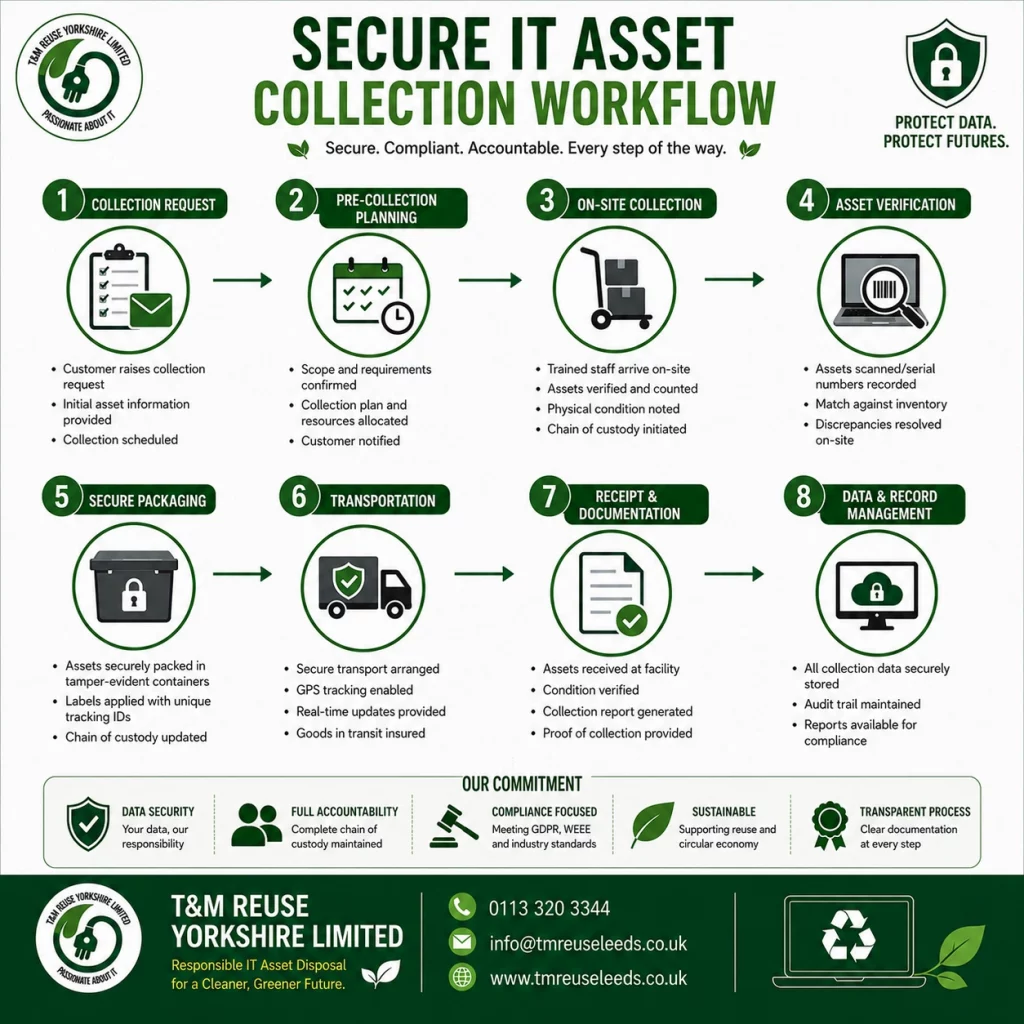
Collection should be handled using documented procedures that record exactly what equipment is removed.
Collection records typically include asset numbers, serial numbers, collection dates, locations, and signatures from authorised personnel.
This documentation creates the first link in the custody chain.
Once equipment leaves a business premises, transportation security becomes critical.
Devices may still contain sensitive information, making them vulnerable to theft, loss, or unauthorised access during transit.
Secure transportation procedures often involve sealed containers, tracked vehicles, documented transfer records, and controlled access measures.
Each handover should be recorded to preserve the integrity of the custody trail.
This stage is often the most important part of the process.
The UK National Cyber Security Centre (NCSC) recommends secure sanitisation methods to ensure data cannot be recovered from retired storage media.
Methods may include certified software erasure, degaussing, shredding, crushing, or physical destruction depending on the storage technology involved.
After completion, businesses should receive formal certification confirming that data destruction has taken place.
Businesses remain responsible for protecting personal and sensitive information even when equipment is no longer in use.
The Information Commissioner’s Office (ICO) states that organisations must securely dispose of devices containing personal data and ensure that information cannot be recovered after disposal.
Failure to properly manage retired IT assets can potentially lead to regulatory investigations, reputational damage, and financial penalties.
For organisations operating in regulated sectors such as healthcare, finance, education, and legal services, chain-of-custody documentation provides valuable evidence of compliance.
Security is only one part of the equation.
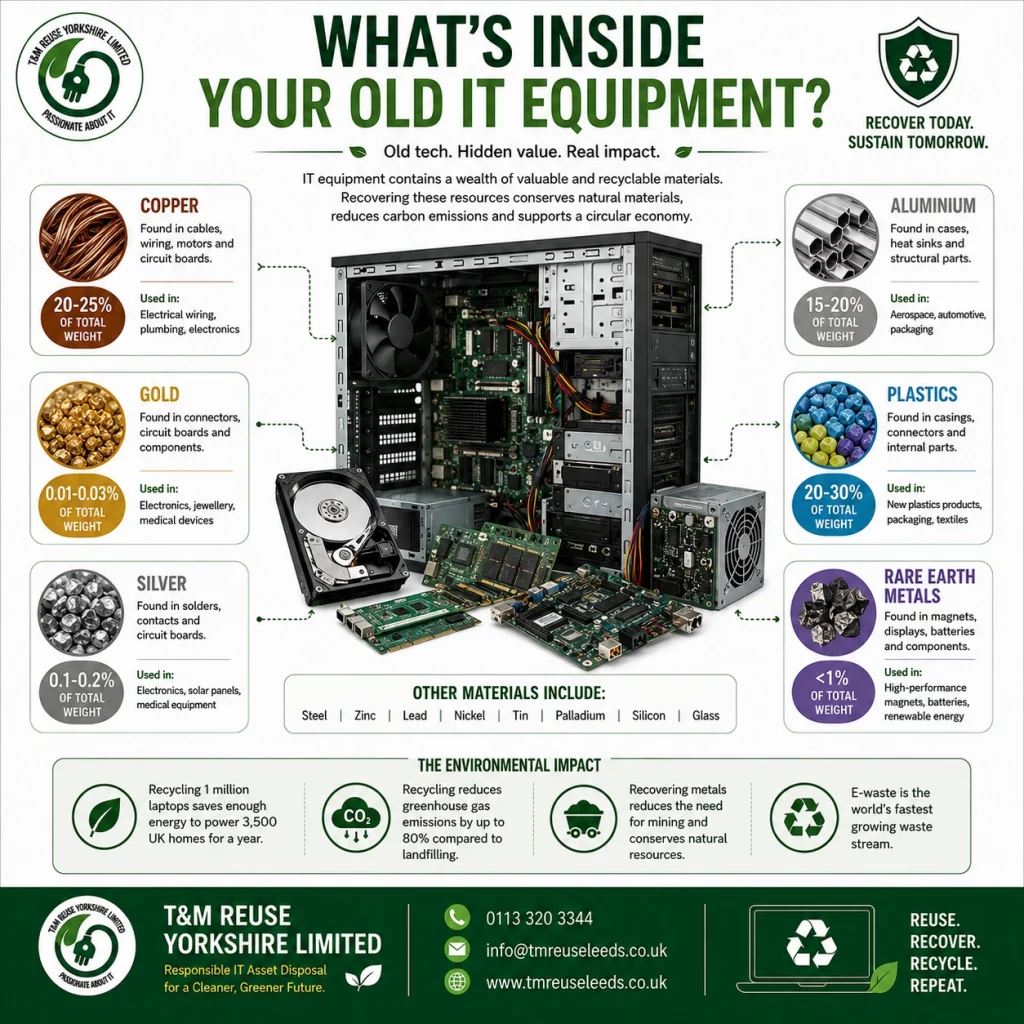
Electronic devices contain valuable materials including gold, silver, copper, aluminium, and rare earth elements. Recovering these materials reduces demand for virgin mining and supports a circular economy.
According to the Global E-waste Monitor 2024, approximately US$62 billion worth of recoverable resources are lost annually due to inadequate recycling practices.
Choosing chain of custody IT recycling Leeds services ensures that equipment is processed responsibly while helping recover valuable materials that can be reintroduced into manufacturing supply chains.

Many businesses focus on computers and servers but overlook smaller devices that can store sensitive information.
Examples include external hard drives, backup tapes, USB drives, smartphones, tablets, multifunction printers, networking equipment, SSDs, and even photocopiers.
Modern office equipment often contains internal storage capable of retaining confidential data long after devices are retired.
A comprehensive asset disposal programme should therefore include every device capable of storing or processing information.
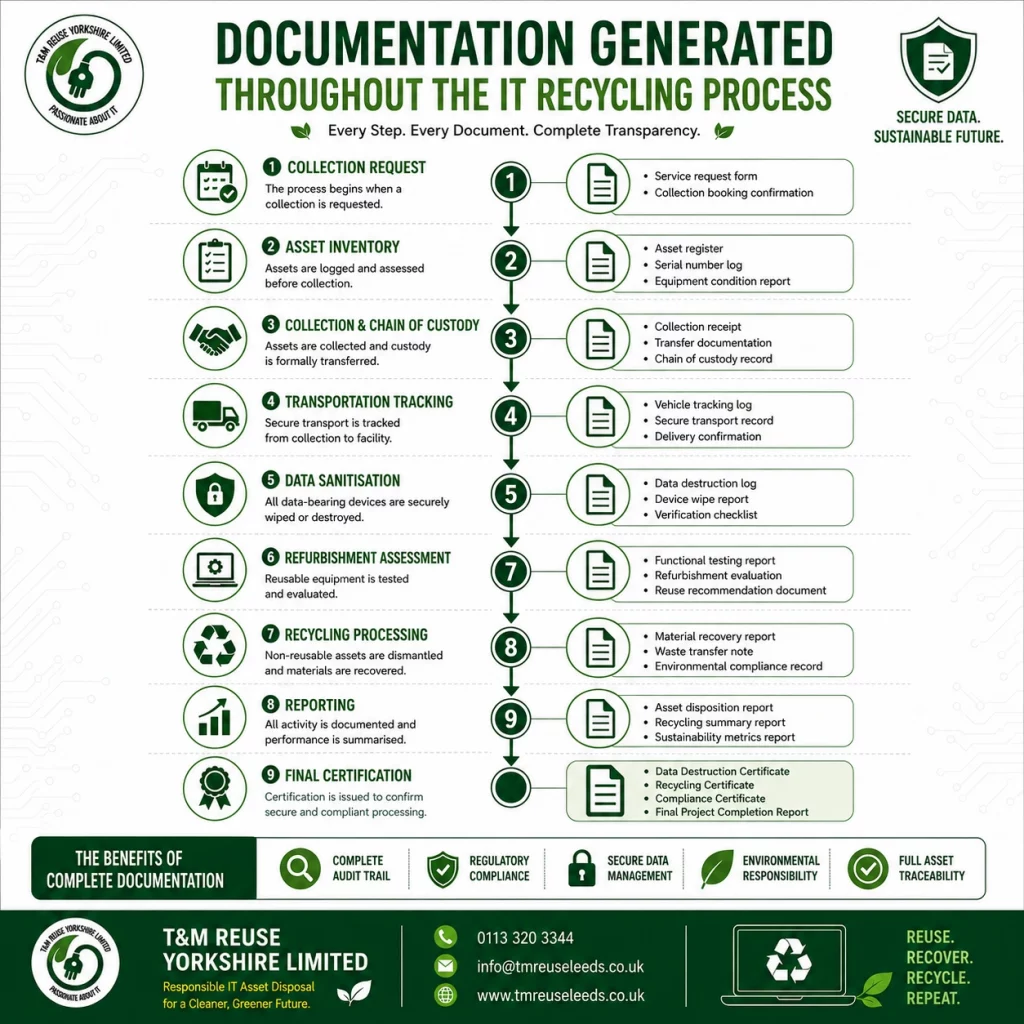
One of the defining characteristics of professional secure IT recycling Leeds services is comprehensive documentation.
Businesses should receive records showing equipment inventories, collection logs, transportation records, processing details, and certificates confirming data destruction or recycling outcomes.
These records create a complete audit trail that can support internal governance requirements, customer due diligence requests, and regulatory compliance audits.
Not all IT recycling providers offer the same level of transparency.
Businesses should evaluate whether a provider can demonstrate secure collection procedures, asset tracking systems, documented chain-of-custody processes, certified data destruction methods, and environmental compliance credentials.
The strongest providers can explain every stage of the process and provide evidence supporting each step.
When evaluating options, organisations should focus on accountability, traceability, security, and compliance rather than simply choosing the lowest-cost service.

Technology refresh cycles continue to accelerate. Devices that were state-of-the-art just a few years ago may already be approaching end-of-life.
Developing a formal disposal strategy helps businesses maintain consistent standards whenever equipment is retired. It also reduces the likelihood of devices being forgotten in storage rooms where data risks can remain hidden for years.
Organisations that integrate chain of custody IT recycling Leeds procedures into their wider cybersecurity and sustainability strategies are often better positioned to protect sensitive information while supporting responsible environmental practices.
How many retired laptops, hard drives, servers, smartphones, and storage devices are currently sitting unused within your organisation? More importantly, could you account for every one of them if an auditor asked tomorrow?
Chain of custody IT recycling is a documented process that tracks IT equipment from collection through transportation, data destruction, refurbishment, and recycling. It creates a complete audit trail showing how assets were handled and disposed of securely.
A documented chain of custody helps protect sensitive business data, reduces the risk of data breaches, ensures accountability, and provides evidence that IT assets have been disposed of in a secure and compliant manner.
Businesses should include laptops, desktop computers, servers, hard drives, SSDs, smartphones, tablets, backup tapes, USB drives, printers, photocopiers, networking equipment, and any device capable of storing data.
Secure IT recycling ensures that personal and confidential data is permanently destroyed before devices are recycled or reused. This helps businesses meet their data protection obligations under UK GDPR and reduces compliance risks.
Standard IT recycling focuses on recycling equipment, while chain-of-custody IT recycling provides detailed tracking, documented transfers, secure handling procedures, certified data destruction, and full reporting throughout the disposal process.
Businesses should receive asset inventories, collection records, transfer logs, data destruction certificates, recycling reports, and audit trail documentation that verifies the entire disposal process.
Data can be securely destroyed through certified software erasure, degaussing, hard drive shredding, SSD destruction, or other approved sanitisation methods that prevent information from being recovered.
Yes. Simply deleting files or formatting a drive often does not permanently remove data. Specialist recovery tools can retrieve information unless approved data destruction methods have been used.
Industries that handle sensitive information, including healthcare, finance, legal services, education, government organisations, and professional services, benefit significantly from secure and traceable IT disposal processes.
Businesses may face data breaches, regulatory penalties, reputational damage, loss of confidential information, and an inability to prove compliance if equipment is not tracked and documented properly.
Businesses should review their IT disposal policies annually and whenever major technology upgrades, office relocations, or regulatory changes occur to ensure continued compliance and security.
Secure IT recycling helps Leeds businesses protect sensitive data, meet legal obligations, reduce environmental impact, maintain audit trails, and ensure retired IT equipment is handled responsibly from collection to final processing.