
Technology keeps businesses moving, but what happens when old computers, laptops, servers, and IT equipment reach the end of their life? For many organisations, disposing of outdated devices is more than a compliance task—it’s an opportunity to strengthen their environmental and social impact. CSR computer recycling Leeds has become an important part of responsible business practices, helping companies reduce waste, protect sensitive data, and demonstrate their commitment to sustainability.
As customers, investors, employees, and regulators increasingly expect businesses to operate responsibly, computer recycling is no longer just about clearing office space. It has become an essential part of Corporate Social Responsibility (CSR), Environmental, Social and Governance (ESG) reporting, and the circular economy.
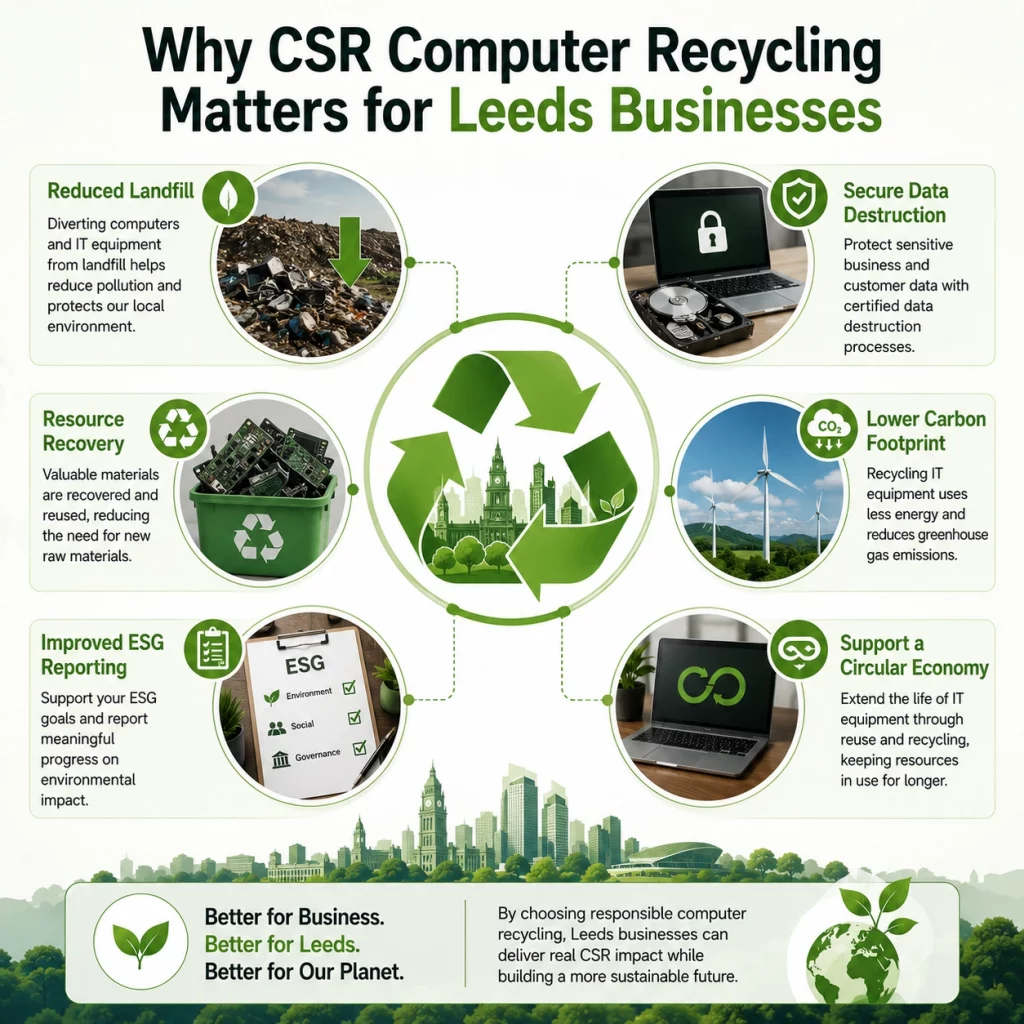
Corporate Social Responsibility (CSR) is the way businesses manage their impact on society and the environment. Responsible computer recycling supports these goals by ensuring unwanted IT equipment is reused, refurbished, or recycled instead of ending up in landfill.
This includes:
Rather than treating old equipment as waste, businesses can recover valuable materials while preventing hazardous substances from entering the environment.
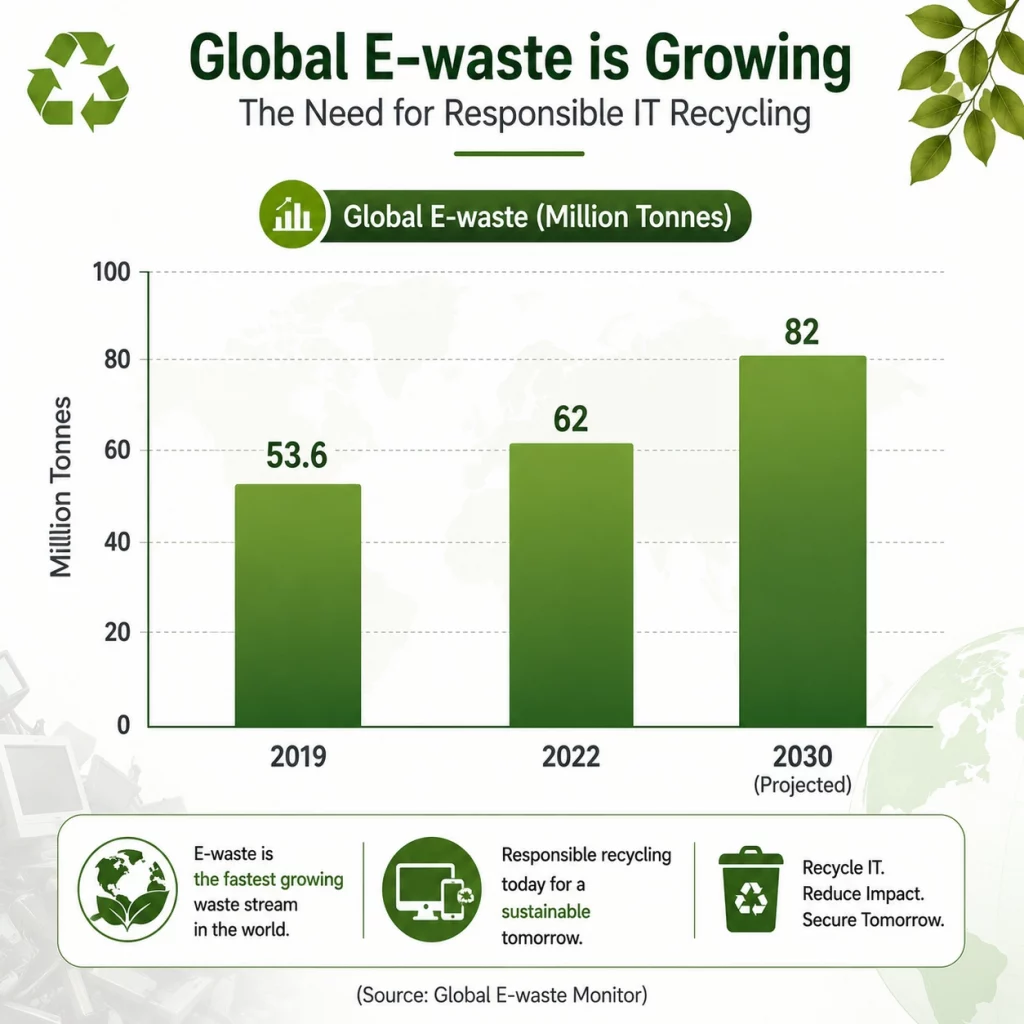
According to the Global E-waste Monitor 2024, the world generated approximately 62 million tonnes of electronic waste, yet only 22.3% was formally collected and recycled. Without stronger recycling efforts, this rate could fall to 20% by 2030 despite growing demand for electronics.
Many Leeds companies already invest in energy-efficient buildings, employee wellbeing, and community projects. Computer recycling fits naturally into these initiatives because it delivers measurable environmental and social benefits.
Modern organisations replace IT equipment every three to five years. Without a responsible recycling process, these devices can contribute to one of the world’s fastest-growing waste streams.
Responsible recycling demonstrates that a company values sustainability throughout the entire lifecycle of its technology.
Electronic devices contain valuable materials including copper, aluminium, steel, gold, silver, and rare earth elements. Recycling allows these materials to be recovered and used again instead of extracting new raw materials.
At the same time, recycling prevents hazardous substances such as lead, mercury, and cadmium from contaminating soil and water.
The Global E-waste Monitor estimates that increasing formal recycling rates to 60% by 2030 would generate environmental and economic benefits exceeding US$38 billion worldwide.
Calculate your organization's carbon offset, raw material recovery, and landfill diversion stats for ESG reporting.
Loading environmental summary...
Need an official ESG Environmental Recycling Report for your company board?
Request Official CSR Audit Report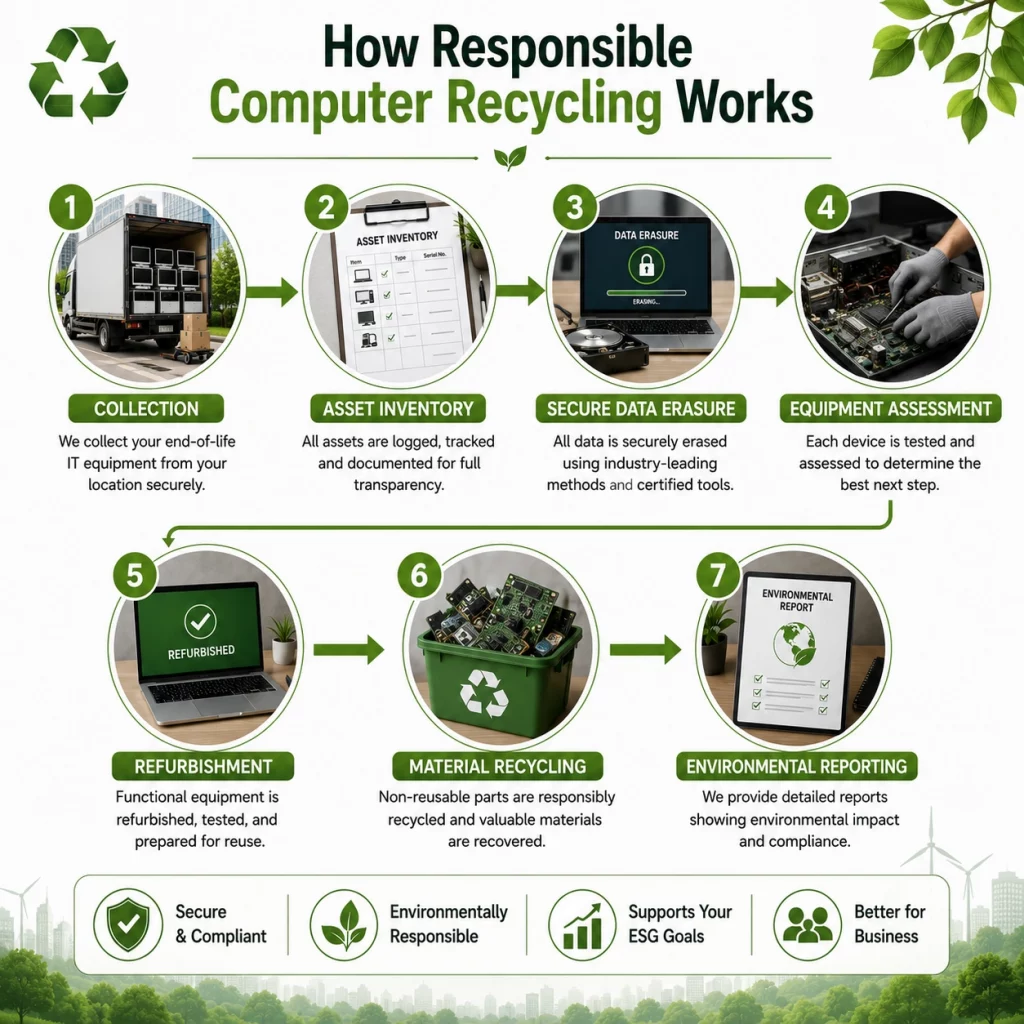
The circular economy focuses on keeping products and materials in use for as long as possible.
Instead of throwing away functioning IT equipment, many devices can be:
Traditional Disposal | Circular Economy Approach |
Landfill | Reuse |
Scrap | Refurbishment |
Mixed Waste | Certified Recycling |
Resource Loss | Material Recovery |
Extending the life of computers reduces demand for new manufacturing while lowering greenhouse gas emissions associated with mining and production.
For companies in Leeds, this aligns with both UK sustainability goals and growing customer expectations.
Many organisations now report their Environmental, Social and Governance (ESG) performance to investors, clients, and stakeholders.
Responsible computer recycling supports all three pillars.
Businesses that can clearly demonstrate sustainable IT disposal often strengthen procurement opportunities, especially when bidding for contracts requiring environmental commitments.
Corporate responsibility also means protecting confidential information.
Old computers often contain:
Simply deleting files is rarely enough.
Secure data destruction ensures information cannot be recovered before equipment is reused or recycled.
For many organisations, this forms an important part of GDPR compliance alongside responsible environmental practices.
Modern consumers increasingly prefer businesses that demonstrate genuine environmental responsibility.
Likewise, employees are more likely to feel engaged when working for organisations committed to sustainable practices.
Computer recycling may seem like a behind-the-scenes activity, but it contributes to a company’s wider reputation.
It shows that sustainability extends beyond marketing messages into everyday business operations.
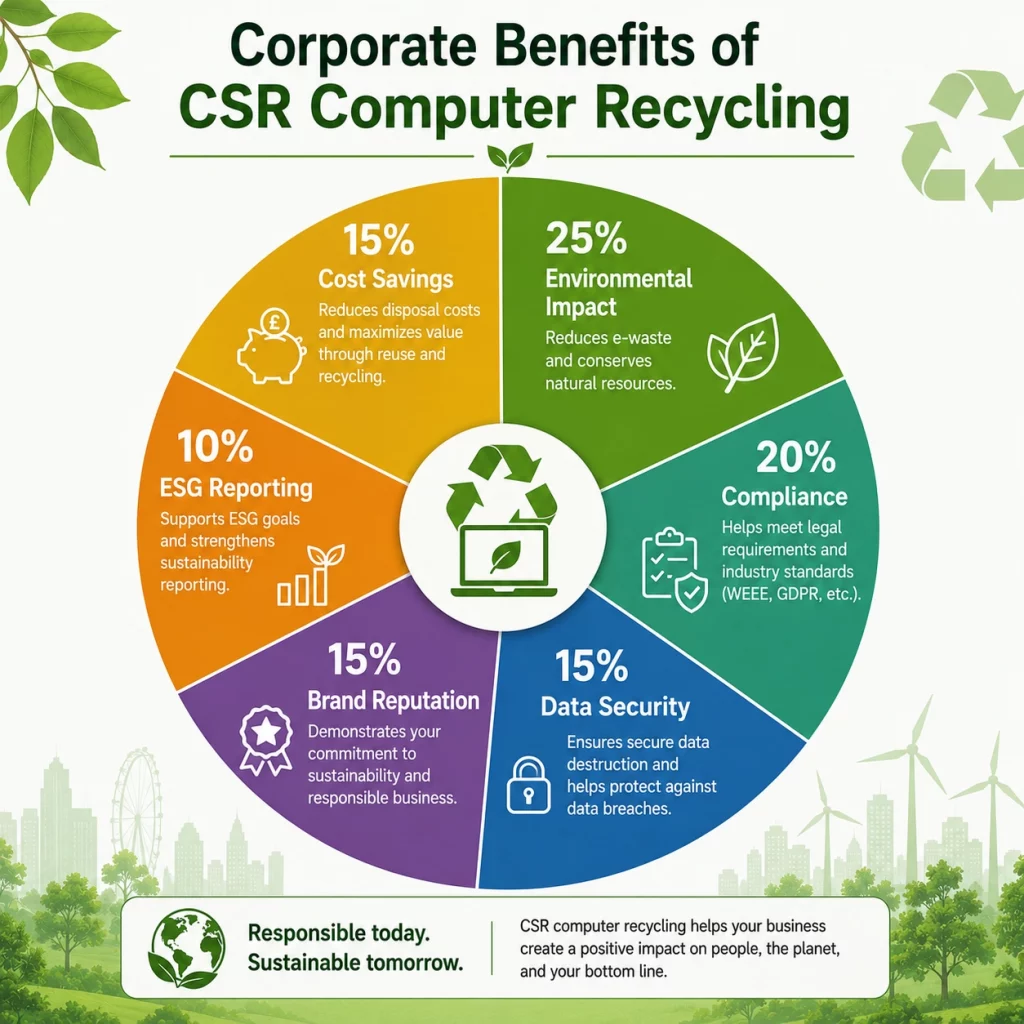
Many companies assume responsible recycling only creates additional costs.
In reality, proper IT asset management may help businesses:
Although CSR should never focus only on financial returns, reducing waste often supports both sustainability and operational efficiency.
Electronic waste continues to grow faster than almost every other waste stream.
Industry research indicates the UK remains among the world’s highest producers of electronic waste per person, making responsible recycling increasingly important for businesses of every size.
At the same time, customers, investors, and supply chain partners increasingly expect organisations to demonstrate measurable environmental action rather than simply making sustainability claims.
For Leeds businesses, adopting computer recycling Leeds initiatives within broader CSR programmes helps create measurable outcomes that can be reported year after year.
Many organisations now include measurable sustainability indicators in their annual reports.
Useful metrics include:
Tracking these figures makes CSR reporting more transparent and demonstrates continuous improvement.
Technology upgrades will continue, but responsible disposal should become part of every upgrade plan.
Based on the E-waste Facts & Statistics by the Business Waste, with electronic waste expected to reach 82 million tonnes globally by 2030, businesses have an opportunity to reduce their environmental impact through better recycling, refurbishment, and resource recovery.
For companies across Leeds, making responsible computer recycling part of everyday business operations supports sustainability goals while contributing to a cleaner, more resource-efficient future.
How does your business currently manage outdated computers and IT equipment, and could your next technology upgrade become an opportunity to strengthen your CSR strategy?
CSR computer recycling in Leeds refers to the responsible collection, secure data destruction, refurbishment, and recycling of old computers and IT equipment as part of a company’s Corporate Social Responsibility (CSR) strategy. It helps businesses reduce electronic waste, support sustainability goals, comply with UK environmental regulations, and contribute to a more sustainable circular economy.
Computer recycling helps Leeds businesses reduce landfill waste, recover valuable materials, protect sensitive business data, and demonstrate environmental responsibility. It also supports Environmental, Social and Governance (ESG) reporting, improves brand reputation, and shows customers and stakeholders that the business is committed to sustainable practices.
Responsible computer recycling supports CSR by reducing environmental pollution, conserving natural resources, promoting the reuse of electronic equipment, and ensuring hazardous materials are disposed of safely. It also helps businesses meet sustainability objectives while demonstrating accountability and ethical environmental management.
Most business IT equipment can be recycled, including desktop computers, laptops, monitors, servers, hard drives, printers, networking equipment, switches, routers, keyboards, mice, cables, UPS systems, and various electronic accessories. Many devices can also be refurbished for reuse before recycling.
Yes. Professional computer recycling services typically include certified data destruction through secure data wiping or physical destruction of storage devices. This ensures confidential business information cannot be recovered and helps organisations comply with GDPR and data protection requirements before equipment is reused or recycled.
Yes. Depending on the age, condition, and specifications of the equipment, many computers and IT assets still have resale or refurbishment value. Businesses may recover part of their investment through IT asset remarketing while reducing electronic waste and supporting sustainable reuse.
Computer recycling keeps electronic waste out of landfill and allows valuable materials such as copper, aluminium, steel, gold, and plastics to be recovered and reused. This reduces the need for raw material extraction, lowers carbon emissions from manufacturing, and helps conserve natural resources.
Yes. UK businesses are required to dispose of Waste Electrical and Electronic Equipment (WEEE) responsibly under the WEEE Regulations. Using an authorised computer recycling provider helps businesses meet legal obligations, minimise environmental impact, and maintain proper documentation for compliance.
Most organisations replace or upgrade their computers every three to five years, although this varies depending on business needs. Businesses should regularly review their IT assets and recycle any obsolete, damaged, or unused equipment through a certified recycling company to maintain security and sustainability.
A certified computer recycling company provides secure data destruction, environmentally responsible recycling, full compliance with WEEE regulations, and complete audit documentation. Choosing a trusted recycling partner helps Leeds businesses strengthen their CSR initiatives, support ESG reporting, protect sensitive information, and ensure IT equipment is handled responsibly.