
When a business replaces dozens or even hundreds of laptops, the question is no longer simply where the equipment goes next. The bigger concern is what happens to the sensitive information stored on those devices. That’s why on-site laptop disposal Leeds has become an increasingly important topic for organisations looking to protect data, meet compliance obligations, and manage end-of-life IT equipment responsibly.
Every retired laptop potentially contains customer information, employee records, financial documents, intellectual property, login credentials, and business communications. According to IBM’s Cost of a Data Breach Report 2024, the global average cost of a data breach reached $4.88 million, the highest level recorded in the report’s history. While many breaches originate through cyberattacks, improperly managed IT disposal can create unnecessary risks that businesses cannot afford to ignore.
For organisations across Leeds, understanding whether on-site laptop disposal is the right option requires balancing security, compliance, convenience, and sustainability.
On-site laptop disposal refers to the process of handling laptop decommissioning and data destruction directly at a business location rather than transporting devices to an external processing facility first.
In most cases, organisations arrange for laptops to be collected and processed at their premises, allowing authorised personnel to witness critical stages of the disposal process.
This approach provides greater visibility and control over how sensitive devices are managed before they leave the site.
Laptops have become the primary computing device for many organisations.
Hybrid working, remote teams, and mobile workforces mean more sensitive data is stored across larger numbers of devices than ever before.
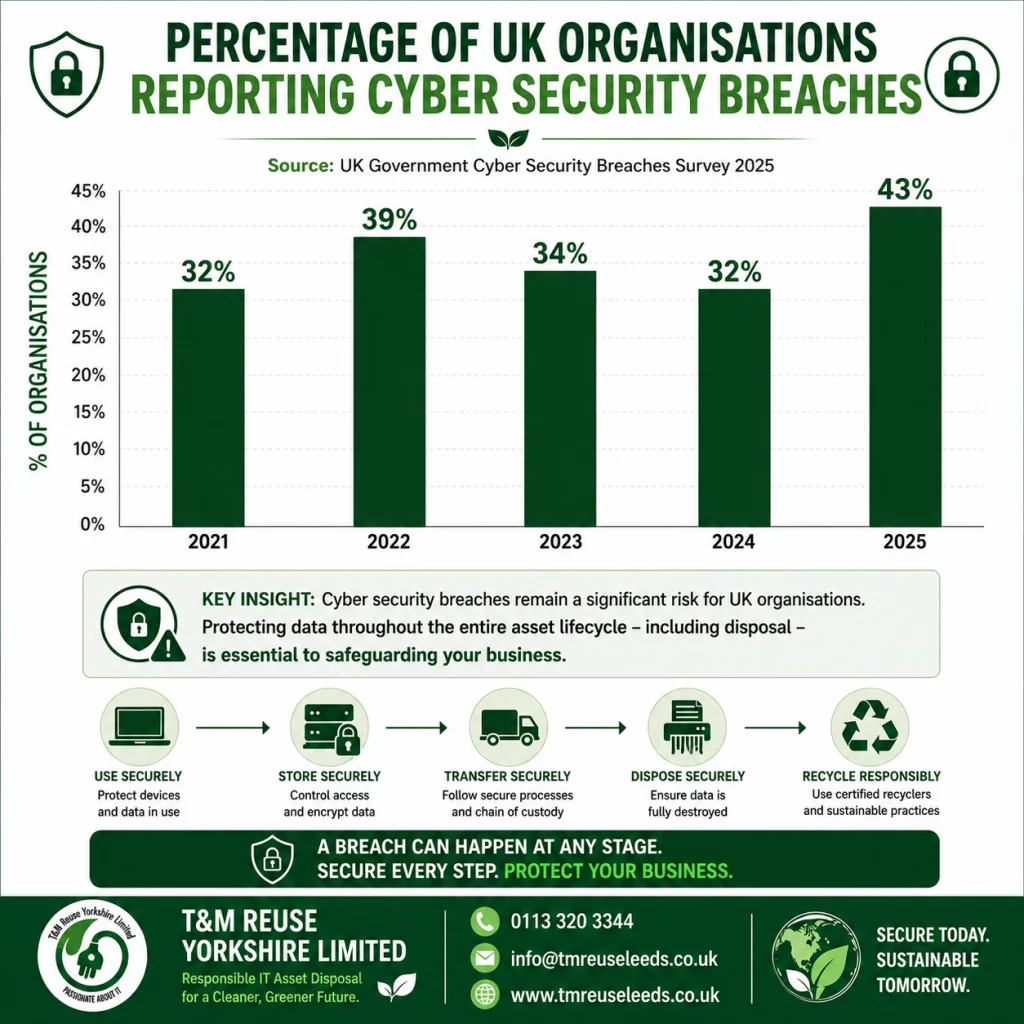
According to the UK Government’s Cyber Security Breaches Survey 2025, 43% of UK businesses experienced a cyber security breach or attack during the previous 12 months. While organisations often focus on online threats, physical devices remain an important part of overall cybersecurity strategies.
Proper laptop disposal Leeds processes help reduce the risk of confidential information being exposed through retired hardware.
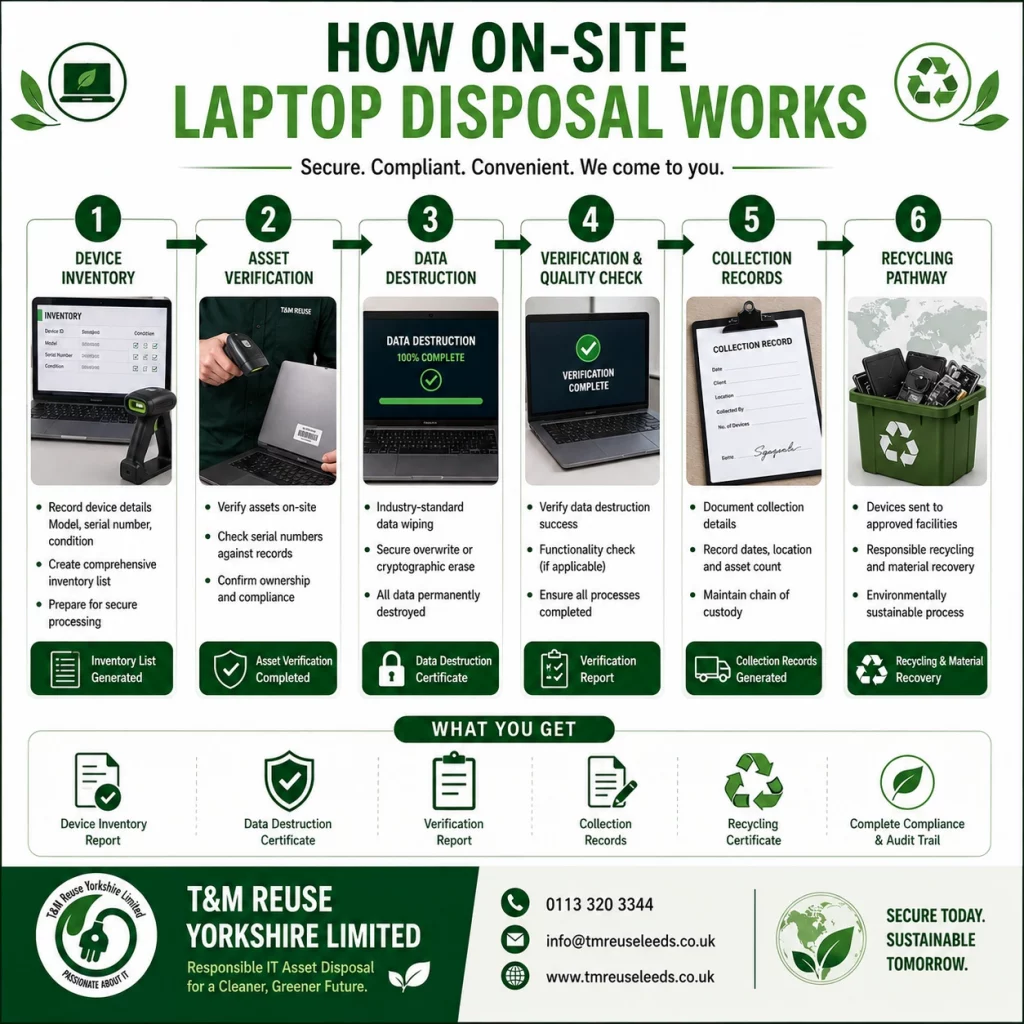
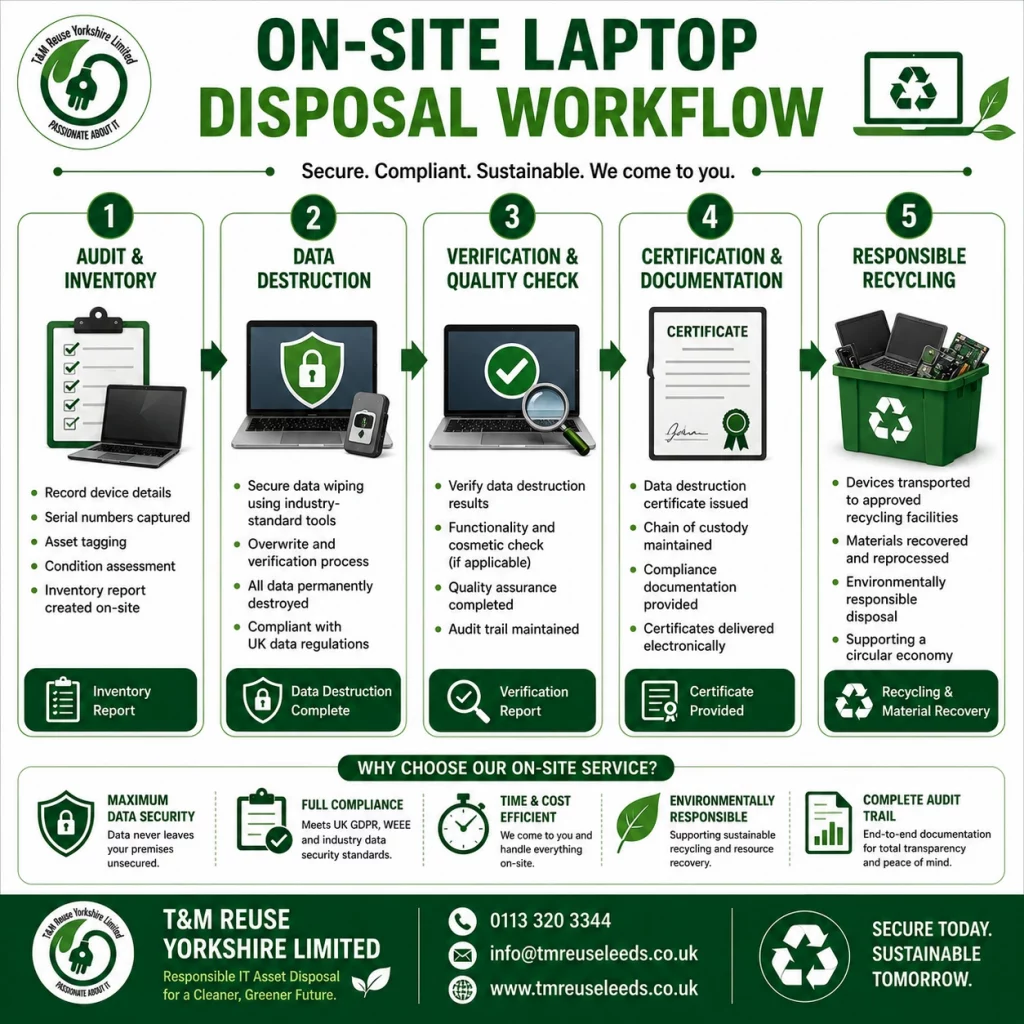
The process usually begins with a detailed inventory of equipment.
Each laptop is recorded using serial numbers, asset tags, or unique identifiers. This creates accountability and ensures that every device scheduled for disposal can be tracked.
Asset auditing is particularly important for organisations managing large technology refresh projects.
Before a laptop is recycled, refurbished, or dismantled, data must be permanently removed.
Approved methods may include certified software erasure, hard drive shredding, SSD destruction, or other recognised sanitisation techniques.
The National Cyber Security Centre (NCSC) recommends using appropriate media sanitisation methods to prevent data recovery from retired devices.
Following destruction, organisations typically receive documentation confirming that the process has been completed.
These records can support compliance requirements and provide evidence that sensitive information has been managed responsibly.
One of the biggest advantages of on-site laptop disposal Leeds services is reducing the time devices spend in transit before sensitive data is destroyed.
For organisations handling confidential information, this additional control can provide reassurance that devices remain secure throughout the process.
Businesses can often witness disposal activities directly.
This visibility helps strengthen trust in the process while demonstrating accountability to internal stakeholders, auditors, and customers.
When large numbers of laptops require disposal, on-site processing can simplify logistics and reduce delays associated with transportation and off-site handling.
For businesses undergoing office relocations, upgrades, or infrastructure changes, this can improve operational efficiency.
Not always.
The suitability of on-site disposal depends on factors such as the volume of devices involved, the sensitivity of stored information, industry regulations, and organisational risk tolerance.
For example, businesses operating in healthcare, finance, legal services, education, and government sectors often handle highly sensitive information that may justify enhanced disposal controls.
Smaller organisations with fewer devices may find alternative disposal methods sufficient if appropriate security measures are maintained.
The disposal of laptops involves more than environmental responsibility.
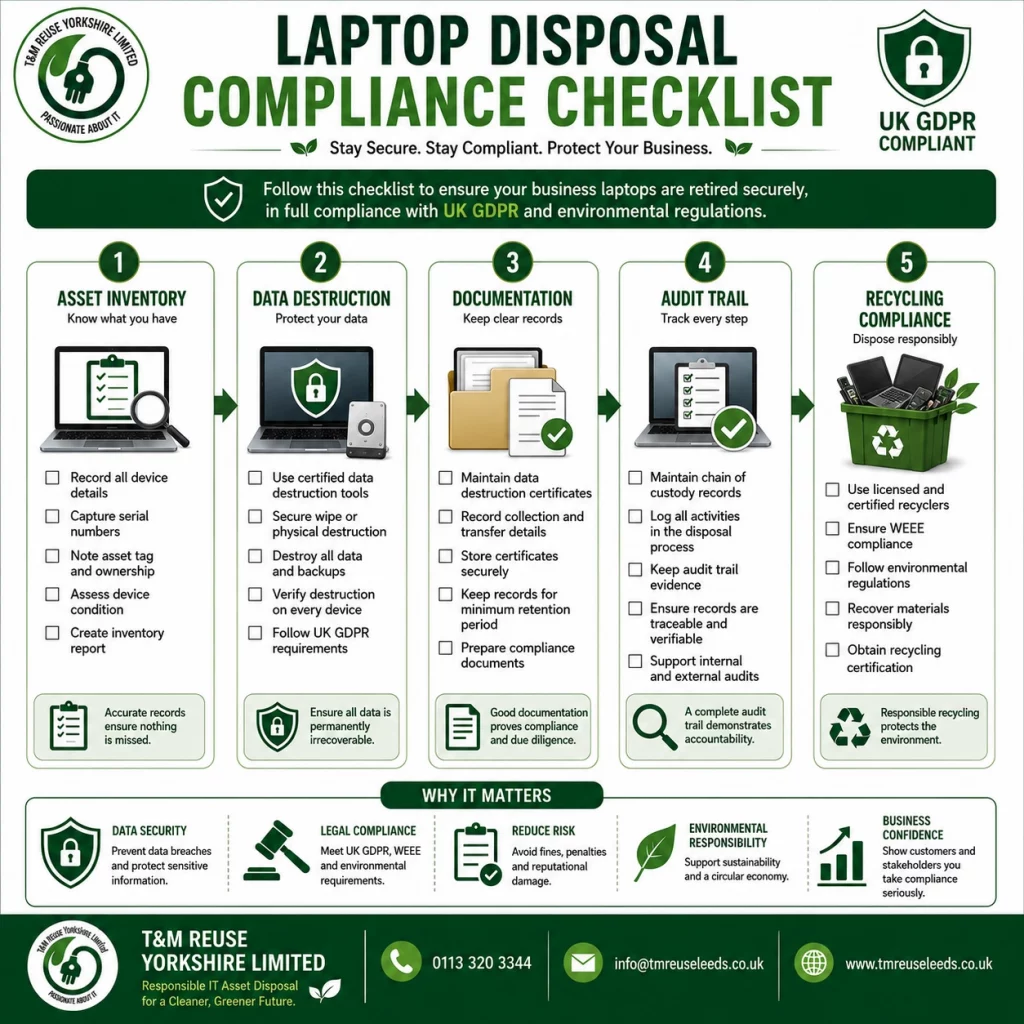
The UK GDPR requires organisations to implement appropriate technical and organisational measures to protect personal data throughout its lifecycle, including disposal.
The Information Commissioner’s Office (ICO) has repeatedly emphasised that organisations remain responsible for data even when equipment reaches end-of-life.
Documented disposal procedures, data destruction certificates, and asset tracking records can help demonstrate compliance and accountability.
Beyond security and compliance, laptop disposal has an important environmental dimension.
The Global E-waste Monitor 2024 reported that the world generated 62 million tonnes of electronic waste in 2022, with only 22.3% formally recycled.
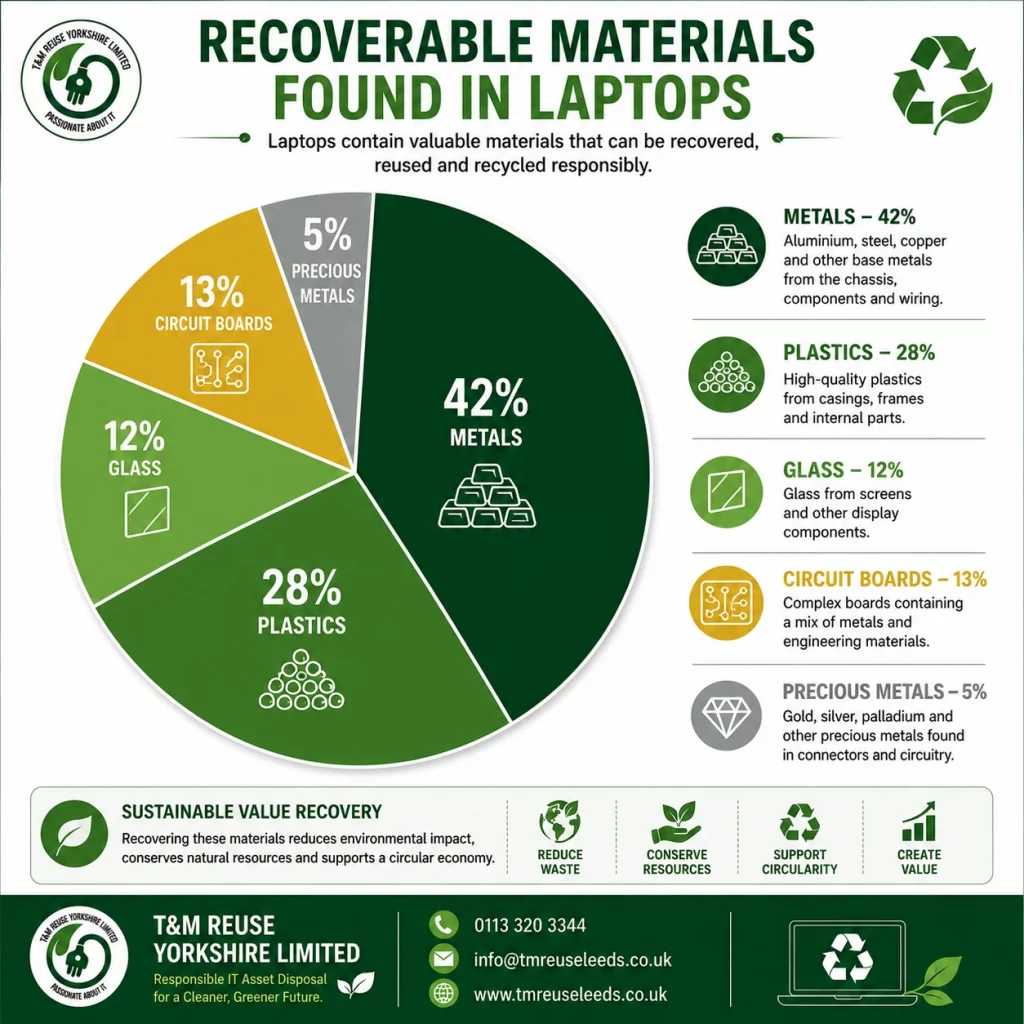
Laptops contain valuable materials including copper, aluminium, plastics, gold, silver, and rare earth elements. Recovering these resources helps reduce pressure on raw material extraction while supporting a circular economy.
Responsible laptop disposal Leeds programmes ensure that equipment is processed in a way that maximises resource recovery and minimises environmental impact.
One common mistake is assuming that deleting files permanently removes information.
Another is storing retired laptops indefinitely in offices, cupboards, or storage rooms. Forgotten devices can become security risks while delaying opportunities for responsible recycling.
Incomplete asset inventories can also lead to devices being misplaced or overlooked during disposal projects.
Organisations should maintain accurate records and ensure every retired laptop follows a documented disposal pathway.

Before selecting a disposal approach, businesses should evaluate several key considerations.
Can the process provide documented proof of data destruction? Is there a complete audit trail? How are devices tracked? What happens to equipment after processing? Are environmental regulations followed?
The answers to these questions can help determine whether on-site laptop disposal Leeds is the most appropriate option for the organisation’s needs.
Technology refresh cycles continue to shorten as organisations adopt newer devices and software platforms.
Rather than treating laptop disposal as a one-off activity, businesses can benefit from integrating end-of-life asset management into broader cybersecurity, compliance, and sustainability strategies.
A documented process helps ensure consistency, reduces risk, and simplifies future technology upgrades.
If your organisation needed to retire 50, 100, or even 500 laptops tomorrow, would you be confident that every device could be securely tracked, verified, and disposed of without exposing sensitive information?
On-site laptop disposal is a secure process where laptops are collected, audited, and have their data destroyed at your business premises before being transported for recycling or refurbishment. This provides greater control and visibility over the disposal process.
Businesses often choose on-site laptop disposal to reduce data security risks, maintain chain-of-custody records, meet compliance requirements, and gain peace of mind by witnessing the disposal process firsthand.
For organisations handling sensitive information, on-site disposal can provide an additional layer of security because data destruction takes place before devices leave the premises, reducing the risk of data exposure during transport.
Businesses in sectors such as healthcare, finance, legal services, education, government, and professional services often benefit most because they manage large volumes of confidential data and have strict compliance obligations.
After data destruction, laptops may be refurbished for reuse, dismantled for parts recovery, or recycled responsibly to recover valuable materials such as metals and plastics.
Yes. Simply deleting files or performing a factory reset does not permanently remove data. Certified data destruction methods are required to ensure information cannot be recovered.
On-site laptop disposal supports UK GDPR compliance by ensuring personal and sensitive information is securely destroyed before devices leave the organisation, helping reduce the risk of data breaches.
Businesses should receive asset inventories, collection records, data destruction certificates, recycling reports, and audit trail documentation confirming secure and compliant disposal.
Laptop disposal policies should be reviewed at least annually and whenever major technology upgrades, office relocations, mergers, or regulatory changes occur.
Recycled laptops can yield valuable materials including copper, aluminium, steel, plastics, gold, silver, and other components that can be reused in manufacturing processes.
Unused laptops may still contain sensitive data. Storing them indefinitely can increase security risks, create compliance concerns, and delay responsible recycling or refurbishment opportunities.
If your organisation handles confidential information, requires strong audit trails, needs enhanced security controls, or wants greater visibility during the disposal process, on-site laptop disposal may be the most suitable solution.