
Modern offices depend heavily on printers and photocopiers, yet many businesses overlook what happens when these machines reach the end of their useful life. Whether it is a single office printer or a fleet of multifunction photocopiers, proper printer disposal Leeds WEEE practices are becoming increasingly important for legal compliance, environmental protection, and data security. Across Leeds, businesses are generating growing volumes of electrical waste, making responsible disposal a critical part of sustainable operations.
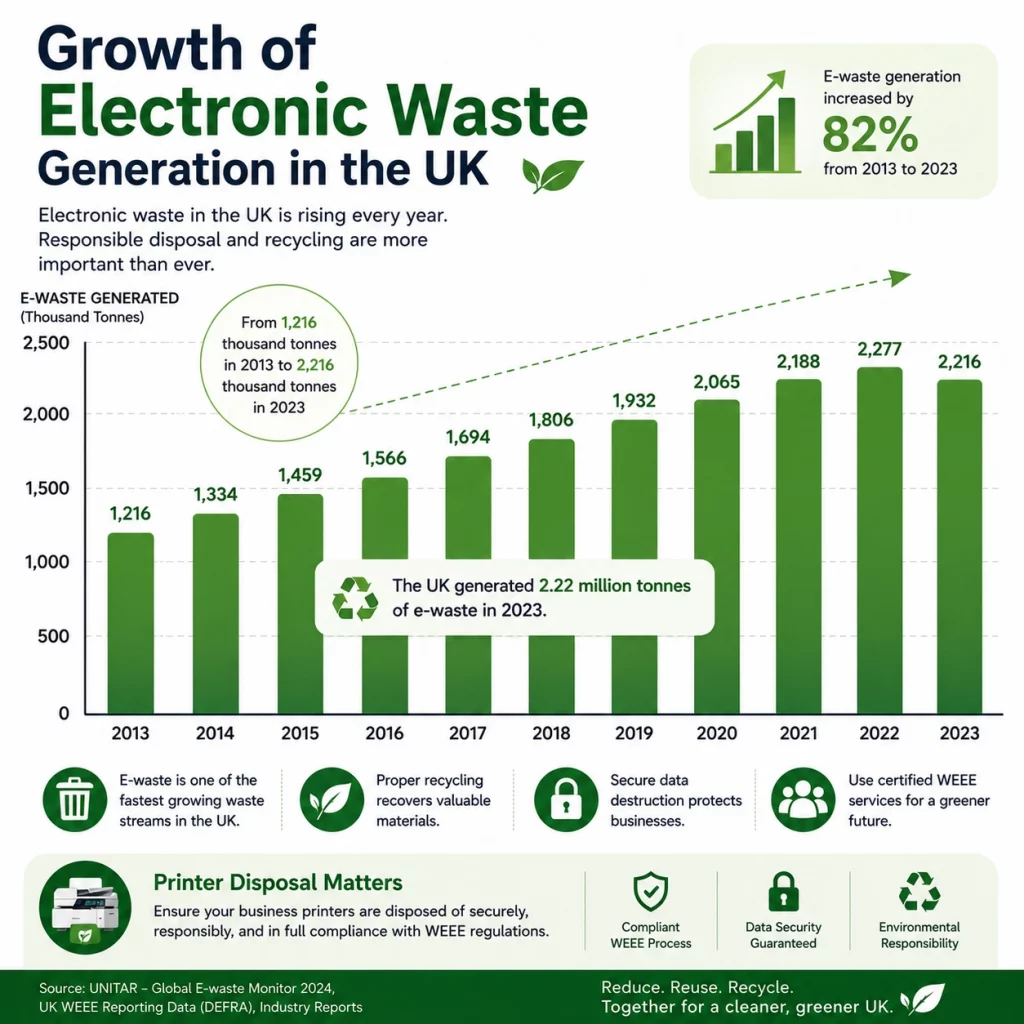
According to UK and international e-waste research, electrical waste remains one of the fastest-growing waste streams worldwide. The UK generates millions of tonnes of electronic waste annually, while recycling rates still lag behind the amount of equipment discarded each year. Proper WEEE management helps recover valuable materials, reduce landfill waste, and prevent harmful substances from entering the environment.
WEEE stands for Waste Electrical and Electronic Equipment. Printers, photocopiers, scanners, multifunction devices, fax machines, and related office technology all fall within this category when they are no longer usable.
The UK’s WEEE Regulations were introduced to ensure electrical equipment is collected, treated, reused, refurbished, and recycled responsibly. Businesses that dispose of electrical equipment must ensure it is handled through authorised channels and processed correctly.
For Leeds organisations, this means old office printers cannot simply be placed in general waste skips. They must enter the correct recycling and recovery process to meet regulatory requirements and support the circular economy.
Businesses upgrade office technology more frequently than ever before. Networked printers, managed print devices, and multifunction photocopiers often become obsolete within a few years.
Research shows the UK generates approximately 6 million tonnes of e-waste annually, making it one of the largest producers of electronic waste per capita globally. Furthermore, only a fraction of electronic waste is fully recycled and recovered.
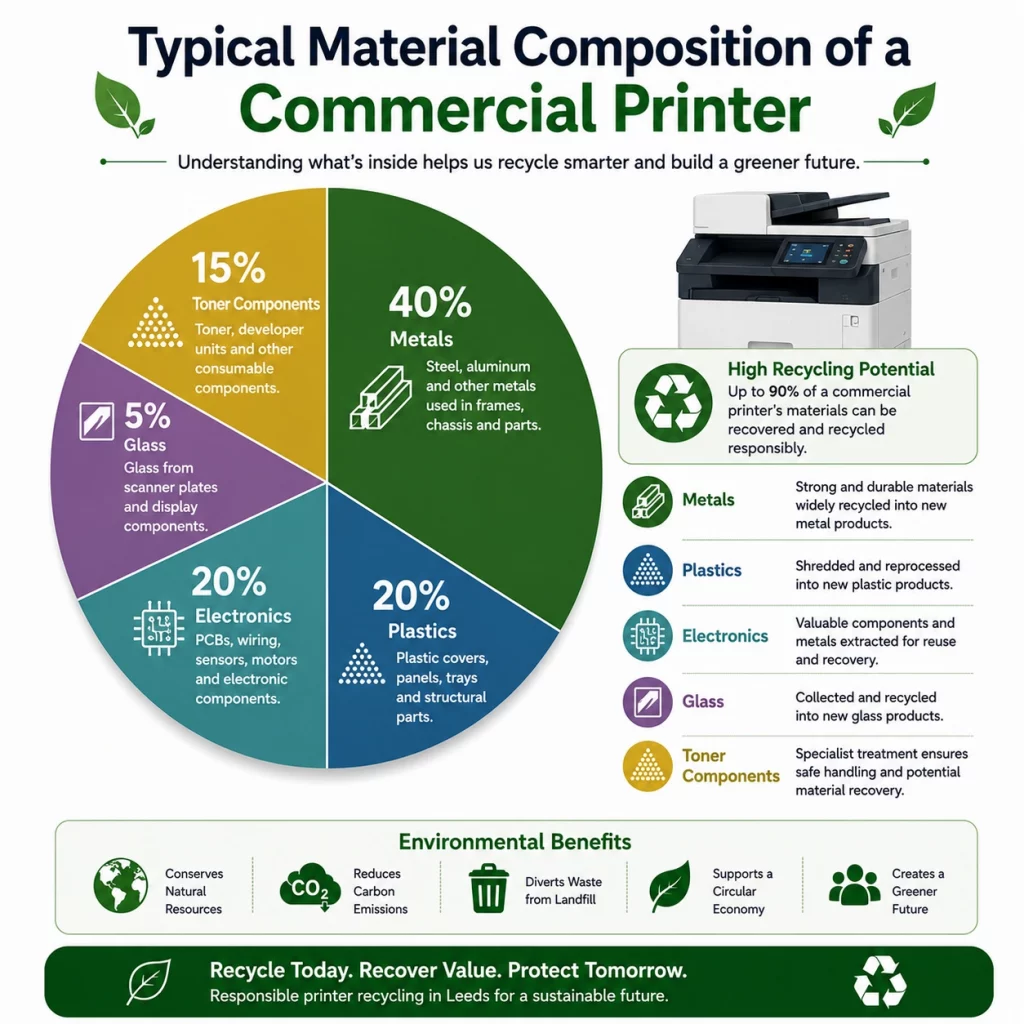
For Leeds businesses, discarded printers and photocopiers contribute significantly to WEEE electronic waste Leeds volumes because these devices contain:
Without proper recycling, many of these valuable materials are lost.
The exact list may vary depending on the condition and quantity of equipment being collected.
Many items still contain reusable components that can be refurbished, extending their lifespan and supporting circular economy initiatives.
Many office managers assume a printer is simply another piece of office furniture. In reality, modern devices often contain sensitive business information.
Photocopiers and multifunction printers frequently store:
This creates a significant security risk if equipment is disposed of incorrectly.
Government guidance on WEEE treatment and reuse emphasises the importance of appropriate handling, recovery, and treatment processes for electrical equipment. Authorised treatment facilities are required to follow strict standards for processing WEEE materials.
Many organisations unintentionally breach best practices during office clearances and technology upgrades.
Printers contain recyclable materials and electronic components that require specialist treatment. Disposing of them through standard waste channels may result in environmental harm and regulatory issues.
Businesses often forget that photocopiers and multifunction devices may contain hard drives or internal memory systems.
Waste transfer notes and collection records help demonstrate compliance with duty-of-care obligations. Businesses should maintain documentation whenever electrical equipment leaves their premises.
Only authorised waste carriers and approved treatment routes should be used for WEEE disposal.
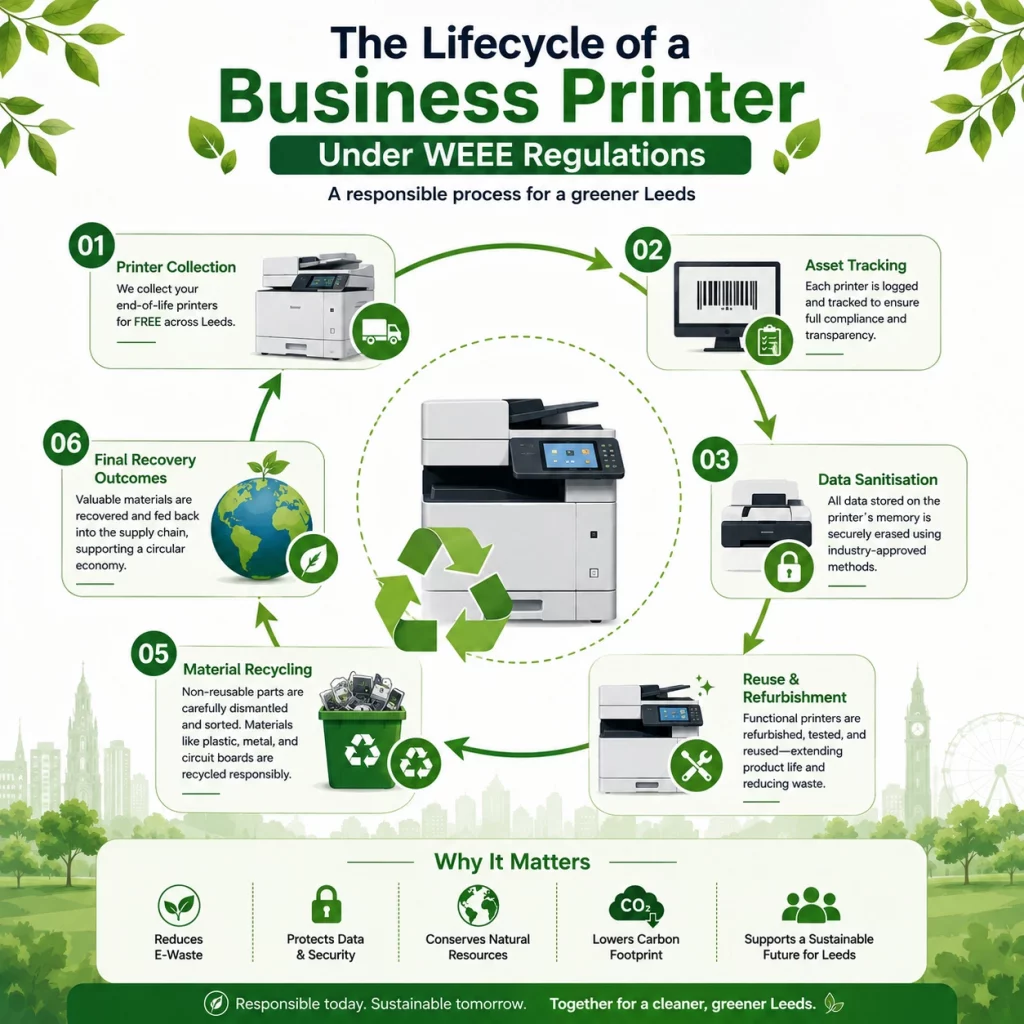
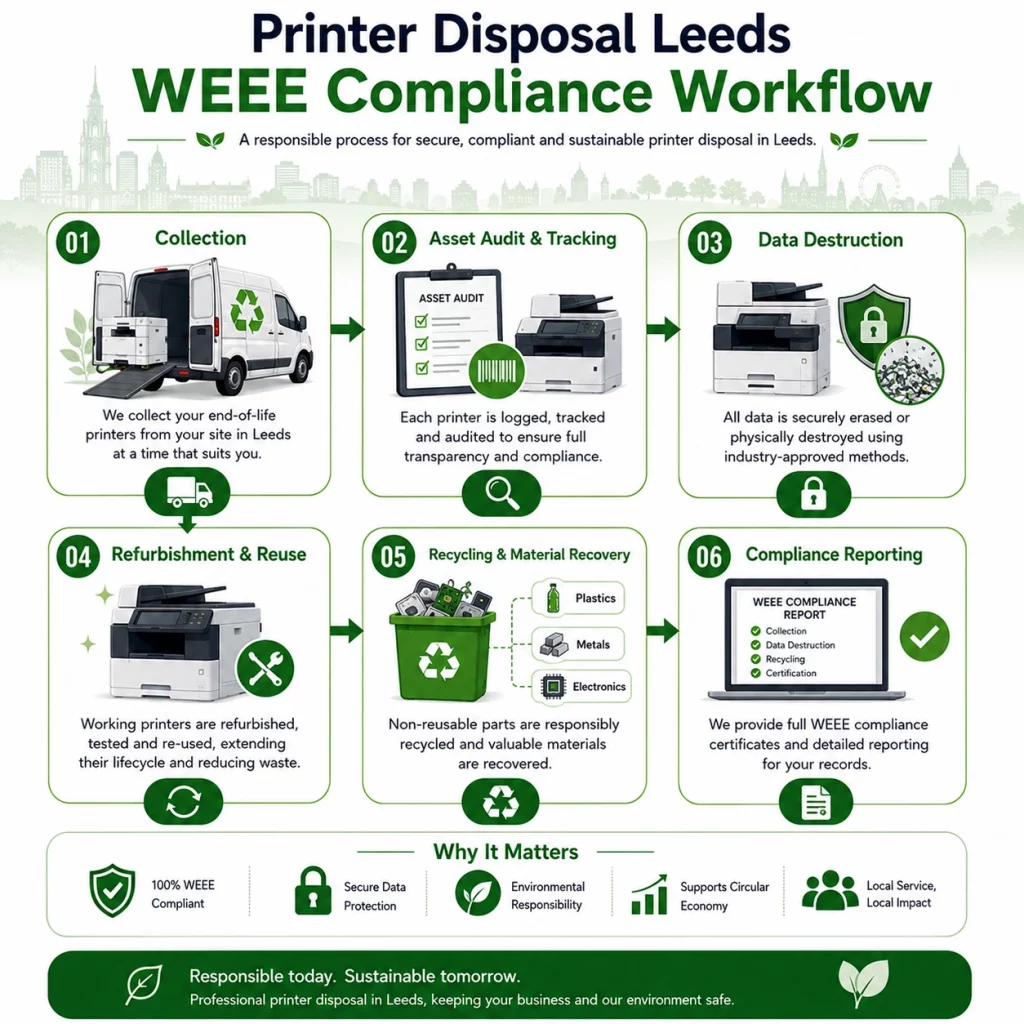
A compliant disposal process typically follows several stages designed to maximise reuse and recycling opportunities.
Equipment is identified, catalogued, and prepared for removal. This helps businesses maintain accurate asset records.
Any storage media is securely sanitised or destroyed to protect confidential information.
Where possible, equipment is tested for refurbishment and reuse. Government guidance prioritises reuse before recycling because extending product life delivers greater environmental benefits.
Devices that cannot be reused are dismantled, and materials are separated for recycling.
Relevant documentation provides evidence that equipment has been managed responsibly.
Responsible printer recycling delivers measurable environmental advantages.
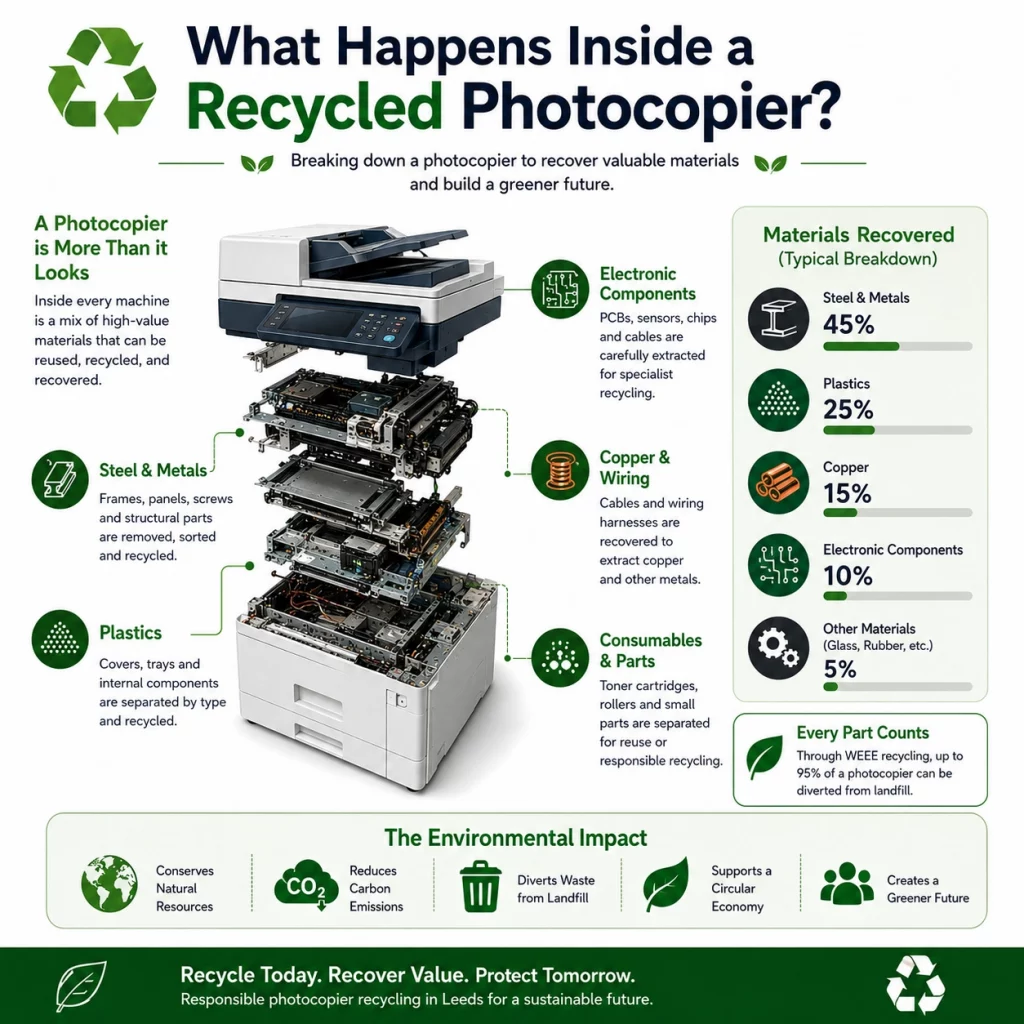
Many office devices contain recoverable metals and plastics that can be reintroduced into manufacturing supply chains. Recovering these materials reduces demand for virgin resource extraction and lowers energy consumption.
Industry research highlights that electronic waste recycling contributes significantly to reducing carbon emissions and conserving valuable materials. Recycling electronic equipment helps prevent millions of tonnes of greenhouse gas emissions globally each year.
For Leeds businesses pursuing sustainability targets, proper WEEE disposal supports broader environmental, social, and governance (ESG) objectives.
Not every printer reaching disposal age is truly at the end of its life.
Many devices can be:
The UK regulatory framework encourages reuse wherever practical before recycling takes place. Extending equipment lifespan reduces waste generation and maximises the value extracted from manufactured products.
For organisations replacing large printer fleets, refurbishment opportunities can significantly reduce overall environmental impact.
Evaluate the precise carbon metrics, mechanical polymer recovery, and circular economy lifecycles for your corporate printing equipment.
Businesses generating WEEE electronic waste Leeds must meet duty-of-care obligations throughout the disposal process.
Regulatory guidance requires organisations to ensure electrical waste is stored safely, transferred using authorised carriers, and accompanied by appropriate documentation. Businesses must also ensure equipment reaches approved treatment facilities for processing.
Failure to follow correct procedures may expose organisations to environmental, reputational, and compliance risks.
Keeping clear records of collections, asset audits, and disposal certificates helps demonstrate responsible waste management practices.
Sustainability expectations continue to increase across both public and private sectors.
Clients, investors, employees, and regulators increasingly expect organisations to manage waste responsibly. Proper printer disposal Leeds WEEE practices help businesses:
As electronic equipment turnover accelerates, responsible disposal is becoming an essential part of modern business operations rather than an optional environmental initiative.
Instead of waiting until outdated printers and photocopiers become a storage problem, how is your organisation planning to manage its next technology refresh while staying compliant with WEEE regulations and sustainability goals?
Printer disposal Leeds WEEE refers to the safe and compliant collection, recycling, reuse, and disposal of unwanted printers, photocopiers, scanners, and other electronic office equipment under the UK’s Waste Electrical and Electronic Equipment (WEEE) Regulations. This ensures equipment is handled responsibly, reducing environmental impact and supporting legal compliance.
Yes. Most printers and photocopiers contain recyclable materials such as steel, aluminium, copper, plastics, and electronic components. Through specialist WEEE recycling services, these materials can be recovered and reused, helping reduce landfill waste and conserve natural resources.
Printers and photocopiers are classified as electronic waste and may contain hazardous materials, valuable recyclable components, and stored data. UK regulations require businesses to dispose of WEEE through authorised recycling and disposal channels rather than general waste streams.
Many modern photocopiers and multifunction printers contain internal hard drives or memory storage that can retain copies of scanned, printed, emailed, and faxed documents. Secure data destruction is essential before recycling or disposal to protect confidential business information.
After collection, printers are typically audited, data-bearing components are securely erased or destroyed, reusable equipment is refurbished where possible, and remaining materials are separated and recycled through authorised treatment facilities.
Yes. Businesses have a legal duty of care to ensure waste electrical and electronic equipment is stored, transported, and disposed of responsibly. Using authorised WEEE recycling services helps businesses comply with UK environmental regulations.
Absolutely. Even if a printer is damaged or no longer operational, valuable materials can still be recovered and recycled. Components such as metals, plastics, circuit boards, and wiring can often be processed through specialist recycling facilities.
Businesses should receive appropriate waste transfer documentation and, where applicable, recycling or data destruction certificates. These documents help demonstrate compliance with environmental regulations and internal audit requirements.
WEEE recycling reduces landfill waste, conserves raw materials, lowers carbon emissions associated with manufacturing new products, and supports the circular economy by recovering valuable resources from end-of-life electronic equipment.
Yes. Businesses, schools, universities, healthcare facilities, and offices can arrange collections for single items or large quantities of printers, photocopiers, and other IT equipment. Bulk collections help organisations clear redundant assets efficiently while ensuring compliant disposal.