
If your organisation handles computers, servers, monitors or telecoms equipment, then you’re already managing one of the UK’s fastest-growing waste streams — electrical and electronic waste (WEEE). As businesses digitise further and upgrade equipment more frequently, mountains of outdated tech pile up in offices, storerooms and data cabinets. That’s exactly where outsourcing to free WEEE recycling specialists becomes an invaluable strategy.
Instead of dealing with the legal, environmental and data-security burden in-house, companies across Leeds and the wider Yorkshire region are leaning on professional recycling partners to manage compliance, asset tracking and responsible disposal. And with many certified recyclers offering free collection and treatment, outsourcing often costs far less — and delivers far more value — than internal handling.
The UK’s E-Waste Crisis Is Growing Faster Than Ever:
According to the Global E-Waste Monitor 2024, the world generated 62 million tonnes of e-waste in 2022, and only 22.3% was properly documented as recycled. The UK is currently one of the highest producers of e-waste per person, generating an estimated 6 million tonnes per year, yet less than a third is processed via compliant routes.
E-waste contains both hazardous substances and valuable materials. A broken laptop, for example, may contain:
Without proper treatment, the hazardous elements can harm the environment — but when handled professionally, many materials can be recovered and reused.
This makes e-waste one of the most important waste categories for modern organisations to manage responsibly.
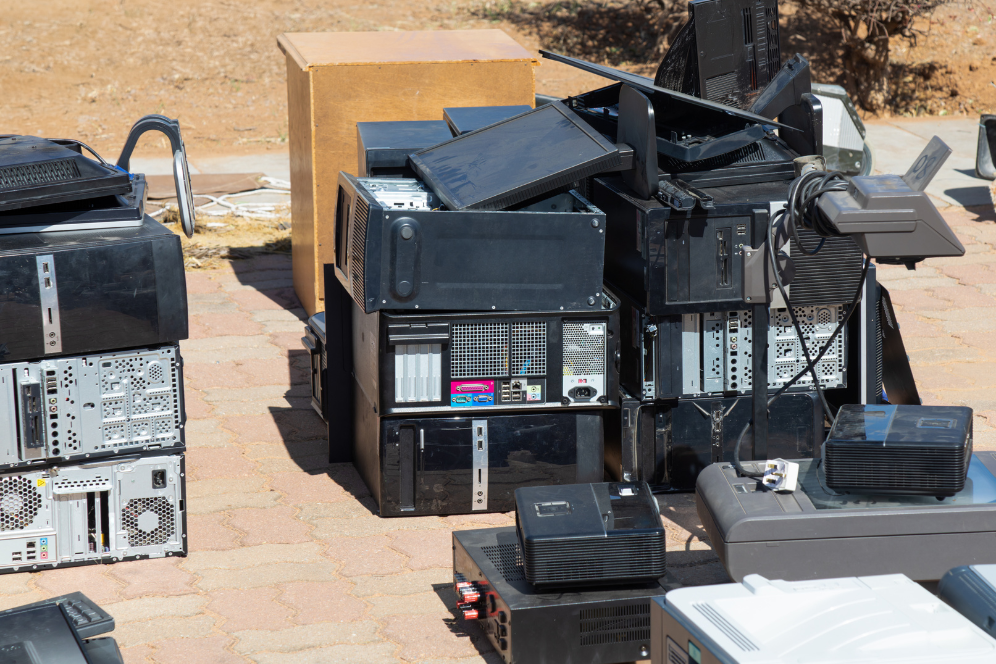
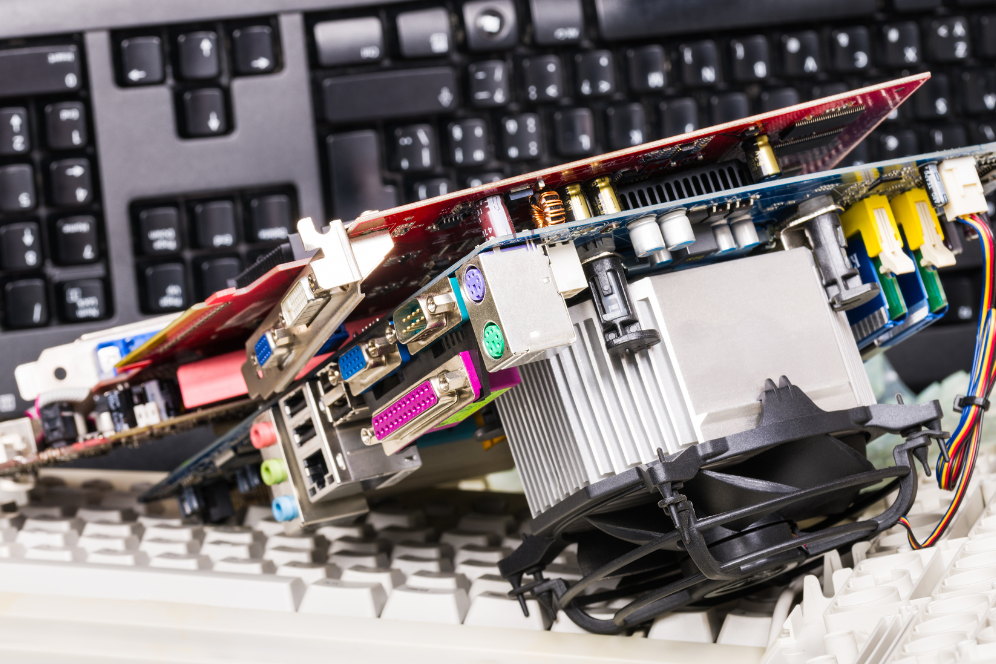
Even well-intentioned businesses often underestimate the complexity of electronic waste disposal.
The risks include:
Given this, it’s easy to see why organisations outsource WEEE management instead of struggling with it internally.
One of the biggest advantages is the availability of free WEEE recycling. Because specialists recover valuable metals and components from electronic waste, many offer:
This eliminates traditional waste-management costs and helps organisations meet sustainability targets without increasing budgets.
For companies in Leeds upgrading devices regularly, this can save thousands per year.
The UK’s WEEE Regulations require businesses to dispose of electronics through licensed treatment facilities and authorised carriers. Outsourced specialists:
This ensures your organisation avoids fines, breaches and environmental liability.
Industry guidance regularly warns that improper WEEE disposal is one of the most common compliance failures for UK businesses — outsourcing removes this risk altogether.
Old hardware often contains sensitive data, even if wiped manually. Studies from leading security organisations have shown that data can be recovered even after factory resets.
Professional WEEE recyclers use:
This protects your business from data breaches — one of the most expensive risks a company can face.
Not every device heading for disposal is worthless.
Many organisations replace equipment while it still has significant reuse potential. Through sell IT hardware programmes offered by specialists, businesses can:
Independent studies show that refurbished equipment can function for 5–7 additional years, making resale both profitable and environmentally responsible.
This transforms WEEE disposal from a cost centre into a value-generating process.
Environmental transparency is now a core part of CSR and ESG reporting. Outsourcing allows businesses to access:
Because these records come from accredited processors, they hold weight in audits, tenders and CSR statements.
As sustainable procurement becomes standard in both public and private sectors, documented WEEE recycling strengthens your organisation’s credibility.
Handling e-waste internally means allocating staff time for:
This is inefficient and pulls staff away from core responsibilities.
Outsourcing gives businesses:
Your team can stay focused on what they do best.
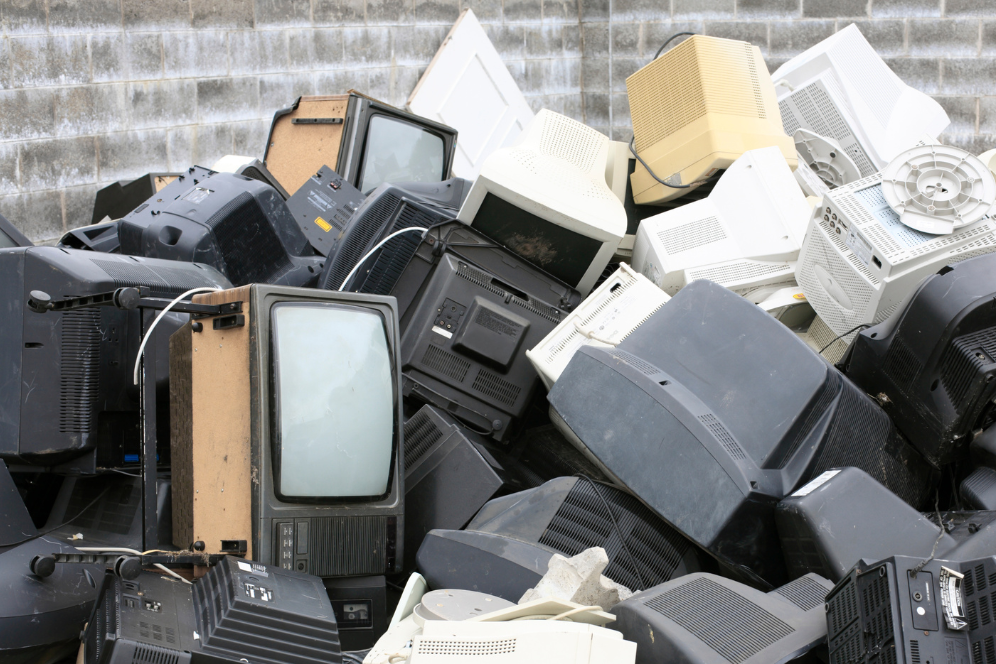
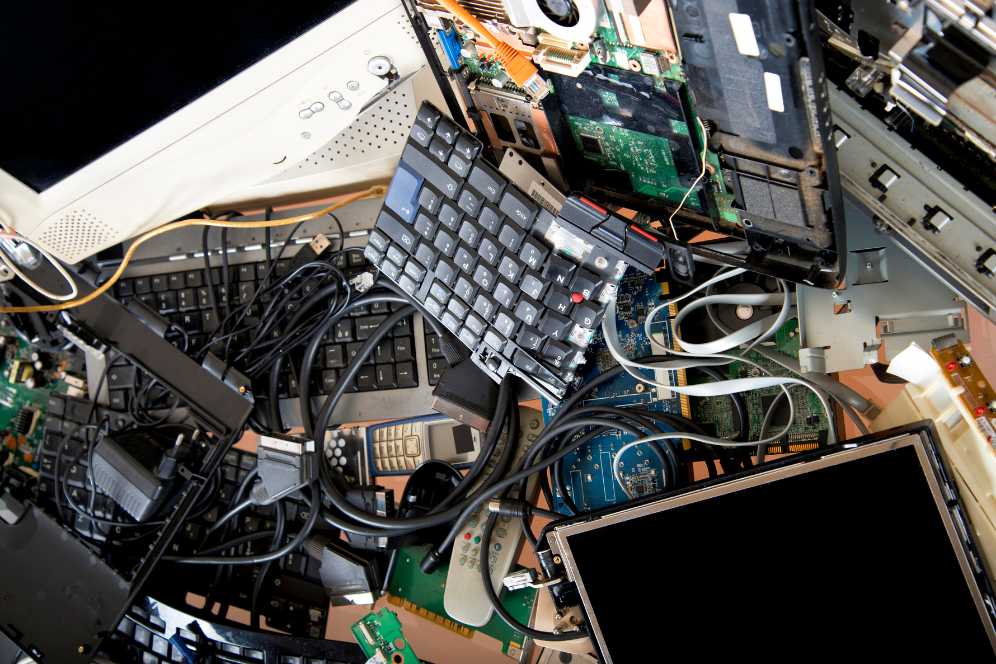
Companies are cycling through equipment at faster rates than ever.
Both UK and international environmental rules are becoming more stringent.
The sooner you evaluate and sell reusable hardware, the more you recover.
Proactive companies benefit most from early adoption.
WEEE-licensed treatment capabilities
When selecting a free WEEE recycling partner, look for:
Choosing the right partner directly affects the safety, value and environmental outcomes of your disposal strategy.
Outsourcing to free WEEE recycling specialists isn’t just a convenience — it’s a strategic move that improves compliance, protects data, cuts costs and supports long-term sustainability goals. When combined with sell IT hardware options, the process can even generate revenue and reduce procurement budgets.
For businesses in Leeds and across Yorkshire, partnering with a professional WEEE recycling provider ensures your organisation stays compliant, environmentally responsible and ahead of the curve in a rapidly growing e-waste landscape.
Free WEEE recycling refers to the collection, treatment and responsible disposal of electronic waste at no direct cost to your organisation. Many specialists offer this service because they recover valuable materials from old IT equipment, making it cost-efficient for them and convenient for you.
Most electrical and electronic items can be recycled, including laptops, computers, monitors, servers, telecoms equipment, printers, networking devices and cables. Some specialists also handle batteries and UPS units under compliant WEEE processes.
Specialists follow UK WEEE Regulations, meaning your waste is handled by licensed carriers and authorised treatment facilities. You also receive Waste Transfer Notes and recycling certificates that prove full legal compliance during audits.
Yes. Certified recyclers provide secure data destruction, including multi-pass wiping or physical hard-drive shredding. This ensures sensitive business information cannot be recovered after disposal.
Absolutely. If your old IT equipment is still functional, specialists can test, refurbish and resell it on your behalf. The sell IT hardware process helps businesses recover value from equipment that still holds resale potential.
Outsourcing reduces landfill waste, prevents hazardous materials (like lead, cadmium and mercury) from harming the environment and increases the recovery of valuable metals. It also supports circular-economy goals and reduces your organisation’s carbon footprint.
Yes. Free WEEE recycling eliminates disposal fees, reduces storage costs and lowers staff time spent on manual sorting and logistics. When combined with resale opportunities, outsourcing often generates net savings.
You should receive:
These form part of your compliance and sustainability records.
Many companies schedule quarterly or biannual collections, while larger organisations may opt for monthly pickups. Routine collections prevent storage build-up and ensure efficient asset-lifecycle management.
Choose a provider that offers secure data destruction, compliant WEEE processing, clear documentation, transparent processes and the ability to help you sell IT hardware when appropriate. Local service is also beneficial for reducing environmental impact.