
Technology refreshes are now a routine part of running a modern business. Whether an organisation is upgrading employee devices, moving to hybrid working models, or replacing aging hardware, hundreds of laptops can quickly reach end-of-life at the same time. This growing challenge has made bulk laptop recycling Leeds an increasingly important topic for businesses seeking secure, compliant, and environmentally responsible disposal solutions.
The scale of electronic waste is staggering. According to the United Nations Global E-waste Monitor 2024, the world generated 62 million tonnes of electronic waste in 2022, a figure expected to rise to 82 million tonnes by 2030. Yet only 22.3% of global e-waste is formally collected and recycled. For Leeds businesses replacing large numbers of laptops, responsible recycling is no longer simply a sustainability initiative—it is an essential part of data protection, compliance, and corporate responsibility.
Bulk laptop recycling refers to the collection, processing, refurbishment, and recycling of multiple laptops as part of a coordinated disposal project.
Rather than handling devices individually, businesses manage large volumes of retired equipment through a structured process designed to ensure security, efficiency, and environmental compliance.
For organisations replacing dozens, hundreds, or even thousands of devices, bulk recycling offers a practical way to manage technology refresh cycles while maintaining accountability.
Every retired laptop contains more than hardware.
Employee records, customer information, business communications, intellectual property, login credentials, and financial documents may still reside on storage devices long after laptops leave active service.
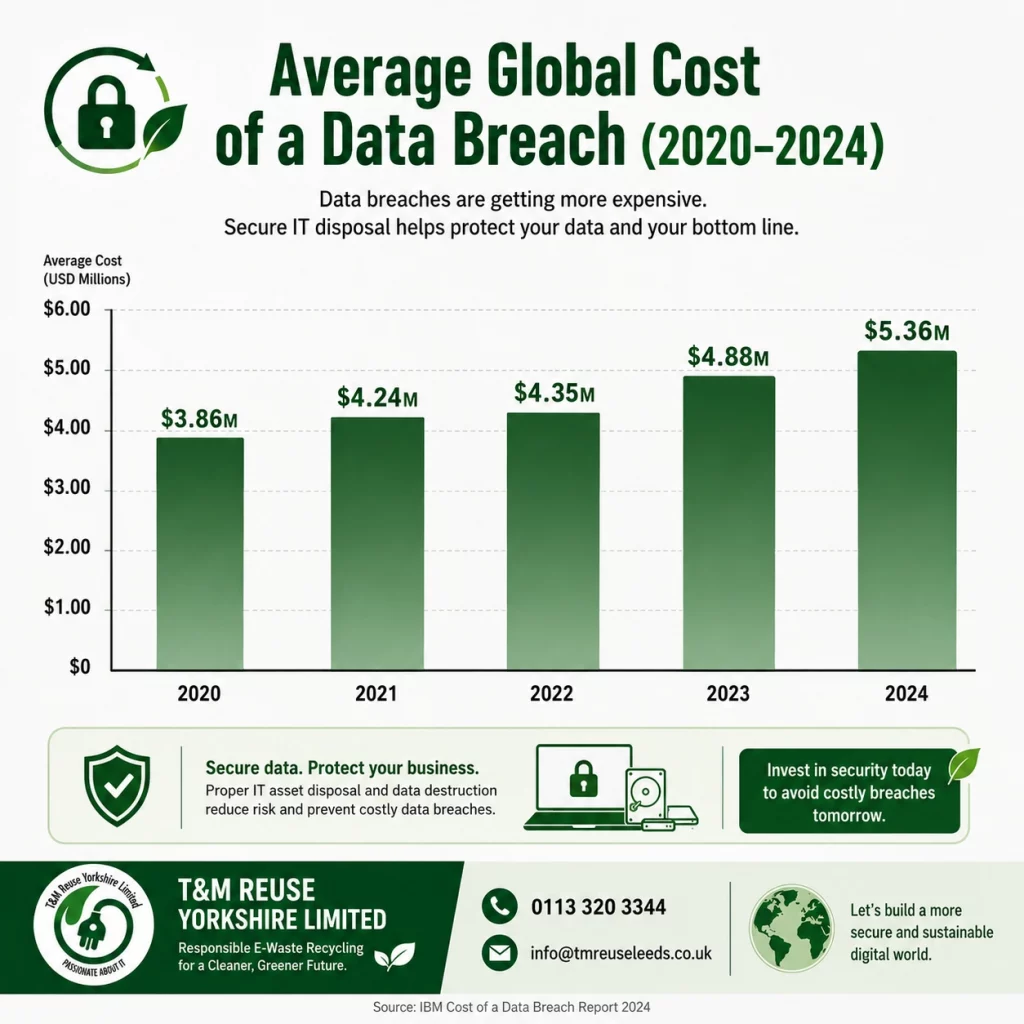
According to IBM’s Cost of a Data Breach Report 2024, the average global cost of a data breach reached $4.88 million. This highlights why secure disposal processes are critical when managing large volumes of retired IT equipment.
Proper laptop recycling Leeds programmes help businesses reduce security risks while ensuring devices are handled responsibly.
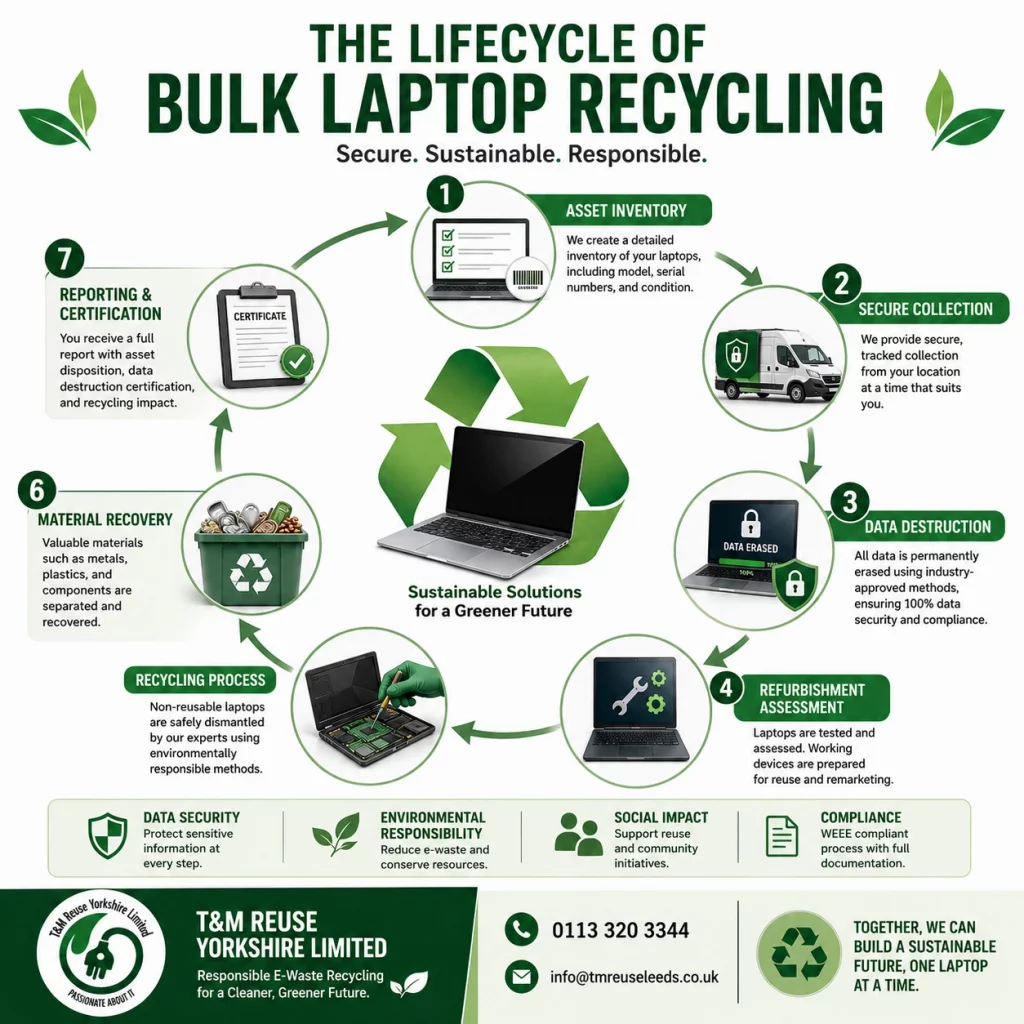
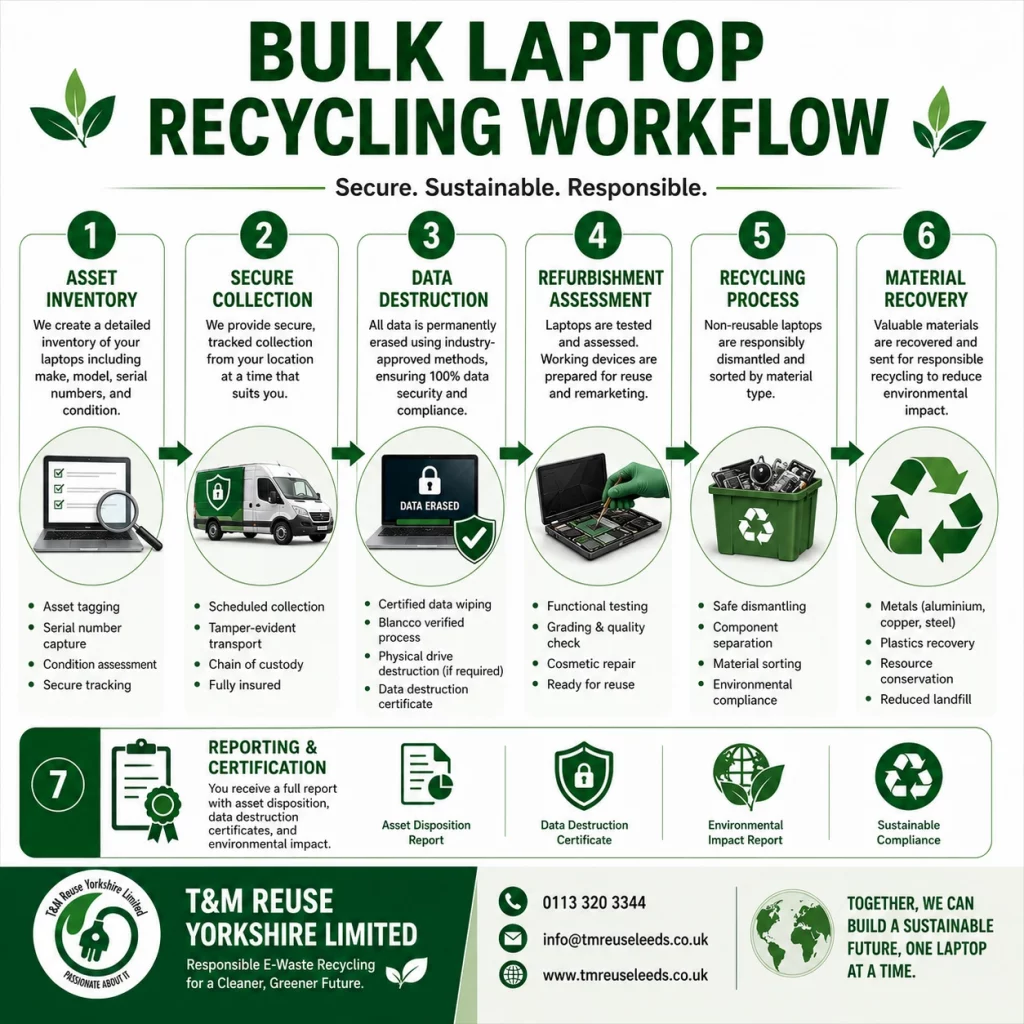
The first stage involves identifying every laptop scheduled for disposal.
Asset inventories typically record serial numbers, asset tags, device specifications, and ownership information. This process helps organisations maintain accountability throughout the project.
Without a complete inventory, devices can easily be overlooked or misplaced.
Once assets have been identified, they are collected and tracked using documented procedures.
Maintaining a chain of custody ensures that devices remain accounted for throughout transportation and processing.
For organisations handling sensitive information, tracking provides additional confidence that equipment has not been lost or tampered with.
Before a laptop can be reused, refurbished, or recycled, stored data must be securely removed.
The UK National Cyber Security Centre (NCSC) recommends approved sanitisation methods that prevent information from being recovered.
Depending on requirements, data destruction may involve certified software erasure, hard drive shredding, SSD destruction, or other recognised methods.
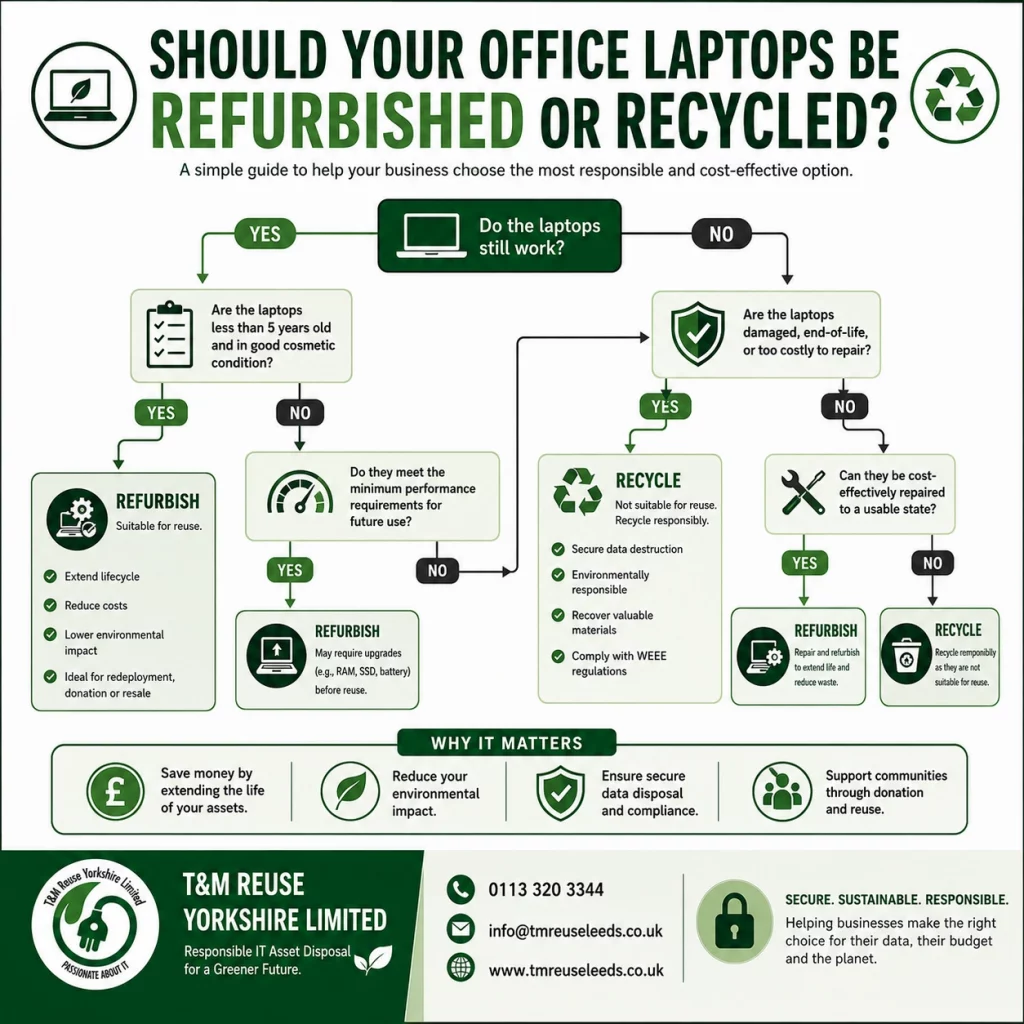
Not every retired laptop needs to be dismantled immediately.
Many devices remain functional and can be refurbished, upgraded, or redeployed where appropriate. Extending device lifespans reduces waste and maximises the value of existing technology assets.
Laptops that are no longer suitable for reuse can be dismantled and processed for material recovery.
Laptop disposal is not solely an environmental issue.
The UK GDPR requires organisations to protect personal data throughout its lifecycle, including when devices reach end-of-life.
The Information Commissioner’s Office (ICO) makes clear that organisations remain responsible for personal data stored on equipment being disposed of or recycled.
For this reason, businesses should maintain records demonstrating that data was securely destroyed before devices entered recycling streams.
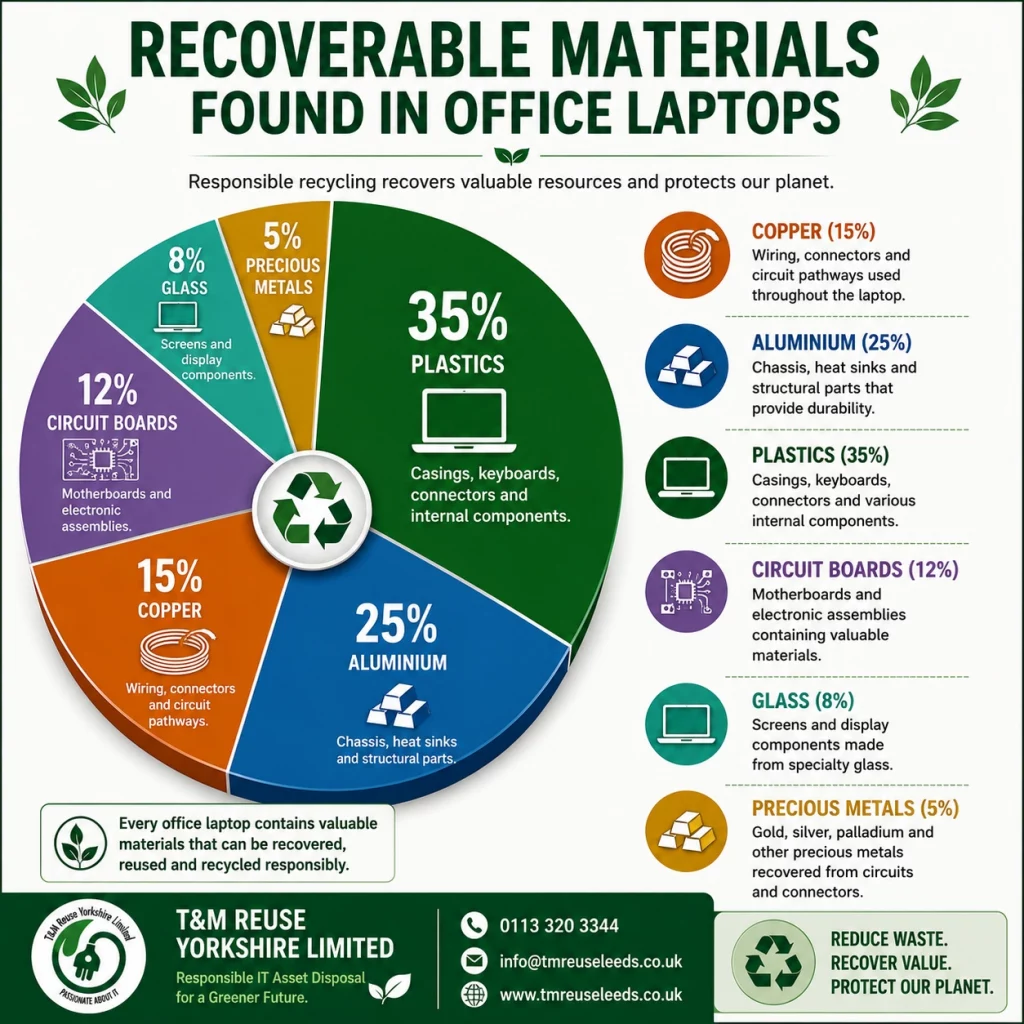
Laptops contain valuable resources that can be recovered and reused.
Materials such as copper, aluminium, plastics, gold, silver, palladium, and rare earth elements are commonly found within electronic devices.
According to the Global E-waste Monitor 2024, approximately US$62 billion worth of recoverable resources are lost annually due to inadequate recycling practices.
Effective bulk laptop recycling Leeds programmes help businesses support the circular economy while reducing pressure on natural resources.
One of the biggest challenges is maintaining accurate records.
When hundreds of devices are involved, organisations can easily lose visibility if assets are not properly tracked. Incomplete inventories often create compliance concerns and increase security risks.
Storage is another issue. Many businesses accumulate outdated laptops in cupboards, storerooms, and office spaces while waiting for disposal decisions. These devices may still contain sensitive information.
Planning ahead helps organisations avoid unnecessary risks and operational disruptions.
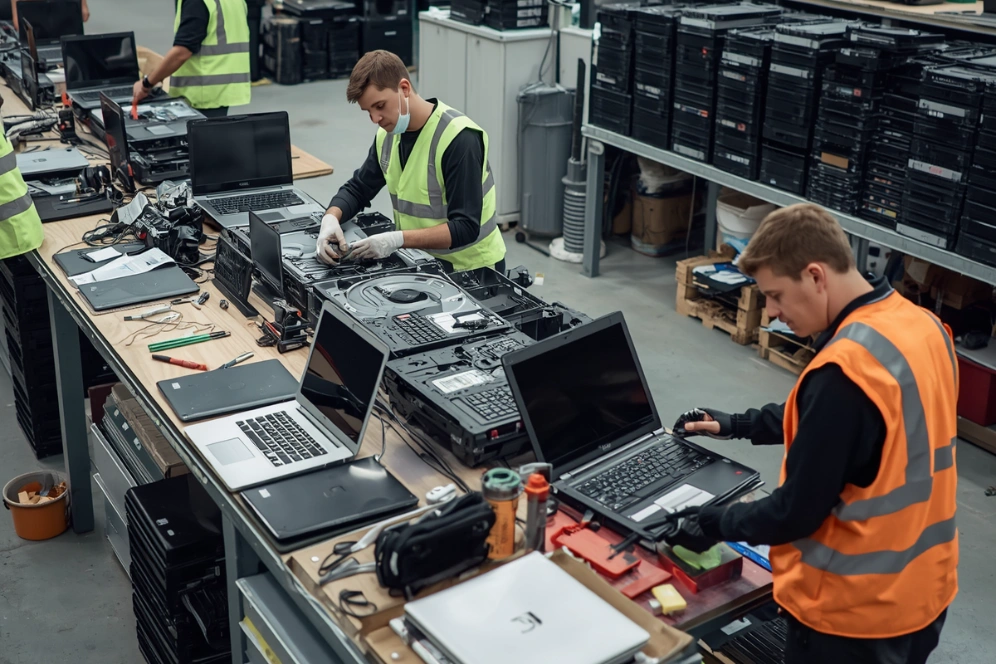
Any organisation replacing significant numbers of laptops can benefit from structured recycling processes.
This includes financial institutions, legal firms, healthcare providers, educational organisations, government departments, technology companies, and corporate offices.
Businesses with hybrid workforces often experience more frequent device replacement cycles, making efficient laptop recycling increasingly important.
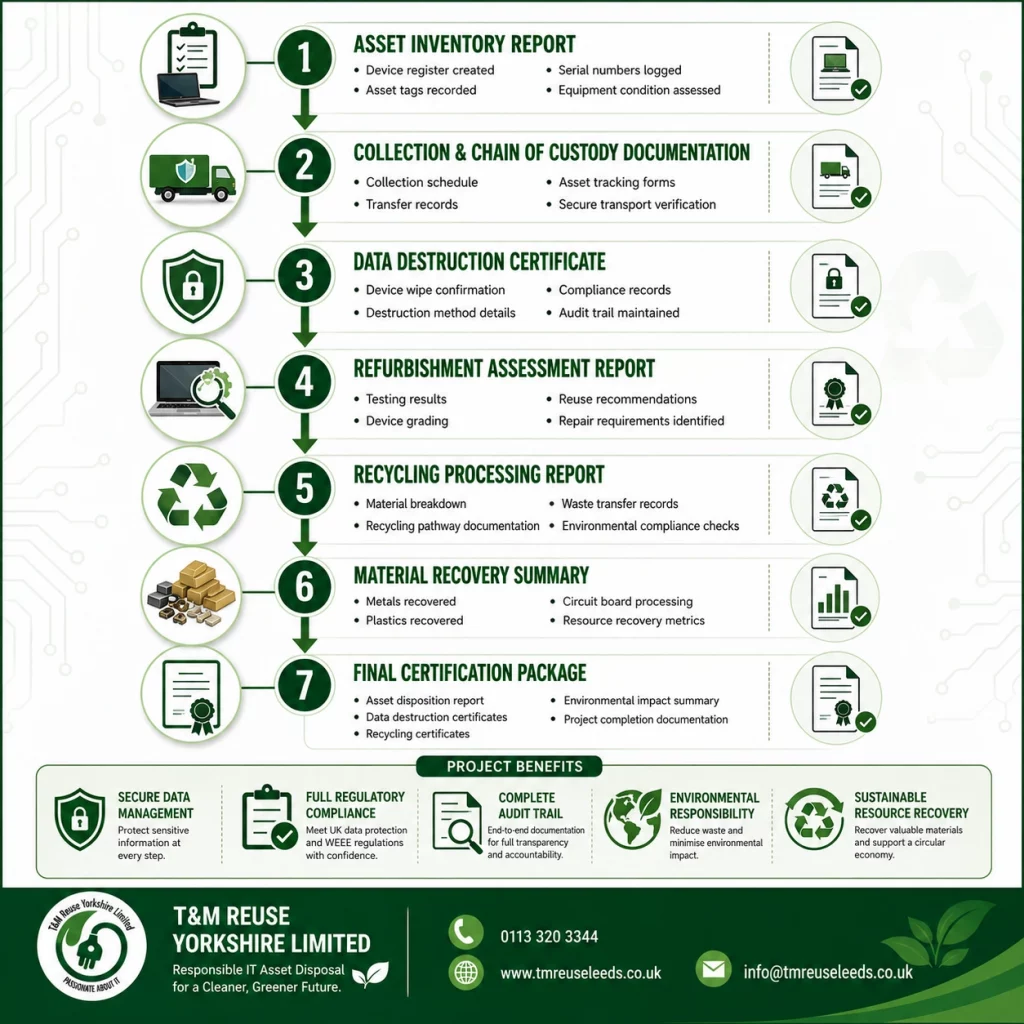
Effective laptop recycling projects generate detailed records.
Documentation may include asset inventories, collection logs, chain-of-custody reports, data destruction certificates, recycling reports, and compliance documentation.
These records support governance requirements and provide evidence that retired devices have been managed responsibly.
Maintaining documentation is particularly valuable during audits, compliance reviews, and customer due diligence assessments.
Laptop recycling should not be viewed as a one-time project.
Most organisations replace devices every three to five years, creating an ongoing need for secure and environmentally responsible disposal procedures.
Developing a formal IT asset disposition strategy helps businesses maintain consistency, reduce security risks, and improve sustainability outcomes across future technology refresh cycles.

If your office replaced every laptop tomorrow, would you know exactly where each device is, what data it contains, and how it will be securely processed? Taking the time to answer those questions today can make future technology upgrades far smoother, safer, and more sustainable.
Bulk laptop recycling involves the secure collection, data destruction, refurbishment, and recycling of multiple laptops from a business or organisation. It is ideal for office relocations, technology upgrades, and large-scale IT refresh projects.
Bulk laptop recycling helps businesses protect sensitive data, comply with data protection regulations, reduce electronic waste, recover valuable materials, and ensure old laptops are disposed of responsibly.
Laptops are typically audited, securely wiped or destroyed, assessed for refurbishment, dismantled if necessary, and processed for material recovery. Usable components may be reused while recyclable materials are recovered for future manufacturing.
Data is removed using certified software erasure, hard drive shredding, SSD destruction, or other approved sanitisation methods that ensure information cannot be recovered.
Yes. Bulk laptop recycling services are specifically designed to handle large volumes of devices efficiently while maintaining secure asset tracking, data destruction, and compliance documentation.
Businesses, schools, universities, healthcare providers, legal firms, financial institutions, government organisations, and corporate offices often require bulk laptop recycling when replacing multiple devices.
When carried out by a professional IT recycling provider, bulk laptop recycling can support UK GDPR compliance by ensuring personal and sensitive information is securely destroyed before devices are reused or recycled.
Yes. If laptops remain functional and meet performance requirements, they may be refurbished and reused. Devices that are beyond economical repair are typically recycled for material recovery.
Businesses should receive asset inventories, collection records, chain-of-custody reports, data destruction certificates, recycling reports, and compliance documentation.
Recycled laptops can contain valuable materials including copper, aluminium, plastics, steel, gold, silver, palladium, and other reusable resources.
Businesses should review their IT asset disposal and recycling procedures annually or whenever significant technology upgrades, office relocations, mergers, or compliance changes occur.
Professional laptop recycling services help businesses securely dispose of equipment, protect confidential data, meet environmental obligations, maintain compliance records, and support sustainable resource recovery.