
A cracked screen, dead battery, water damage, or a laptop that simply refuses to turn on often ends up forgotten in a drawer or pushed into a cupboard. Many people assume that once a device is beyond repair, it has little or no value left. The reality is very different. When it comes to broken laptop recycling Leeds, even the most damaged devices contain valuable materials, reusable components, and recoverable resources that should never end up in general waste.
As technology evolves and replacement cycles become shorter, the number of discarded laptops continues to rise. According to the Global E-waste Monitor 2024, the world generated a record 62 million tonnes of electronic waste in 2022, and that figure is projected to reach 82 million tonnes by 2030. Unfortunately, only 22.3% was formally collected and recycled.
For businesses and households across Leeds, responsible laptop recycling is becoming increasingly important—not only for environmental protection but also for data security and resource conservation.
One of the biggest misconceptions about electronic waste is that broken devices are worthless. In reality, many components inside damaged laptops can be reused, refurbished, or recycled.
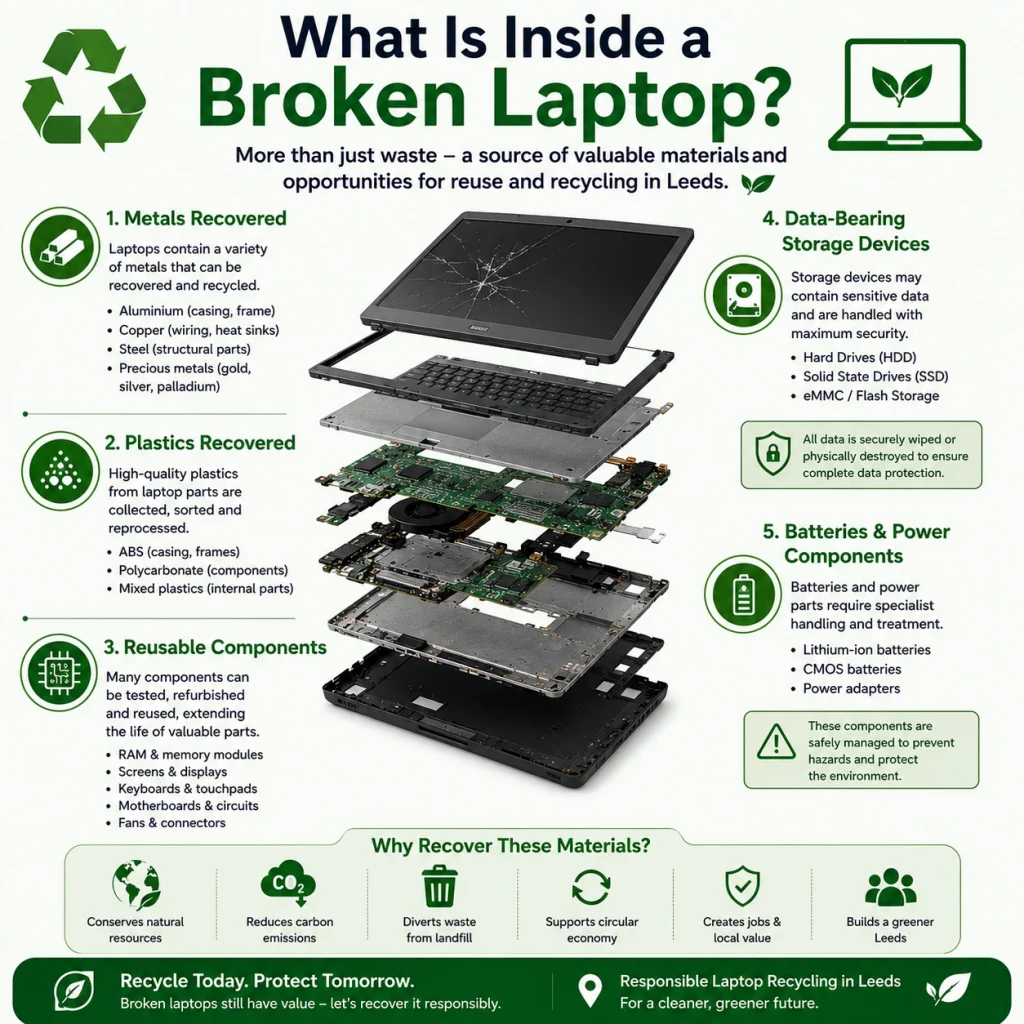
Even if the motherboard has failed, valuable materials such as copper, aluminium, steel, gold, silver, and plastics remain recoverable. These resources can be extracted and reintroduced into manufacturing supply chains, reducing the demand for virgin raw materials.
The United Nations reports that billions of pounds worth of recoverable resources are lost annually because electronic waste is not properly recycled.
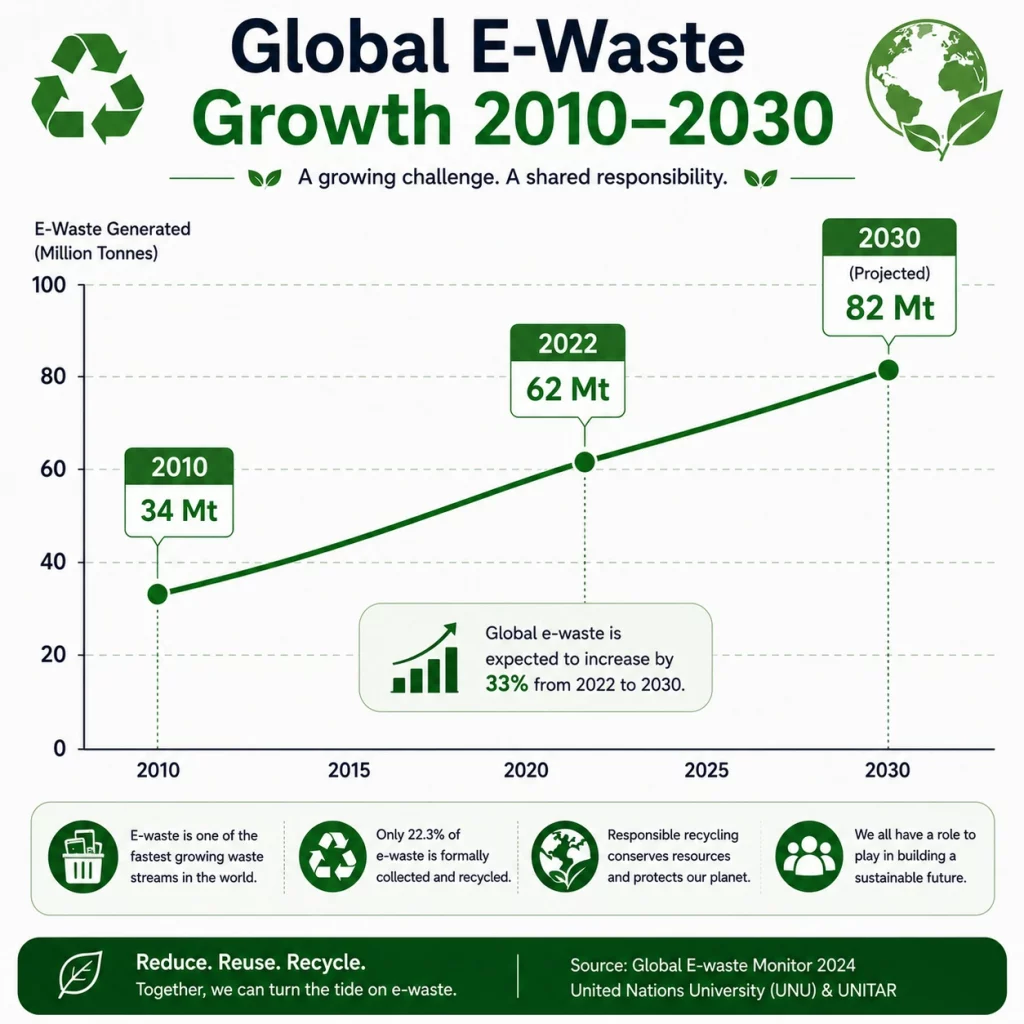
Electronic waste is one of the fastest-growing waste streams globally. The UK remains one of the largest producers of e-waste per capita.
Recent industry figures indicate that the UK generates approximately 6 million tonnes of electronic waste annually, while recycling rates remain significantly below what is needed to support a circular economy.
Laptops contribute substantially to this challenge because businesses frequently replace equipment every three to five years. Devices that appear obsolete often still contain reusable components or materials that can be recovered through specialist recycling processes.
This is where professional laptop recycling Leeds services play a critical role in keeping valuable resources within the economy while reducing environmental impact.
The exact list may vary depending on the condition and quantity of equipment being collected.
Many items still contain reusable components that can be refurbished, extending their lifespan and supporting circular economy initiatives.
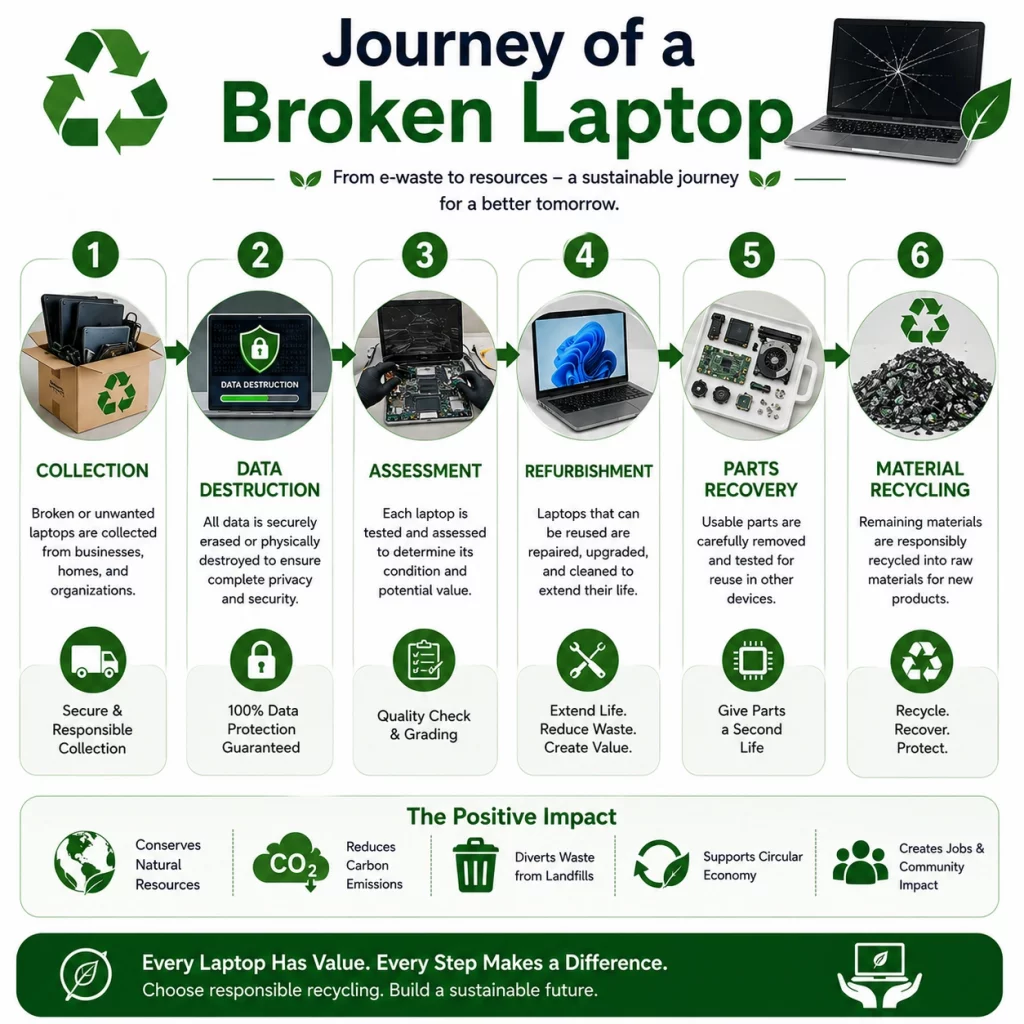
Many people imagine recycling as simply shredding devices. Modern recycling processes are far more sophisticated.
The first stage involves collecting laptops and assessing their condition. Not every broken laptop follows the same recycling journey. Specialist recycling facilities assess each device individually to determine whether it can be reused, refurbished, dismantled for parts, or processed for material recovery. The outcome depends on the condition of the equipment and the value that can still be recovered from it.
For businesses, the hard drive is often more valuable than the laptop itself because of the information stored on it.
Before recycling begins, storage media should undergo secure data destruction to ensure confidential information cannot be recovered.
Working components such as RAM, processors, cooling systems, power supplies, and screens may be reused in refurbishment projects.
Remaining materials are separated into metal, plastic, and electronic fractions for specialist processing and recovery.
The most sustainable laptop is often the one that stays in use.
Many devices classified as broken only require minor repairs or replacement parts. Extending the lifespan of IT equipment reduces manufacturing demand and lowers carbon emissions associated with producing new devices.
For organisations in Leeds, prioritising reuse before recycling supports circular economy principles while helping reduce electronic waste.
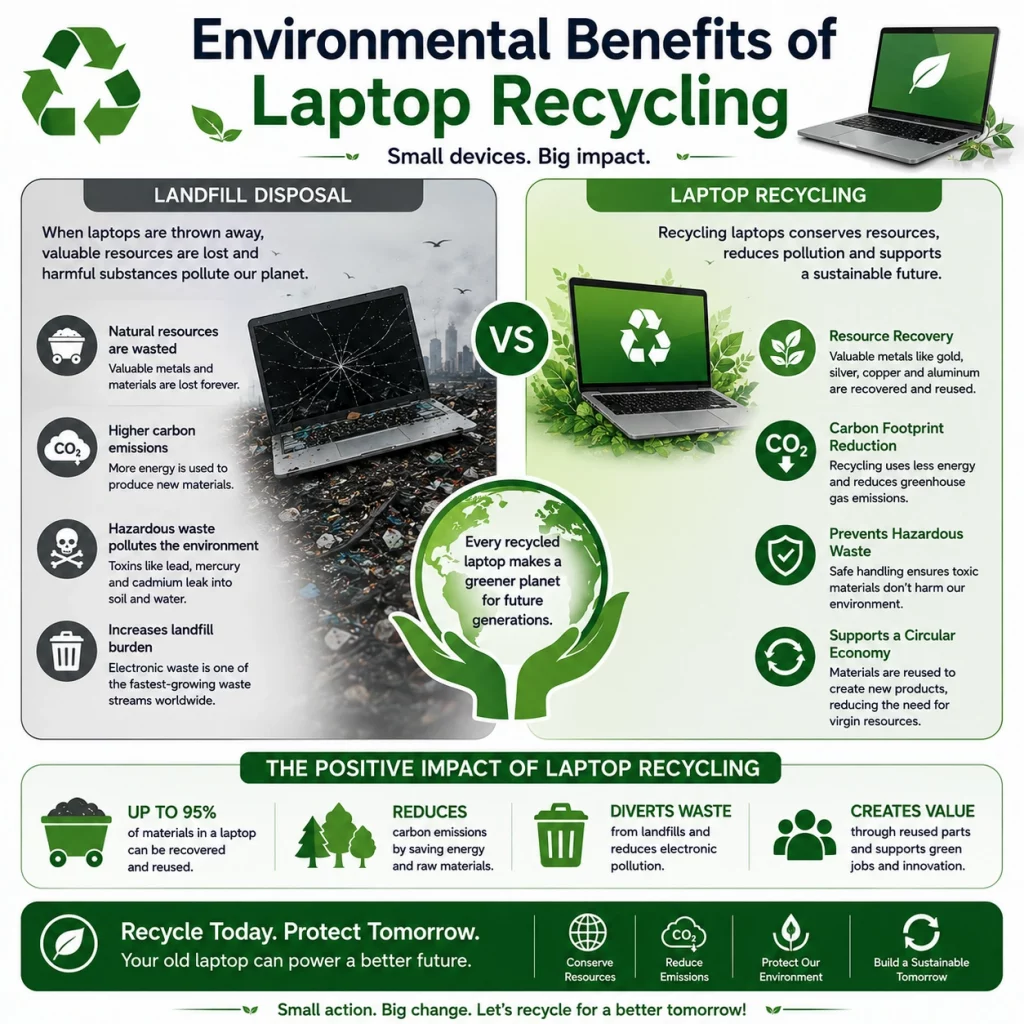
When damaged laptops enter inappropriate disposal routes, several environmental risks emerge.
Electronic equipment contains substances that require specialist handling. Improper disposal can lead to contamination of soil and water resources.
The World Health Organization highlights that e-waste contains hazardous substances that can pose risks to both environmental and human health when not managed properly.
At the same time, discarded laptops contain valuable materials that require energy-intensive mining and processing to replace.
Choosing responsible broken laptop recycling Leeds services helps reduce both pollution risks and resource depletion.
A laptop that no longer works can still contain recoverable data.
Hard drives and SSDs often remain intact even when a device appears completely unusable. Personal information, customer records, financial documents, and business data may still be stored on those drives.
This makes secure data destruction an essential step before any recycling activity takes place.
For organisations operating under GDPR requirements, ensuring proper handling of data-bearing devices is not only good practice but often a legal necessity.
The UK’s Waste Electrical and Electronic Equipment (WEEE) Regulations were introduced to ensure electrical products are collected, treated, reused, recycled, and disposed of responsibly.
These regulations encourage producers, businesses, and recycling organisations to divert electronic waste away from landfill and toward approved treatment facilities.
For businesses in Leeds disposing of old IT equipment, working with compliant recycling providers helps demonstrate environmental responsibility while supporting legal compliance.
Businesses often focus on purchasing technology but overlook end-of-life management.
Developing a structured approach to IT asset disposal can help organisations:
By integrating responsible laptop recycling Leeds practices into wider sustainability strategies, organisations can achieve measurable environmental improvements.
Calculate your organization's direct environmental contributions, resource reclamation weights, and carbon offset metrics.
Every damaged laptop represents more than electronic waste. It contains materials, components, and resources that still hold value.
The Global E-waste Monitor 2024 highlights that e-waste generation is growing five times faster than documented recycling efforts. This makes responsible collection, reuse, refurbishment, and recycling more important than ever.
Whether a laptop has suffered physical damage, battery failure, liquid exposure, or complete hardware failure, it should never be dismissed as worthless. Through responsible broken laptop recycling Leeds, these devices can continue contributing to a more sustainable and resource-efficient future.
Instead of storing broken laptops indefinitely or assuming they belong in the bin, what could your old devices still contribute to the circular economy if given a second chance through responsible recycling?
Yes, broken laptops can be recycled even if they no longer switch on, have a damaged screen, water damage, battery issues, or hardware failures. Professional recycling companies can recover valuable materials and reusable components while ensuring environmentally responsible disposal.
A recycled laptop typically goes through collection, secure data destruction, assessment, refurbishment (if possible), parts recovery, and material recycling. Valuable metals, plastics, and electronic components are recovered and reused wherever possible.
Yes. Reputable laptop recycling companies provide secure data destruction services before recycling begins. Hard drives and SSDs are either professionally wiped or physically destroyed to prevent sensitive information from being recovered.
Absolutely. Even laptops that are completely non-functional contain recyclable materials such as aluminium, copper, steel, plastics, and precious metals. Many internal components may also be suitable for refurbishment or parts recovery.
Laptop recycling helps reduce electronic waste, conserve natural resources, lower carbon emissions, and prevent hazardous materials from entering landfill sites. It also supports the circular economy by keeping valuable materials in use for longer.
Most laptop components can be recycled, including hard drives, SSDs, batteries, circuit boards, screens, keyboards, plastics, aluminium casings, copper wiring, and memory modules.
Yes. UK businesses must comply with Waste Electrical and Electronic Equipment (WEEE) Regulations and ensure electronic waste is disposed of through authorised recycling channels. Proper recycling also helps organisations meet GDPR and data protection obligations.
In many cases, yes. Laptops with repairable faults may be refurbished and reused, extending their lifespan and reducing environmental impact. Reuse is generally considered more sustainable than recycling whenever practical.
Before recycling your laptop, back up any important files, remove personal accounts where possible, and work with a recycling provider that offers certified data destruction services. If the device is unusable, the recycler can often manage the process securely.
Look for a company that offers secure data destruction, WEEE-compliant recycling, environmentally responsible processing, transparent disposal procedures, and experience handling both business and household IT equipment.