
Old laptops, servers, hard drives and mobile devices often contain far more sensitive information than many businesses realise. Even after files are deleted, confidential customer records, financial data, employee information and company documents can still remain recoverable. That is why certified data destruction Leeds has become an essential part of responsible IT asset disposal for businesses of every size. Whether you are replacing office computers or upgrading your entire IT infrastructure, ensuring data is permanently destroyed protects your organisation from costly security risks and legal consequences.
According to IBM’s Cost of a Data Breach Report, the global average cost of a data breach reached USD 4.88 million in 2024, the highest ever recorded. While not every breach comes from improperly disposed IT equipment, unsecured storage devices continue to be a significant source of data exposure for organisations worldwide.
Many businesses believe deleting files or formatting a hard drive completely removes sensitive information. Unfortunately, this is rarely true.
When data is deleted, the operating system simply marks the storage space as available for new information. Until new data overwrites that space—or the device undergoes certified sanitisation—the original files can often be recovered using commercially available recovery software.
The UK’s National Cyber Security Centre (NCSC) advises organisations to use approved sanitisation or destruction methods before electronic storage media leaves their control. This applies to:
Without secure disposal, even a single misplaced hard drive could expose thousands of confidential records.
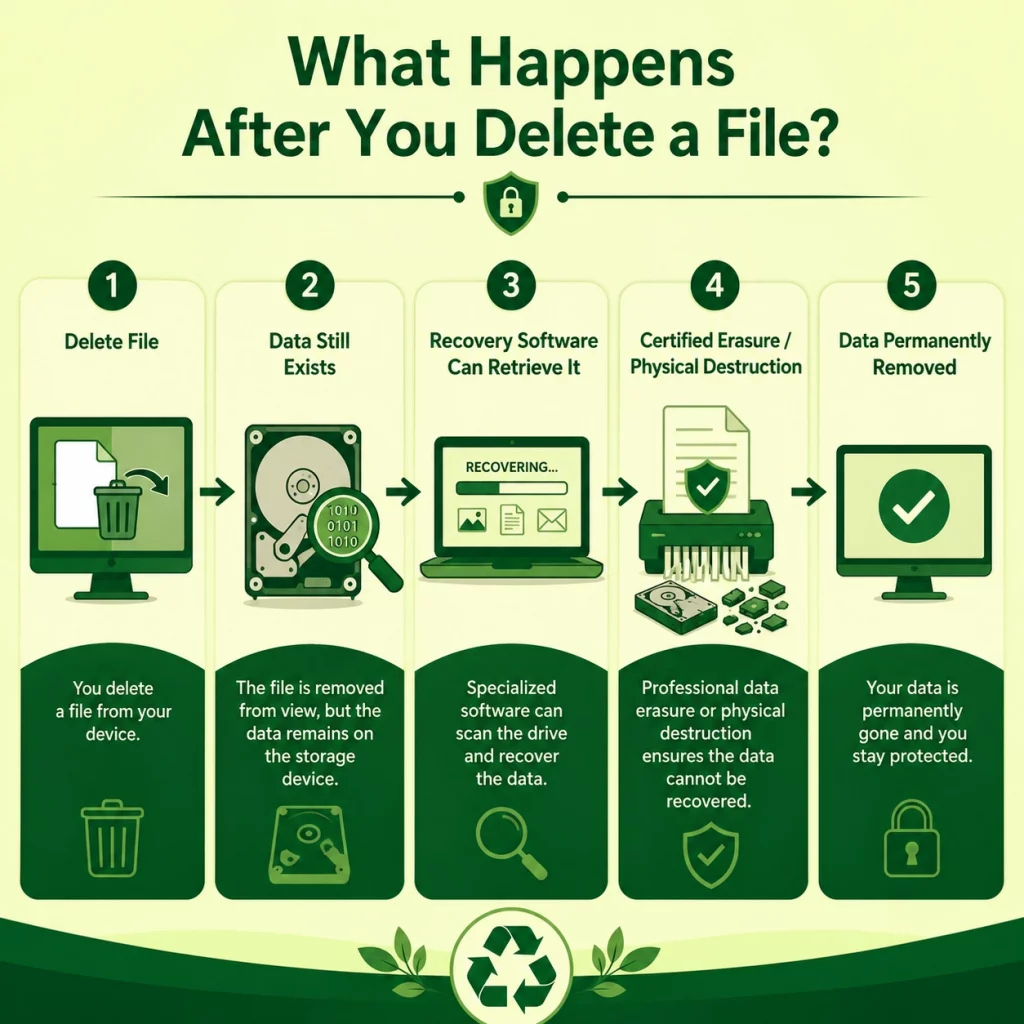
Certified data destruction is a documented process that permanently removes confidential information from storage devices using recognised industry standards.
Unlike simply deleting files or physically damaging equipment yourself, certified destruction provides proof that sensitive data has been destroyed correctly.
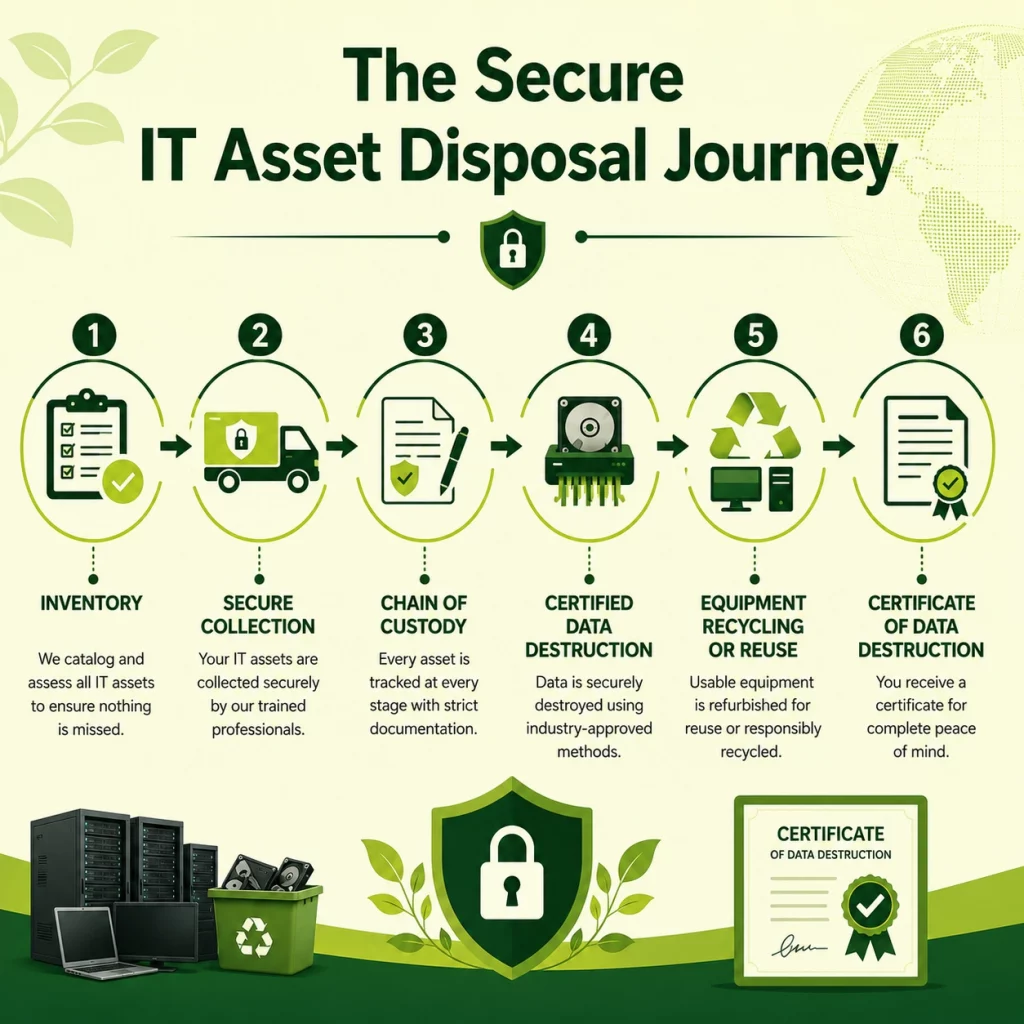
A professional provider typically issues a Certificate of Data Destruction, giving businesses an auditable record showing:
This documentation can become extremely valuable during GDPR audits, insurance claims or customer compliance checks. Industry guidance recommends documented verification as part of secure data disposal.
Every organisation stores valuable information.
Even small businesses in Leeds may hold:
If this data falls into the wrong hands, the consequences can be severe.
Beyond financial losses, businesses may suffer damaged customer trust, operational disruption and regulatory investigations.
The UK GDPR requires organisations to process and dispose of personal information securely throughout its lifecycle. This responsibility does not end when an IT device reaches the end of its useful life. Secure disposal remains part of an organisation’s accountability obligations.
Calculate your hardware exposure level and compliance requirements in real time.
Loading...
Loading...
Need certified IT asset destruction to mitigate this risk?
Request a Secure Destruction QuoteMany companies still dispose of unwanted computers through general recycling or resale without considering the information stored inside them.
The difference between these approaches is significant.
| Standard IT Disposal | Certified Data Destruction |
|---|---|
| Files simply deleted | Data permanently sanitised |
| No verification | Complete audit trail |
| No certificate | Certificate of Destruction provided |
| Higher data breach risk | Significantly reduced security risk |
| Limited compliance evidence | Supports GDPR accountability |
| Unknown handling process | Secure chain of custody |
One of the biggest advantages of secure data destruction Leeds services is maintaining a secure chain of custody.
The chain of custody records every stage of an IT asset’s journey.
Instead of equipment disappearing into unknown hands, every movement is documented from collection through transportation, storage and final destruction.
This helps prevent:
For organisations handling sensitive customer information, maintaining this documented process provides an additional layer of protection and accountability. Industry standards consistently recognise secure chain of custody as a core element of effective IT asset disposition.
Not every storage device requires exactly the same treatment.
Professional IT disposal companies choose the appropriate method depending on the storage technology and future use of the equipment.
Software-based erasure overwrites existing information according to recognised standards.
This allows many devices to be safely reused or remarketed while ensuring previous data cannot be recovered.
Where reuse is not appropriate, physical shredding destroys storage media into very small fragments, making reconstruction practically impossible.
Magnetic storage devices can sometimes be degaussed using powerful magnetic fields that erase stored information.
Industrial crushing equipment physically damages storage devices beyond recovery.
The NIST media sanitisation guidance explains that organisations should select sanitisation methods based on both the media type and the confidentiality of the information stored on it.
Almost every organisation in Leeds handles confidential information.
However, certified destruction is especially important for:
Any business storing customer information should have a documented process for securely disposing of retired IT equipment.
Many businesses think the UK GDPR only applies while data is being actively used. In reality, organisations are responsible for protecting personal information throughout its entire lifecycle—including when IT equipment is retired.
The UK Information Commissioner’s Office (ICO) expects organisations to dispose of personal data securely so it cannot be accessed or recovered by unauthorised individuals. Whether the information is stored on laptops, servers, SSDs or backup drives, businesses must take appropriate technical and organisational measures to protect it.
For Leeds businesses, using certified data destruction Leeds services provides documented evidence that retired IT assets have been handled responsibly, helping demonstrate accountability if regulators, customers or auditors request proof.
Improper disposal is about much more than losing old hardware.
A single hard drive can contain years of sensitive business information. If that device reaches the wrong person, businesses may face:
IBM’s Cost of a Data Breach Report 2024 found that the average global cost of a data breach reached USD 4.88 million, with business interruption, post-breach response and customer remediation among the biggest contributors to rising costs.
Investing in secure data destruction in Leeds is often far less expensive than dealing with the aftermath of a preventable data exposure.
Not every IT recycling company follows the same standards.
Before selecting a provider, businesses should look for evidence that the company follows recognised processes for both security and environmental compliance.
A reliable provider should offer:
Choosing a provider that combines secure destruction with responsible recycling helps businesses protect confidential information while reducing electronic waste.
Certificates are more than paperwork.
They provide documented proof that confidential information has been permanently destroyed using recognised methods.
Many organisations request these certificates during:
Having clear documentation also simplifies record-keeping and demonstrates that your business has taken reasonable steps to protect personal information.
Protecting sensitive data and protecting the environment often go hand in hand.
After storage media has been securely sanitised or destroyed, many remaining IT components can be refurbished, reused or recycled instead of being sent to landfill.
According to the United Nations’ Global E-waste Monitor, electronic waste continues to grow globally, making responsible recycling increasingly important for businesses looking to improve sustainability. Proper recycling helps recover valuable materials while reducing environmental impact.
Businesses that combine secure data destruction in Leeds with certified IT recycling support both cybersecurity and environmental goals.
| Business Need | Certified Data Destruction | Basic Disposal |
|---|---|---|
| Permanent data removal | ✔ | ✖ |
| GDPR accountability | ✔ | Limited |
| Certificate provided | ✔ | Usually No |
| Chain of custody | ✔ | Rarely |
| Secure asset tracking | ✔ | Limited |
| Environmentally responsible recycling | ✔ | Not always |
| Supports audits | ✔ | Limited |
Every retired laptop, hard drive or server represents both an opportunity and a risk. With the right processes, businesses can protect confidential information, demonstrate compliance and support more sustainable IT recycling at the same time.
When was the last time your organisation reviewed its IT disposal process? If you’re unsure whether every retired device receives certified destruction, now could be the perfect time to assess your current approach and identify any gaps before they become costly problems.
Certified data destruction is the secure and permanent removal of data from storage devices such as hard drives, SSDs, laptops, servers, and USB drives using approved methods. After the process is completed, a Certificate of Data Destruction is issued as proof that the data has been permanently erased or physically destroyed. This helps businesses meet UK GDPR requirements and protects sensitive information from being recovered.
Businesses in Leeds handle sensitive customer, employee, and financial data every day. Certified data destruction ensures this information cannot be recovered when old IT equipment is disposed of. It reduces the risk of data breaches, supports UK GDPR compliance, protects your business reputation, and provides documented evidence that confidential data has been securely destroyed.
Deleting files or formatting a hard drive does not permanently remove data. In many cases, deleted information can still be recovered using specialist software. Certified data destruction uses approved data erasure or physical destruction methods to make data permanently inaccessible, providing businesses with complete peace of mind and a Certificate of Data Destruction.
Any device that stores business data should undergo secure data destruction before disposal or recycling. This includes desktops, laptops, servers, hard drives, SSDs, USB flash drives, backup tapes, mobile phones, tablets, memory cards, and network storage devices. Proper destruction ensures confidential information cannot be accessed by unauthorised individuals.
The UK GDPR requires organisations to protect personal data throughout its entire lifecycle, including disposal. Secure data destruction helps businesses demonstrate compliance by ensuring sensitive information is permanently removed from retired IT equipment. A Certificate of Data Destruction also provides valuable evidence during audits or regulatory inspections.
Professional data destruction companies typically use certified software-based data erasure, hard drive shredding, degaussing, crushing, or a combination of these methods depending on the type of storage device. The chosen method ensures that confidential information cannot be recovered while supporting secure and environmentally responsible IT disposal.
A Certificate of Data Destruction is an official document confirming that data stored on an IT asset has been permanently destroyed using recognised methods. It usually includes the device serial number, destruction method, date, and verification details. Businesses often keep these certificates for compliance records, audits, and customer assurance.
Yes. After data has been securely erased or the storage media has been physically destroyed, many IT components can be safely recycled or refurbished. Responsible IT recycling helps recover valuable materials, reduces electronic waste, and supports your organisation’s environmental sustainability goals while ensuring confidential information remains protected.
Businesses should securely dispose of IT equipment whenever devices reach the end of their useful life, are replaced, become faulty, or are no longer required. Creating a regular IT asset disposal policy ensures sensitive information is protected and helps maintain compliance with data protection regulations.
T&M Reuse Yorkshire Limited provides secure, reliable, and fully documented certified data destruction services for businesses across Leeds. The company follows GDPR and WEEE compliant processes, offers secure collection, maintains a complete chain of custody, issues Certificates of Data Destruction, and ensures IT equipment is disposed of responsibly through environmentally friendly recycling practices.