
Every office eventually reaches the point where outdated printers, photocopiers, scanners, fax machines, monitors, and other electronic devices need replacing. While upgrading equipment improves productivity, disposing of old electronics is not as simple as throwing them into a skip. Businesses searching for office equipment WEEE Leeds solutions need to understand both their legal responsibilities and the environmental impact of electronic waste.
Office electronics contain valuable materials such as steel, aluminium, copper, plastics, and even precious metals that can be recovered and reused. However, they may also contain hazardous substances that require specialist handling. Choosing the correct disposal method protects your business, supports sustainability, and ensures compliance with UK environmental regulations.
The Waste Electrical and Electronic Equipment (WEEE) Regulations were introduced to reduce electronic waste ending up in landfill and encourage the recovery of valuable materials. Almost every electrical item found in a modern office qualifies as WEEE once it reaches the end of its useful life.
Common examples include:
Businesses cannot dispose of these items alongside general commercial waste because they require specialist recycling processes.
According to the UK Government, millions of electrical products reach the end of their life every year, making responsible recycling increasingly important for organisations of every size.
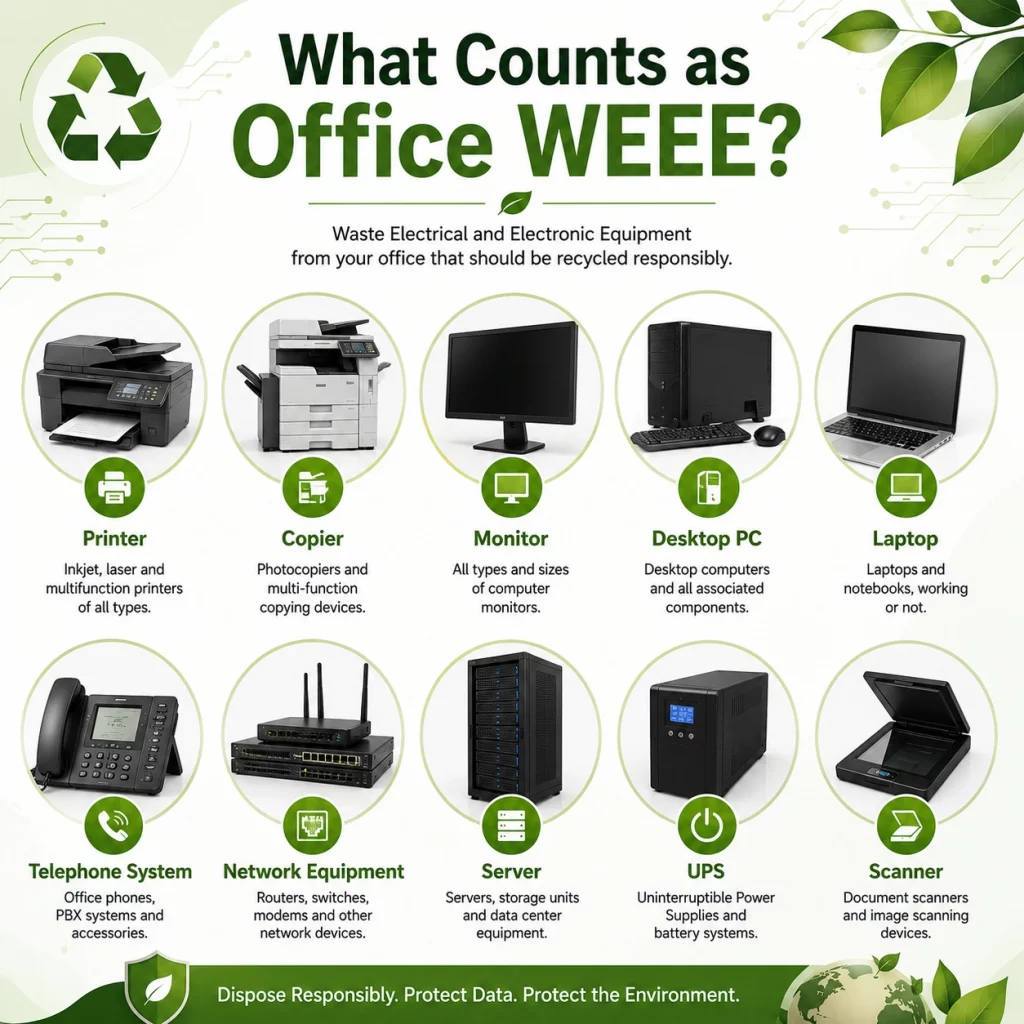
Many companies assume an old printer or copier has little value. In reality, office equipment contains recyclable materials that help reduce demand for newly mined resources.
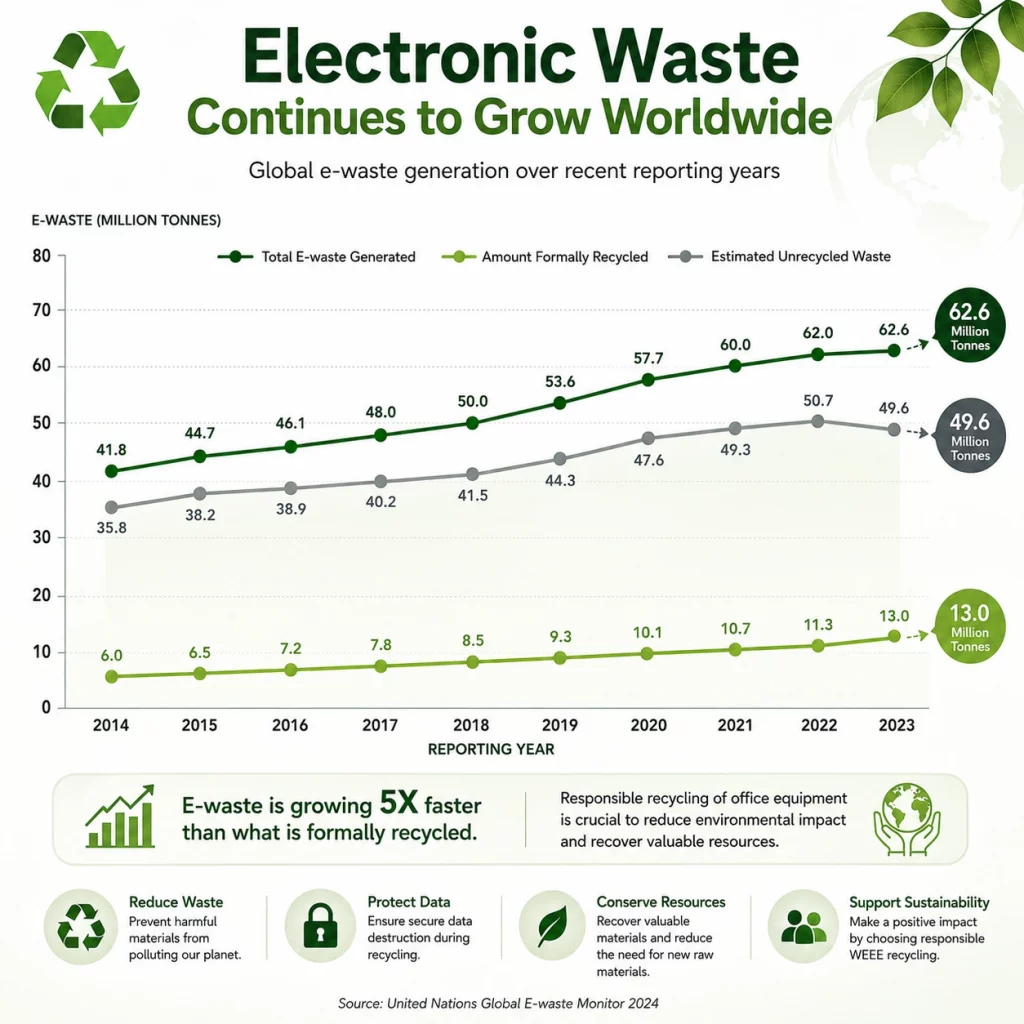
The UK generated approximately 1.6 million tonnes of electronic waste in 2022, according to the Global E-waste Monitor, making electronic waste one of the world’s fastest-growing waste streams.
Improper disposal can lead to:
Responsible WEEE Disposal Leeds services help businesses minimise these risks while supporting the circular economy.
Modern office equipment contains dozens of different materials.
For example, a commercial photocopier may include:
Material | Can It Be Recycled? | Common Reuse |
Steel | Yes | Construction & Manufacturing |
Aluminium | Yes | New electronic products |
Copper | Yes | Wiring & Electrical Components |
Plastics | Yes | New plastic products |
Glass | Yes | Display manufacturing |
Circuit Boards | Yes | Precious metal recovery |
Instead of extracting new raw materials, recycling allows these resources to re-enter manufacturing.
According to the United Nations Global E-waste Monitor, less than a quarter of global electronic waste is formally recycled, highlighting the enormous opportunity for businesses to reduce waste through responsible recycling.
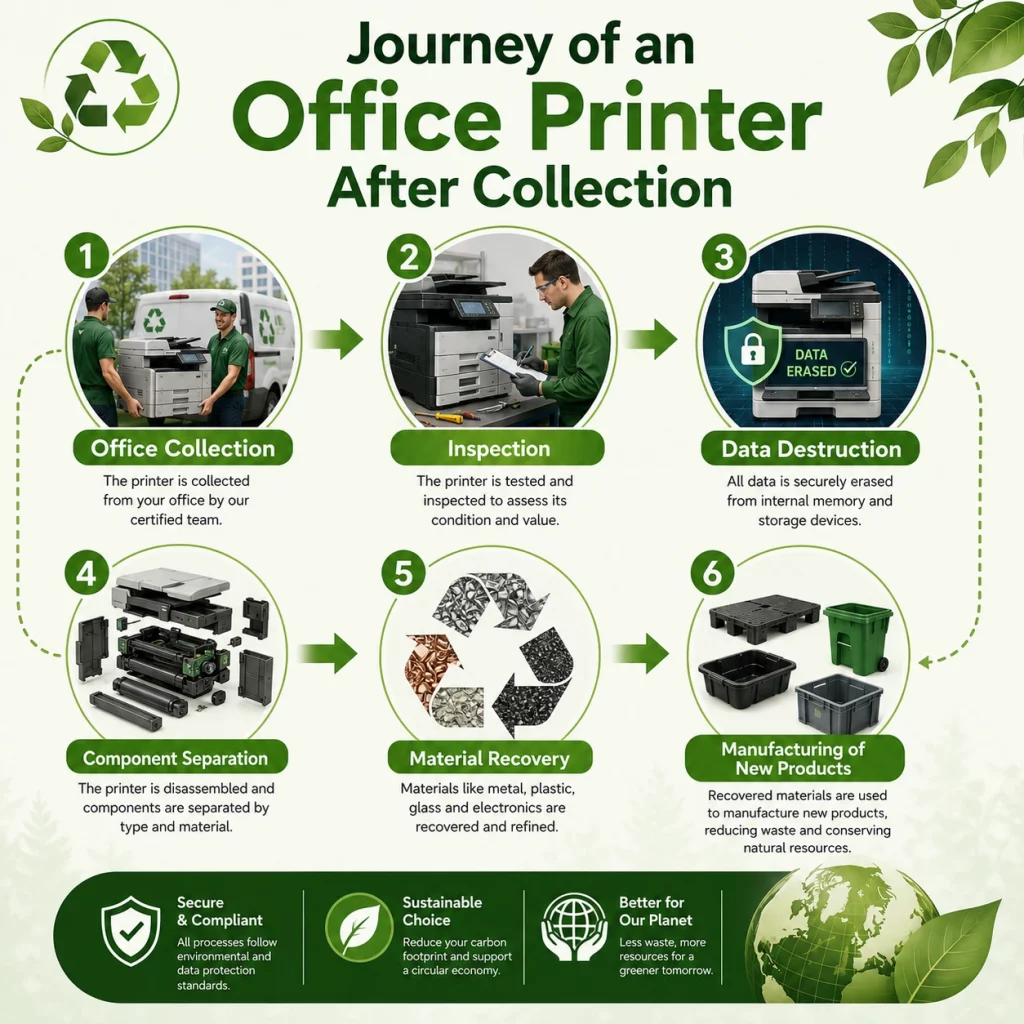
Many businesses wonder what actually happens after collection.
The process is much more advanced than simply breaking equipment apart.
Equipment is collected from offices and transported securely to authorised recycling facilities.
Large businesses often arrange collections for:
Reusable devices are inspected first.
Equipment that still functions may be:
Extending the lifespan of electronics significantly reduces environmental impact compared with immediate recycling.
Many office devices now store sensitive information.
Examples include:
Modern copiers often contain hard drives storing scanned documents, employee records and confidential business information.
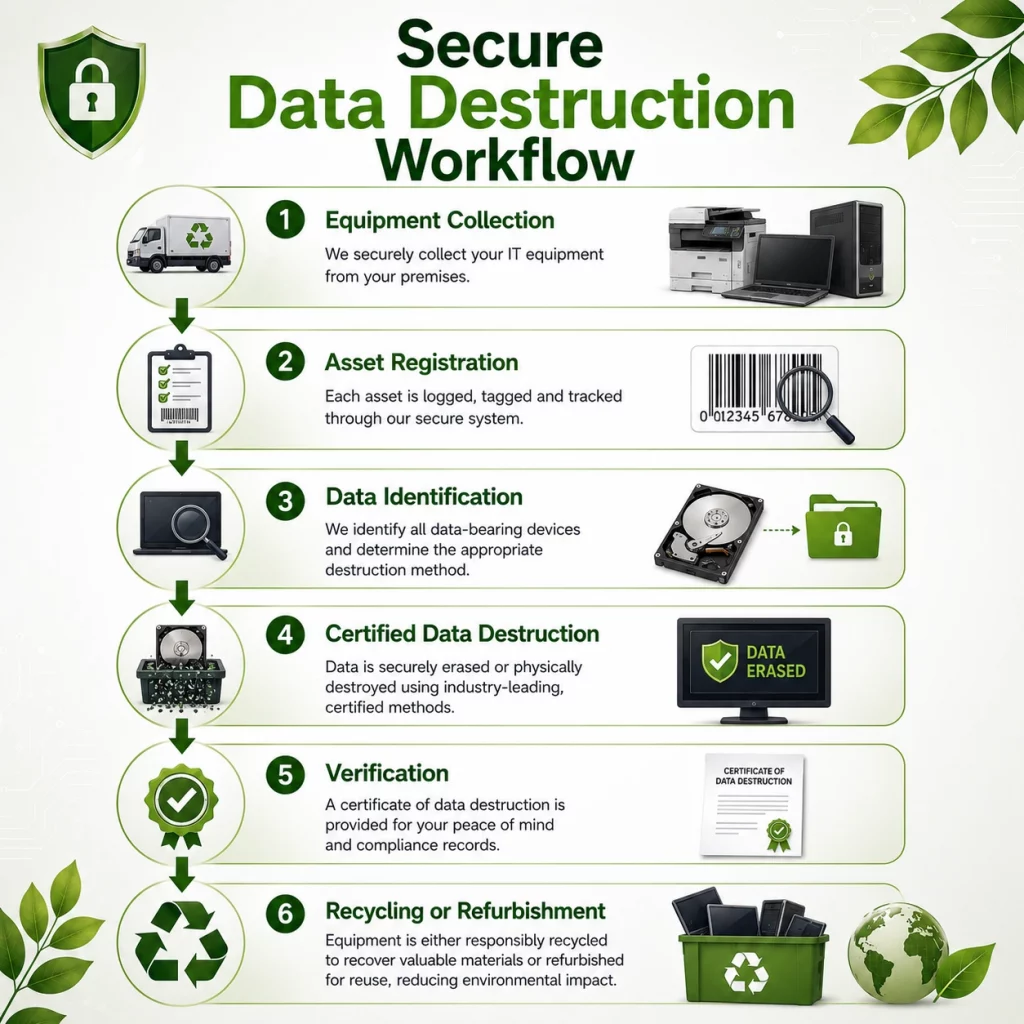
Before recycling begins, secure data destruction ensures this information cannot be recovered.
Once equipment cannot be reused, specialist recycling facilities separate components using mechanical and manual processes.
Materials recovered include:
Hazardous substances are isolated and processed safely.
Many businesses only think about computers when planning electronic recycling.
However, numerous office devices fall under WEEE legislation.
Laser and inkjet printers contain:
Some commercial printers also include storage drives that require secure erasure before recycling.
Large multifunction copiers contain hundreds of recyclable components.
These often include:
Because of their size and complexity, professional handling is recommended.
Office scanners include valuable electronic components that should never be disposed of in general waste.
Many organisations replace VoIP and traditional telephone systems during office upgrades.
These systems contain:
All are recyclable through approved WEEE channels.
Projectors include electronic boards, optical components, plastics and specialised lamps.
Certain lamp types require additional environmental handling.
Check WEEE compliance, data security requirements, and collection options for your office IT assets.
Loading collection options...
Loading security standards...
Loading processing route...
Need compliant WEEE disposal with certified data destruction?
Arrange WEEE CollectionMany organisations unintentionally create compliance risks simply because they are unaware of the regulations.
According to the National Cyber Security Centre (NCSC), some of the most common mistakes include storing broken equipment indefinitely, disposing of electronics with general commercial waste, overlooking hard drives inside multifunction printers, failing to keep disposal records, or assuming older equipment has no remaining value.
Taking time to assess office assets before disposal can often uncover devices suitable for refurbishment or material recovery, helping businesses reduce waste while supporting more sustainable resource management.
Not every company offering waste collection specialises in electrical equipment recycling. Choosing the right recycling partner helps your business stay compliant while protecting sensitive information and reducing environmental impact.
When comparing providers, look beyond collection costs. A professional WEEE recycling company should offer clear documentation, secure handling of electronic assets, and environmentally responsible recycling processes.
A reliable provider should offer:
For organisations replacing large quantities of office equipment, choosing an experienced recycling partner can also reduce downtime during office upgrades.
Many office devices store more information than businesses realise.
Modern multifunction printers, photocopiers and network devices frequently contain internal hard drives or memory capable of storing:
According to the UK’s National Cyber Security Centre (NCSC), organisations should ensure storage media is securely sanitised or destroyed before disposal to reduce the risk of sensitive information being recovered.
Professional data destruction is therefore an essential part of responsible WEEE Disposal in Leeds, especially for businesses handling confidential or regulated information.
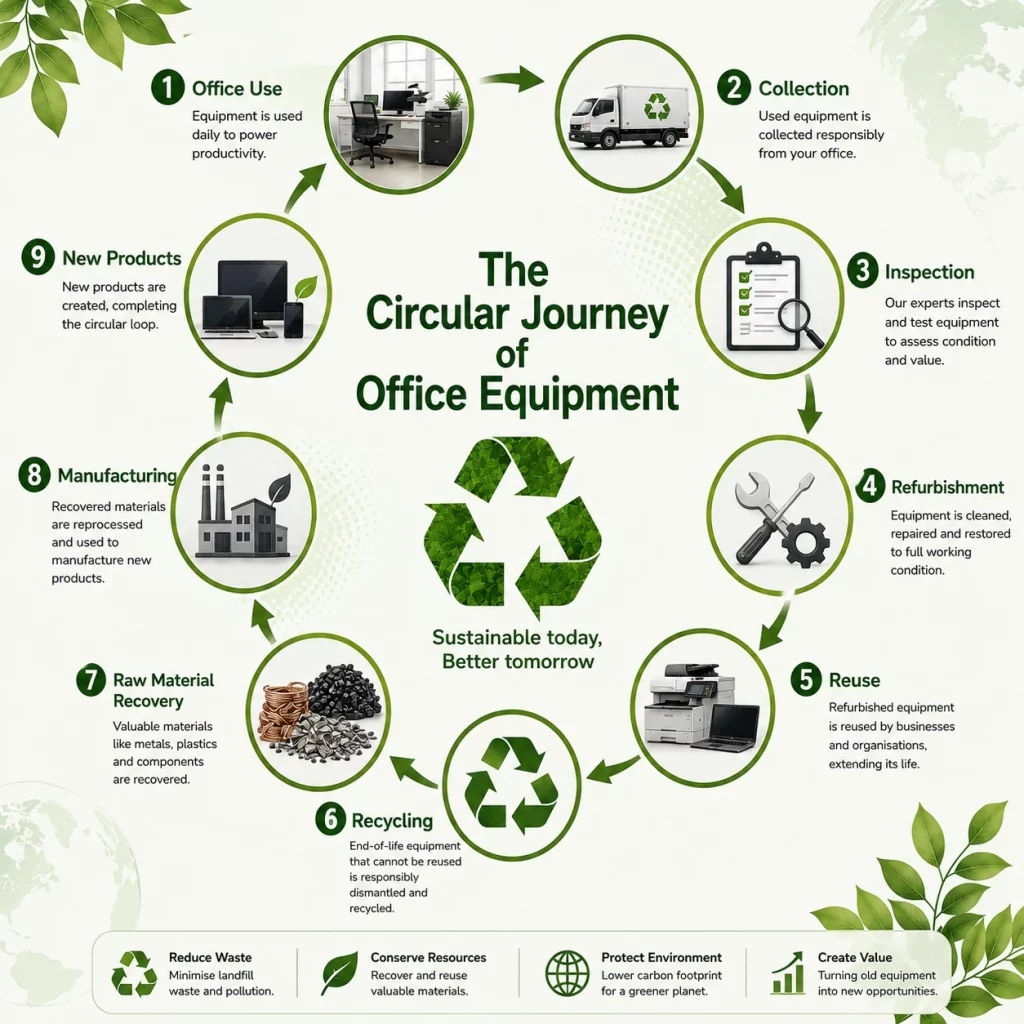
Environmental responsibility is no longer just a marketing trend. Increasingly, customers, suppliers and investors expect organisations to demonstrate sustainable business practices.
Recycling office equipment contributes to sustainability by reducing landfill waste, recovering valuable raw materials and lowering demand for newly extracted resources. It also supports the circular economy by extending the life of suitable equipment through refurbishment and reuse.
According to WRAP (Waste & Resources Action Programme), improving resource efficiency and increasing reuse are among the most effective ways businesses can reduce waste and carbon emissions.
For companies working towards Environmental, Social and Governance (ESG) objectives, responsible WEEE management is a practical step that supports wider sustainability goals.
Technology evolves rapidly, and businesses regularly replace equipment to improve productivity, security and energy efficiency.
Some common reasons include:
While these upgrades improve operations, they also increase the amount of electrical equipment reaching end-of-life. Planning disposal alongside replacement projects helps businesses remain organised and compliant.
Estimate your collection scale, vehicle requirement, pickup duration, and compliance paperwork.
Loading collection duration...
Loading documentation details...
Ready to book your collection or receive an official quotation?
Request a Collection QuotationEvery printer, copier and scanner you recycle responsibly helps reduce landfill waste, recover valuable materials and protect sensitive business data. Planning your office equipment WEEE Leeds recycling now can make your next office upgrade smoother, safer and more environmentally responsible.
What types of office equipment is your business planning to replace this year? Share your thoughts below or contact our team to discuss the best recycling solution for your organisation.
Office equipment WEEE refers to Waste Electrical and Electronic Equipment such as printers, photocopiers, scanners, monitors, computers, telephones, and other electrical devices that have reached the end of their useful life. These items often contain recyclable materials as well as hazardous components, so they must be disposed of through an authorised WEEE recycling service rather than general waste. Proper disposal helps businesses comply with UK environmental regulations while reducing landfill waste.
Most electrical and electronic office equipment can be recycled, including printers, photocopiers, scanners, desktop computers, laptops, monitors, servers, network switches, UPS systems, telephones, projectors, keyboards, and other IT equipment. A professional WEEE recycling provider can safely collect, process, and recycle these items while recovering valuable materials.
Yes. Businesses should not dispose of office printers, photocopiers, or other electronic equipment with general commercial waste. Under the UK Waste Electrical and Electronic Equipment (WEEE) Regulations, businesses have a responsibility to ensure electronic waste is handled by authorised recycling providers to minimise environmental impact and remain compliant.
Yes. Many modern multifunction printers and photocopiers include internal hard drives or memory storage that can retain scanned documents, print history, user information, and confidential business data. Before recycling, secure data destruction should be carried out to protect sensitive information and support GDPR compliance.
Professional WEEE disposal ensures your office equipment is collected, recycled, and processed according to UK regulations. It also helps protect confidential data, reduces environmental impact, provides the necessary compliance documentation, and supports sustainable business practices through reuse and responsible recycling.
Yes. If office equipment is still functional or economically repairable, it may be refurbished and reused before recycling is considered. Reuse extends the lifespan of electronic devices, reduces waste, and supports the circular economy by keeping valuable equipment in use for longer.
After your office equipment has been collected, you should receive appropriate documentation such as a Waste Transfer Note, recycling confirmation, and, where applicable, a certificate confirming secure data destruction. These records help demonstrate compliance with environmental regulations and internal audit requirements.
There is no fixed schedule. Most businesses arrange WEEE collections during office relocations, IT upgrades, equipment replacements, refurbishments, or when electronic assets become obsolete. Regular recycling helps prevent unnecessary storage of unwanted equipment and keeps workplaces organised.
Yes. Responsible WEEE recycling reduces landfill waste, recovers valuable raw materials, lowers carbon emissions associated with manufacturing new products, and supports Environmental, Social and Governance (ESG) objectives. Recycling office equipment also demonstrates a commitment to responsible resource management.
T&M Reuse Yorkshire Limited provides reliable office equipment WEEE disposal across Leeds with free collections, WEEE-compliant recycling, GDPR-compliant data destruction, fully insured services, and environmentally responsible recycling solutions. Whether you need to dispose of a single printer or clear an entire office, our experienced team helps businesses recycle safely, legally, and sustainably.