
Every business eventually reaches the point where old laptops become more of a burden than an asset. Slow performance, outdated hardware, unsupported operating systems, and increasing security risks make older devices unsuitable for modern workplaces. If your organisation is searching for the best way to manage end of life laptops Leeds, making the right disposal decision is about far more than simply clearing office space. It also protects sensitive business data, ensures legal compliance, and supports environmental sustainability.
Across the UK, businesses are replacing laptops more frequently than ever because technology continues to evolve rapidly. However, disposing of outdated devices incorrectly can expose confidential information, create compliance risks, and contribute to growing electronic waste. Understanding the available disposal options helps businesses minimise risk while making the most responsible decision for both their organisation and the environment.
Many people assume an old laptop has little value once it reaches the end of its working life. In reality, even a device that no longer functions can still contain confidential business information including customer records, employee data, financial documents, passwords, and company emails.
According to the UK Government’s Cyber Security Breaches Survey 2025, around half of UK businesses reported experiencing a cyber security breach or attack during the previous year. One overlooked storage device can become an easy target if data is not securely destroyed before disposal.
Businesses also have legal responsibilities. The UK’s Waste Electrical and Electronic Equipment (WEEE) Regulations require electronic equipment to be collected, treated and recycled correctly rather than disposed of with general waste. Failing to comply can lead to unnecessary environmental harm and potential regulatory issues.
Choosing professional laptop disposal Leeds services helps organisations protect sensitive information while ensuring equipment is processed through approved recycling channels.
Most organisations replace laptops because of several practical reasons:
Research from Gartner shows that many businesses now refresh employee laptops every three to five years to maintain productivity and cybersecurity.
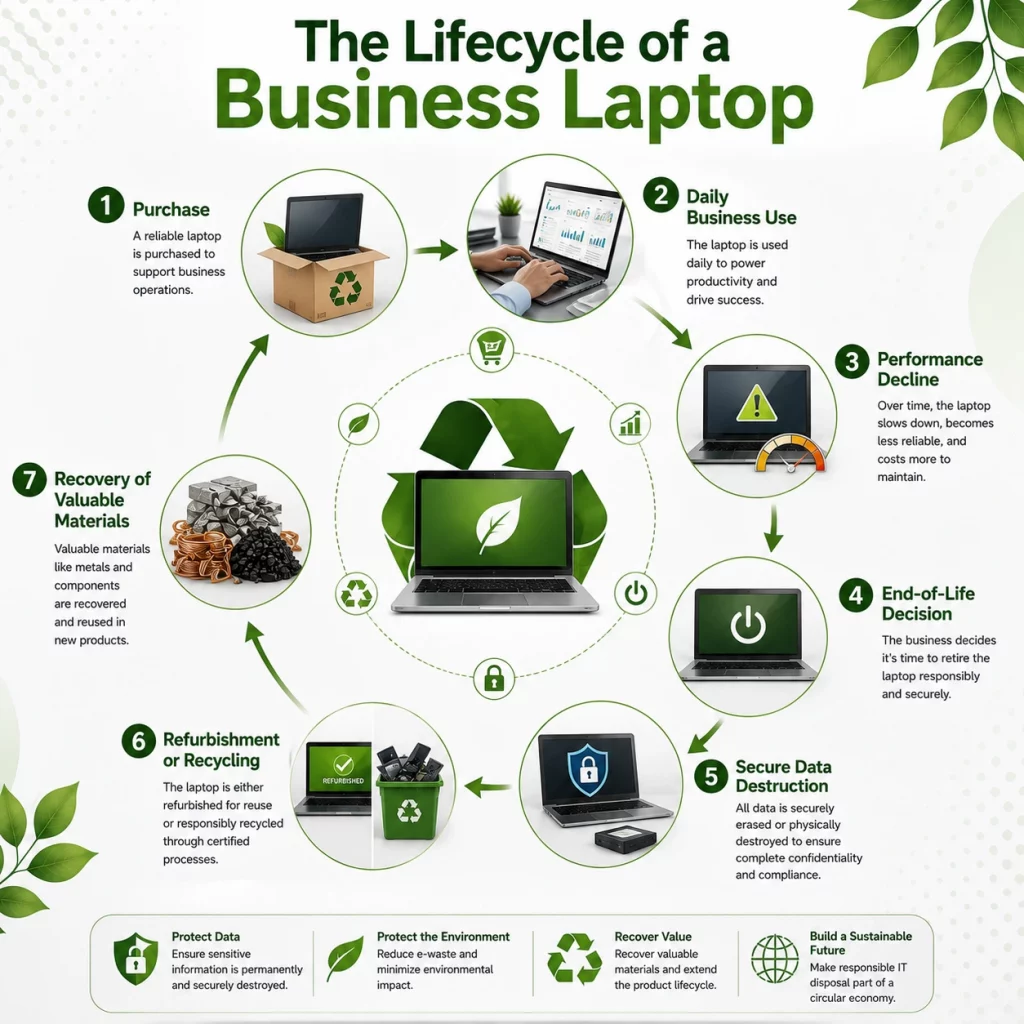
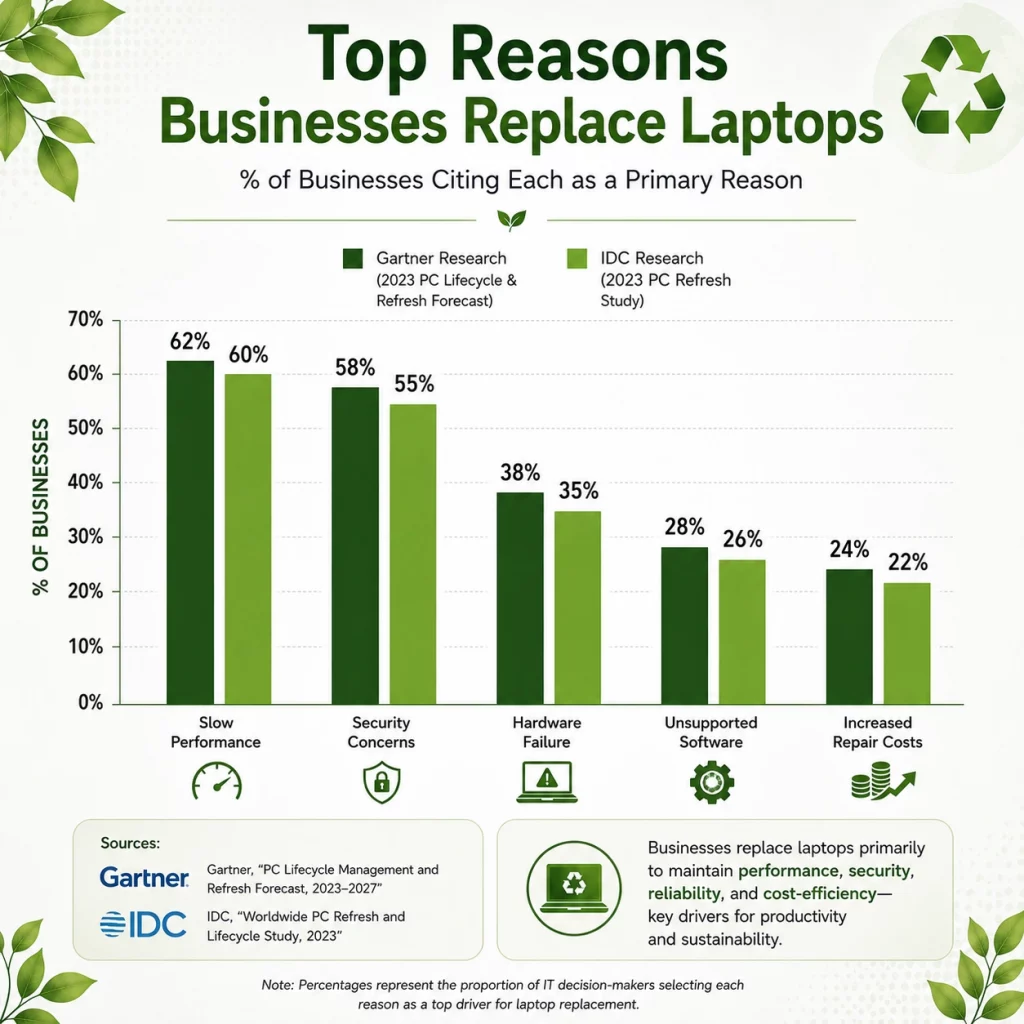
The term “end of life” does not always mean the laptop has stopped working. Instead, it usually means the device no longer delivers sufficient performance, security or compatibility for business needs.
Several factors determine when a laptop reaches this stage.
Older operating systems eventually stop receiving security updates.
For example, Microsoft regularly retiatures support for older Windows versions, meaning unsupported devices become significantly more vulnerable to cyber threats.
Businesses handling customer information should avoid using unsupported systems because they increase the likelihood of security incidents.
Older laptops often develop problems including:
Although repairs are possible, replacement often becomes more cost-effective over time.
According to IDC, worldwide PC shipments continue to remain strong as organisations refresh ageing hardware to improve productivity and security.
Even if a laptop still powers on, slow boot times, freezing applications and limited memory can reduce employee efficiency.
A report by Forrester found that modern workplace devices improve employee productivity by reducing downtime and improving application performance.
If a laptop still functions properly, refurbishment may be the best environmental outcome.
Many components including memory, processors, screens and storage drives remain usable after refurbishment. Extending the life of electronic devices reduces demand for new raw materials and helps lower carbon emissions associated with manufacturing.
The United Nations Global E-waste Monitor highlights that extending the usable life of electronics is one of the most effective ways to reduce electronic waste.
Businesses should ensure all data is professionally erased before any device is reused.
When refurbishment is no longer practical, certified recycling becomes the safest solution.
Professional recycling ensures valuable materials such as aluminium, copper, plastics and precious metals are recovered instead of being sent to landfill.
According to the Global E-waste Monitor 2024, electronic waste exceeded 62 million metric tonnes worldwide, yet only around 22% was formally collected and recycled. This demonstrates why responsible recycling continues to play a major role in protecting natural resources.
Businesses choosing professional laptop disposal Leeds providers should ensure laptops are processed according to UK environmental regulations and that documentation is available where required.
Deleting files or formatting a hard drive does not permanently remove information.
Specialist recovery software can often restore deleted files unless secure destruction methods have been used.
This creates significant risks for businesses handling:
The Information Commissioner’s Office (ICO) regularly reminds organisations that personal information must remain protected throughout its entire lifecycle—including disposal.
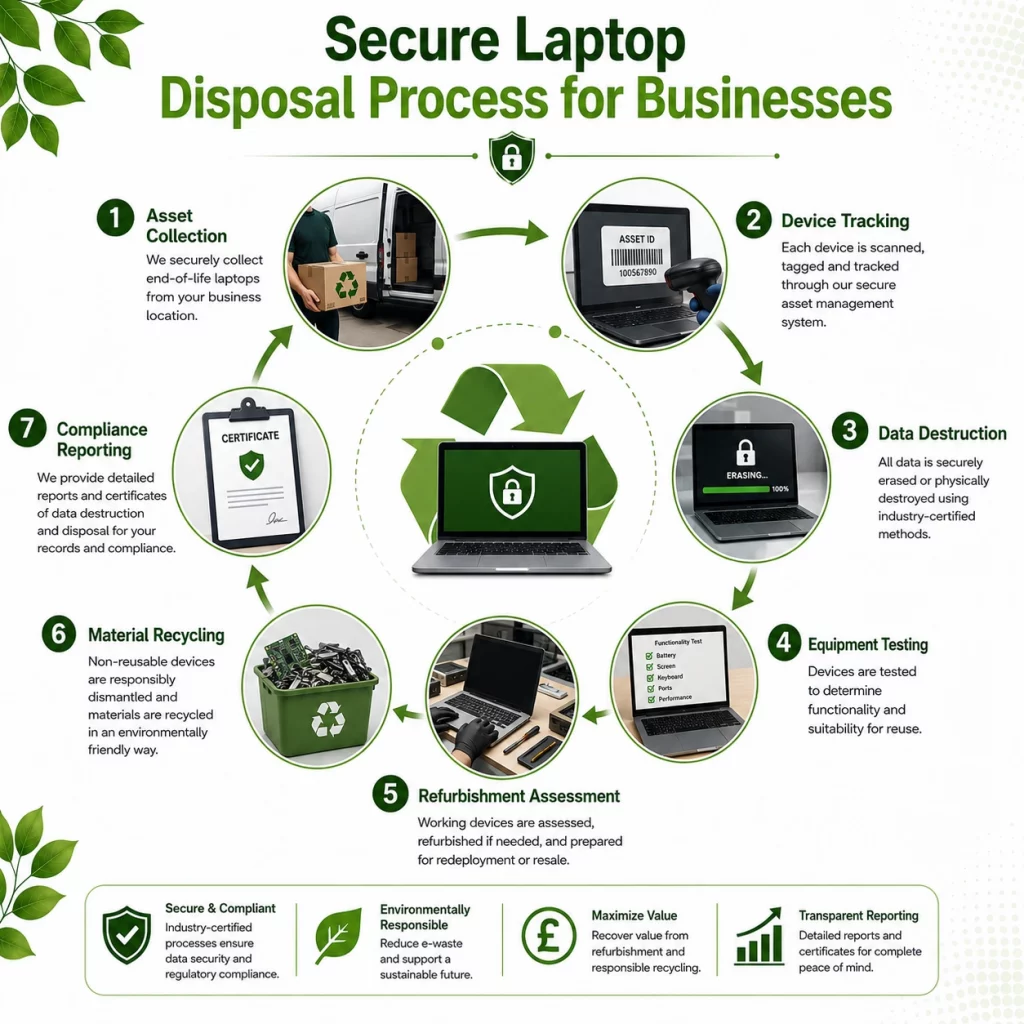
Professional data destruction methods often include certified software erasure or physical destruction of storage media depending on the device’s condition and business requirements.
Assess your business laptop fleet disposal requirements, refurbishment potential, and environmental carbon savings.
Loading collection logistics...
Loading material volume...
Loading required documentation...
Need compliant laptop recycling or a data destruction audit?
Schedule Laptop Disposal Collection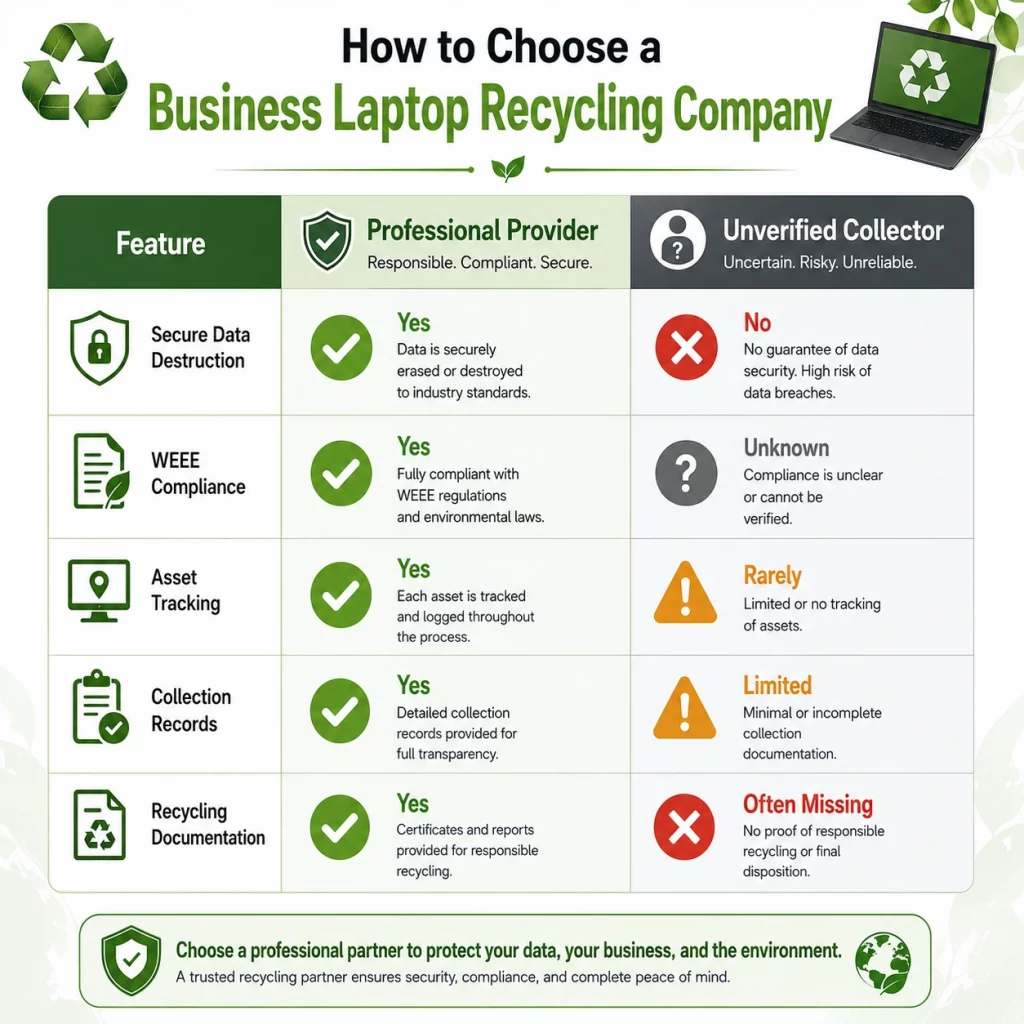
Not all recycling companies offer the same level of service. Businesses should choose a provider that follows recognised industry standards, maintains a secure chain of custody, and provides clear documentation throughout the disposal process.
A reliable laptop disposal Leeds provider should explain exactly what happens to every device from collection through to refurbishment, recycling or certified destruction. This transparency helps businesses demonstrate compliance during audits while reducing the risk of data loss.
Look for providers that can offer:
For organisations replacing dozens or hundreds of laptops each year, having a structured disposal process can also save valuable staff time and reduce operational disruption.
Many businesses focus only on removing old equipment, but disposal also involves important legal responsibilities.
The Waste Electrical and Electronic Equipment (WEEE) Regulations help ensure electronic waste is collected, treated and recycled responsibly instead of ending up in landfill.
At the same time, organisations that process personal information must also comply with UK data protection laws. The Information Commissioner’s Office (ICO) makes it clear that personal data must remain protected throughout its entire lifecycle—including storage, transfer and final disposal. Data breaches caused by improper disposal can expose organisations to financial penalties, reputational damage and customer trust issues.
Choosing professional end of life laptops Leeds services helps businesses meet both environmental and data security obligations together rather than treating them as separate tasks.
Even well-managed organisations sometimes overlook simple mistakes that increase both security and compliance risks.
Many offices have cupboards full of unused laptops waiting for “later.”
Unfortunately, unused devices still contain valuable business information and remain vulnerable to theft or accidental loss.
Simply deleting documents or restoring factory settings does not permanently erase stored information.
Professional data destruction methods overwrite or physically destroy storage media so information cannot be recovered.
The cheapest option is not always the safest.
Businesses should consider:
A slightly lower disposal cost can become extremely expensive if sensitive information is later exposed.
Keeping accurate records of retired equipment helps businesses demonstrate compliance during audits while improving IT asset management.
Recording serial numbers, collection dates and disposal certificates creates a complete audit trail.
Every laptop contains valuable raw materials including aluminium, steel, copper, plastics and small amounts of precious metals.
Recovering these materials reduces the need for mining new resources while lowering greenhouse gas emissions associated with manufacturing replacement products.
According to the Global E-waste Monitor 2024, global electronic waste reached more than 62 million tonnes, yet only around 22% entered documented recycling systems. That recycling gap represents both an environmental challenge and an opportunity for businesses to contribute to a more circular economy.
By choosing responsible laptop disposal Leeds services, organisations help reduce landfill waste while supporting the recovery of valuable materials that can be used in future manufacturing.
How many unused laptops are sitting in your office cupboards right now? Take a quick inventory and see whether they could be securely recycled, refurbished or responsibly disposed of before they become a security or compliance risk. If your business is planning its next IT refresh, now is the ideal time to build a smarter laptop disposal strategy.
Businesses should dispose of end-of-life laptops through a professional IT recycling company that provides secure data destruction and WEEE-compliant recycling. This helps protect sensitive business information, ensures legal compliance, and reduces environmental impact. If the laptops are still functional, they may also be refurbished or reused after certified data erasure.
The safest way to dispose of old business laptops is to use a certified laptop disposal service in Leeds that offers secure collection, asset tracking, certified data destruction, and environmentally responsible recycling. Simply deleting files or formatting the hard drive is not enough to protect confidential data.
Professional laptop disposal protects your business from data breaches, helps meet GDPR and WEEE compliance requirements, and ensures electronic waste is recycled responsibly. It also provides documentation that can support audits and demonstrate responsible IT asset management.
Yes. In many cases, deleted files can be recovered using specialist recovery software if the storage device has not been securely erased or physically destroyed. Professional data destruction methods permanently remove information, making it inaccessible.
After collection, laptops are typically tracked, inspected, and securely wiped of all data. Devices that can be reused are refurbished, while those beyond repair are dismantled so valuable materials like aluminium, copper, plastics, and precious metals can be recovered through certified recycling processes.
Yes. Businesses in the UK must comply with the Waste Electrical and Electronic Equipment (WEEE) Regulations when disposing of electronic equipment. They also have responsibilities under UK GDPR and the Data Protection Act to ensure personal and confidential data is securely destroyed before disposal.
Yes. Even if a laptop no longer works, it contains recyclable materials and electronic components that should not be sent to landfill. Professional IT recycling companies can safely process damaged, obsolete, and non-functional laptops while ensuring secure data destruction.
Most businesses replace laptops every three to five years, depending on hardware performance, security requirements, software compatibility, and manufacturer support. Regular replacement helps improve productivity while reducing cybersecurity risks associated with outdated devices.
A reputable laptop disposal provider should supply documentation such as a Certificate of Data Destruction, recycling confirmation, collection records, and asset reports where applicable. These records help demonstrate compliance and provide a complete audit trail.
T&M Reuse Yorkshire Limited offers secure business laptop disposal in Leeds with certified data destruction, WEEE-compliant recycling, responsible IT asset processing, and environmentally friendly disposal solutions. The company helps businesses protect sensitive information while supporting sustainability and regulatory compliance.