
Electronic waste is growing faster than almost any other waste stream in the world. From outdated laptops and broken monitors to unused servers and networking equipment, businesses and households across Leeds are generating more electronic waste than ever before. Understanding how free electronic waste collection Leeds services work can help you dispose of unwanted devices responsibly while protecting both the environment and sensitive data.
According to the Global E-waste Monitor 2024, the world generated a record 62 million tonnes of electronic waste in 2022, and this figure is expected to reach 82 million tonnes by 2030. Yet only 22.3% of global e-waste is formally collected and recycled, highlighting the growing need for accessible recycling solutions.
For businesses in Leeds, proper e-waste disposal is no longer just an environmental responsibility. It is also an important part of data security, regulatory compliance, and corporate sustainability.
Technology evolves rapidly. Devices that seemed cutting-edge just a few years ago are now being replaced by faster, more efficient alternatives.
This constant upgrade cycle creates a significant amount of waste electrical and electronic equipment (WEEE). Across the UK, approximately two million tonnes of WEEE are discarded annually by households and businesses. Research also suggests that millions of unused electronic devices remain stored in homes and offices rather than entering recycling systems.
Electronic waste contains valuable materials such as copper, aluminium, gold, silver, and rare earth elements. However, it can also contain hazardous substances that may harm the environment if disposed of incorrectly. The European Environment Agency notes that improperly managed e-waste can release dangerous materials into soil and water systems.
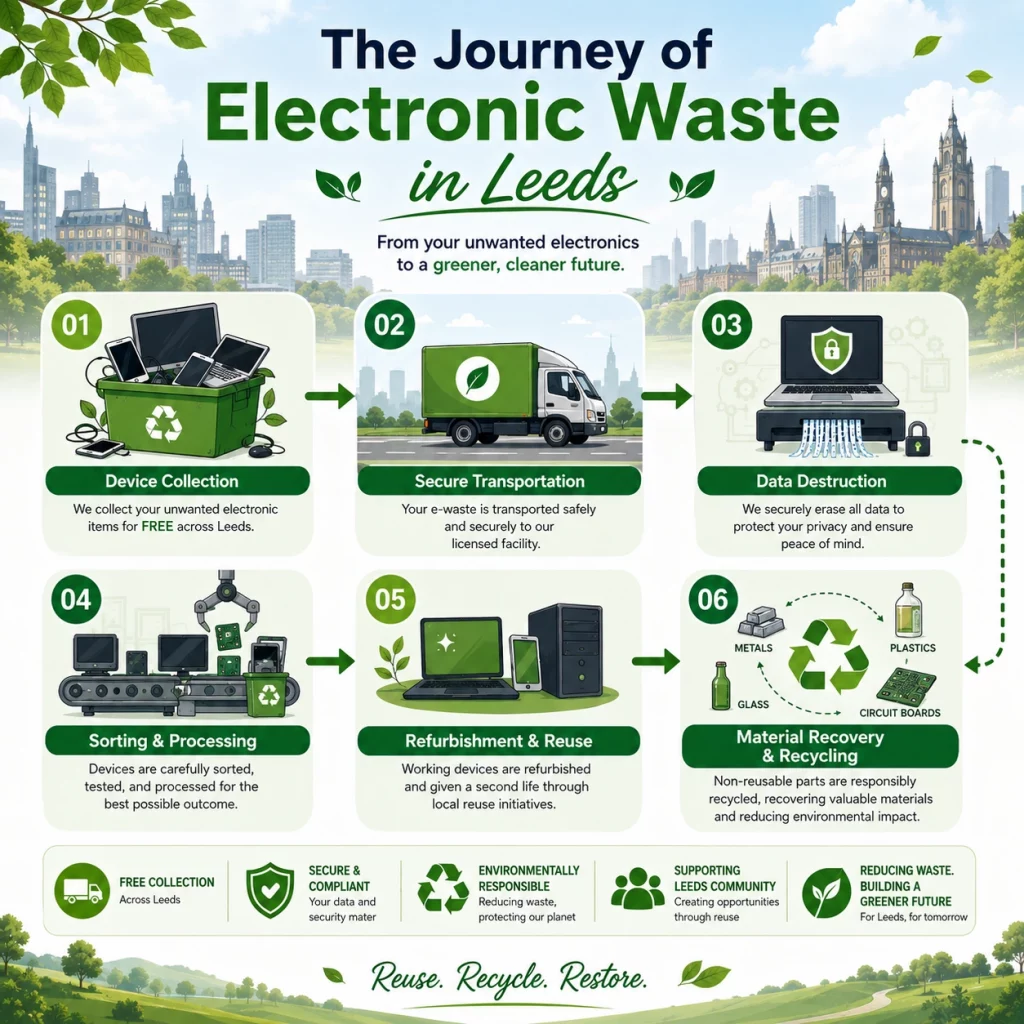
Free electronic waste collection refers to the collection of unwanted electronic equipment without charging the customer for collection services, provided the waste meets acceptance criteria.
Many IT recycling providers offer collection services because recovered materials, refurbished equipment, and reusable components retain value within the circular economy.
For organisations upgrading their IT infrastructure, this can be a practical way to remove large volumes of equipment while ensuring responsible disposal.
Common items accepted during an e waste collection Leeds service include:
Equipment Type | Typical Examples |
Computers | Desktop PCs, workstations |
Laptops | Business and personal laptops |
Displays | Monitors and screens |
Networking Equipment | Routers, switches, hubs |
Servers | Rack servers and storage units |
Printers | Laser and inkjet printers |
Telecommunications Equipment | Phones and PBX systems |
Peripherals | Keyboards, mice, docking stations |
Many organisations underestimate the risks associated with improper disposal of IT assets.
Simply throwing electronics into general waste streams can expose companies to compliance risks, environmental liabilities, and potential data breaches.
Hard drives, SSDs, servers, and storage devices often contain confidential business information.
Professional IT recycling providers typically implement certified data destruction processes to ensure sensitive information cannot be recovered.
Government guidance surrounding WEEE treatment and evidence requirements highlights the importance of approved processing and treatment facilities within the recycling chain.
The UK remains one of the highest producers of electronic waste per capita in Europe. Recent estimates place UK e-waste generation at approximately 24 kilograms per person annually.
Choosing responsible recycling helps reduce landfill use while recovering valuable materials for reuse in manufacturing.
Environmental, Social and Governance (ESG) reporting is becoming increasingly important.
Documented recycling and reuse activities can support sustainability initiatives while demonstrating responsible resource management to customers, investors, and stakeholders.
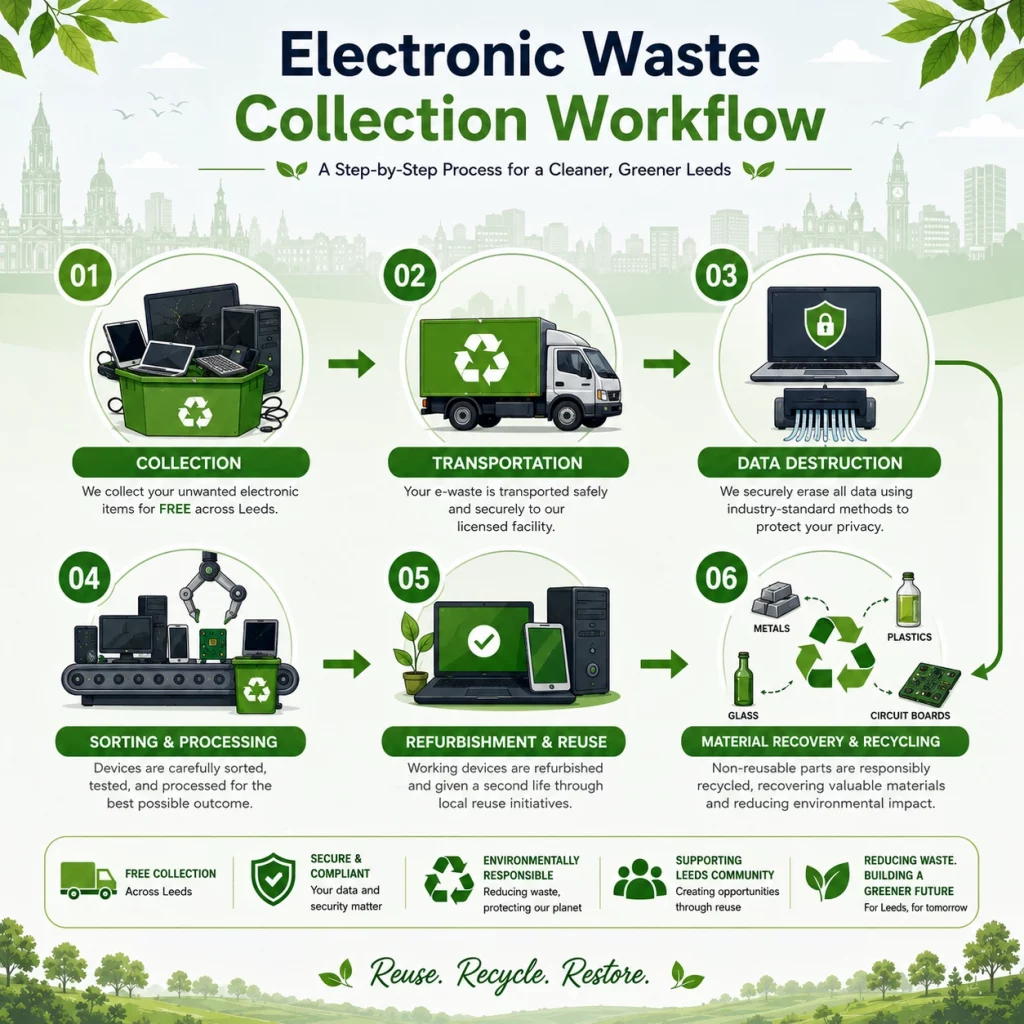
Understanding the collection process can help businesses prepare for efficient disposal.
The recycling provider identifies the type and quantity of equipment available for collection.
A collection date is arranged based on location, volume, and operational requirements.
Items are transported to an authorised processing facility.
Storage media undergo approved destruction or sanitisation procedures.
Working devices may be refurbished and redeployed.
Non-reusable equipment is dismantled and processed for material recovery.
Not every device collected needs to be recycled immediately.
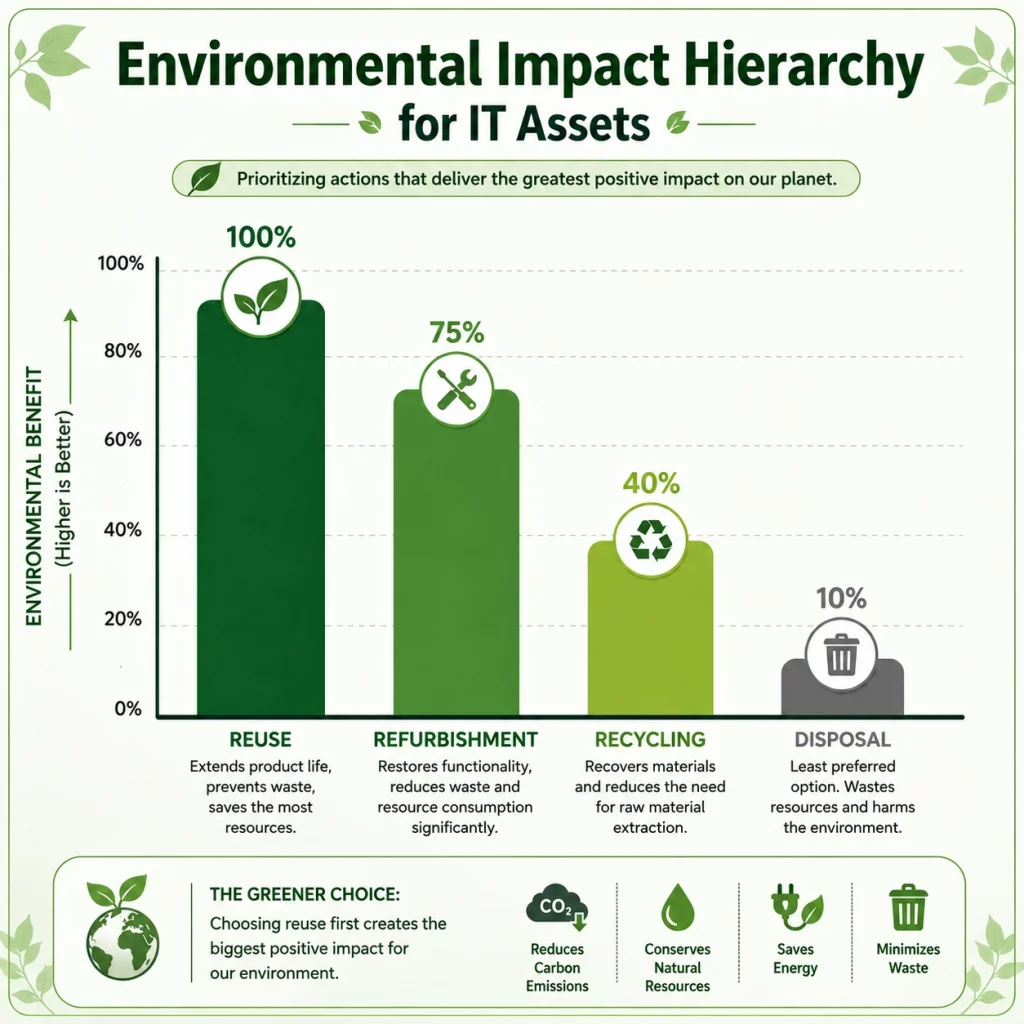
One of the most sustainable approaches is extending product life through refurbishment and reuse.
When functioning equipment is repaired and redeployed, fewer new devices need to be manufactured. This reduces raw material extraction, energy consumption, and carbon emissions.
According to circular economy principles promoted throughout the UK waste sector, reuse generally delivers greater environmental benefits than recycling because it preserves the embedded value of products.
Choosing the right collection partner is critical.
A reputable provider should offer:
Businesses should also request documentation that confirms the responsible treatment and processing of collected equipment.
The circular economy aims to keep products and materials in use for as long as possible.
Electronic waste contains valuable resources that can be recovered and reintroduced into manufacturing supply chains.
The Global E-waste Monitor estimates that billions of dollars worth of recoverable materials are lost annually due to inadequate recycling systems. Valuable metals such as gold, copper, and rare earth elements remain trapped inside discarded electronics.
Recent UK initiatives have also focused on improving electrical recycling systems and increasing producer responsibility for electronic waste management.
By participating in free electronic waste collection Leeds services, organisations contribute directly to resource recovery and waste reduction goals.
Quantify your organization's environmental contribution by calculating carbon emission offsets and hardware diversion metrics.
Many organisations unintentionally create risks during disposal.
The most common mistakes include failing to erase data, storing redundant equipment indefinitely, using unverified disposal providers, and disposing of electronics through general waste channels.
Government and industry data consistently show that electronic waste continues to rise while collection rates struggle to keep pace with demand. In the UK, WEEE collections increased only marginally between 2018 and 2024 despite substantial growth in electronic equipment placed on the market.
This highlights the importance of encouraging more businesses to participate in formal collection and recycling schemes.
Electronic equipment ownership continues to rise across both households and businesses.
The Global E-waste Monitor projects annual e-waste generation growth of approximately 2.6 million tonnes globally, with volumes expected to reach 82 million tonnes by 2030.
At the same time, organisations are facing increasing pressure to improve sustainability performance, strengthen cybersecurity, and demonstrate responsible waste management.
As a result, demand for professional e waste collection Leeds services is expected to continue growing over the coming years.
If your organisation is planning an IT refresh, office relocation, or equipment upgrade, what steps are you taking to ensure your unwanted electronics are reused, refurbished, or recycled responsibly rather than ending up as waste?
Free electronic waste collection in Leeds is a service that allows businesses and individuals to dispose of unwanted IT and electronic equipment without collection charges, subject to eligibility requirements. Collected items are typically reused, refurbished, or recycled in compliance with UK WEEE regulations.
Most e-waste collection services accept laptops, desktop computers, servers, monitors, printers, networking equipment, mobile phones, hard drives, cables, and other unwanted IT equipment. Acceptance may vary depending on the provider and the condition of the items.
Businesses must dispose of waste electrical and electronic equipment responsibly under UK WEEE regulations. Electronic devices should not be placed in general waste streams and should be handled through authorised recycling or reuse channels.
Professional IT recycling companies use certified data destruction methods such as hard drive shredding, degaussing, or secure data wiping. Many providers also issue data destruction certificates for compliance and audit purposes.
Electronic waste contains valuable materials such as copper, aluminium, gold, and rare earth metals that can be recovered and reused. Recycling reduces landfill waste, conserves natural resources, and helps lower carbon emissions associated with manufacturing new products.
Yes. Many laptops, desktops, and other IT assets can be refurbished and reused if they remain functional. Refurbishment extends product lifespan, reduces electronic waste, and supports the circular economy.
You can contact a professional IT recycling provider to schedule a collection. The provider will usually assess the quantity and type of equipment, arrange collection, and ensure proper data destruction and recycling processes are followed.
Collected equipment is typically sorted for reuse, refurbishment, component recovery, or material recycling. Devices containing sensitive data undergo secure destruction procedures before being processed further.
Yes. Reputable recycling providers often supply waste transfer notes, recycling reports, asset registers, and certificates of data destruction to help businesses meet compliance and sustainability reporting requirements.
Professional providers ensure secure data handling, regulatory compliance, responsible recycling, environmental protection, and detailed reporting. They also help businesses reduce storage clutter and support sustainability goals.